Where to Start with Salman Rushdie: A Reading Guide
Where to start with Salman Rushdie — whether to begin with Midnight's Children, The Satanic Verses, or Haroun and the Sea of Stories. A complete reading guide.
Salman Rushdie (born 1947) is the most significant postcolonial novelist in English — the writer who, in Midnight’s Children (1981), created the template for magical realist fiction about the colonial and post-independence experience and demonstrated that the novel of Indian history and politics could be as formally innovative and linguistically rich as any European modernist work. His major novels — Midnight’s Children, The Satanic Verses, The Moor’s Last Sigh — are among the most ambitious and most allusive works in contemporary literature.
Where to Start
The Essential Novel: Midnight’s Children (1981)
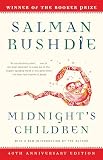
The essential first Rushdie and one of the most important novels in English in the twentieth century. Saleem Sinai’s story — his birth at the moment of Indian independence, his telepathic connection to the midnight children, his progress through the disasters of modern Indian history — is told in a narrative voice of extraordinary richness: comic, tragic, allusive, and driven by the energy of a storyteller who knows that stories are how a culture survives. The novel won the Booker Prize and was later named the ‘Booker of Bookers’ — the best novel ever to have won the prize — twice. It is long and dense, but its narrator’s personality carries the reader through.
The Accessible Entry: Haroun and the Sea of Stories (1990)
The best starting point for readers who want Rushdie’s storytelling gifts without the density of the major novels. Written for Rushdie’s son after the fatwa made their family’s normal life impossible, the novel follows Haroun, whose storyteller father has lost the ability to tell stories, through a fantasy quest to restore his father’s gift. The novel is an allegory about censorship, imagination, and the political importance of stories — lightweight in form, serious in subject — and demonstrates Rushdie’s linguistic playfulness at its most joyful.
The Controversial Masterpiece: The Satanic Verses (1988)
Rushdie’s most formally demanding and most linguistically extravagant novel — and the one whose publication led to the Ayatollah Khomeini’s fatwa calling for his death. The novel’s two protagonists — Gibreel and Saladin, Indian film stars who survive a terrorist bombing and fall to earth transformed — are vehicles for Rushdie’s most ambitious exploration of identity, migration, and the nature of religious experience. The sections dealing with the origins of Islam through a dream narrative were the source of the controversy; they are also some of Rushdie’s most extraordinary writing. Essential reading for understanding the relationship between fiction and political power; not a starting point.
The Moor’s Last Sigh (1995)
Rushdie’s most personal and most melancholy novel — the story of the Moor, a member of a Bombay spice-trading family descended from the last Moorish sultan of Granada, who ages at twice the normal rate and whose family history mirrors the history of modern India and the lost Andalusian civilization. The novel is Rushdie’s most direct meditation on loss — of a civilization, of a way of life, of the secular, multicultural India that he believed was being destroyed by Hindu nationalism. Rich, digressive, and beautifully written.
The Ground Beneath Her Feet (1999)
Rushdie’s alternative-history novel — in which the story of Orpheus and Eurydice is retold as the story of two Mumbai rock musicians who become global superstars in an alternate 1960s. The novel is Rushdie’s most extended engagement with music (particularly with the story of how rock music shaped the second half of the twentieth century) and his most overtly romantic. More accessible than The Satanic Verses; best read after Midnight’s Children.
Why Midnight’s Children Is the Ideal First Book
For a reader new to Salman Rushdie, Midnight’s Children is the ideal first book because it is his masterpiece, one of the most important novels in English of the twentieth century, and the fullest expression of his distinctive gifts, the dazzling, exuberant prose, the magical realism, and the sweeping engagement with history. Midnight’s Children tells the story of Saleem Sinai, born at the exact moment of India’s independence, whose life is mysteriously bound up with the fate of his nation, in a vast, inventive, and exuberant novel. As an entry point it is ideal, for it is his most celebrated work and a perfect example of his exuberant, magical, and ambitious fiction. It welcomes the newcomer with its dazzling prose, its inventive storytelling, and its sweeping scope, drawing the reader into his distinctive vision. It is his masterpiece and the one that best represents his gifts, so the new reader encounters Rushdie at his finest. For the newcomer, then, Midnight’s Children is the natural and ideal starting point.
What to Expect as a New Reader
As a new reader, you can expect Midnight’s Children to be a dazzling, exuberant, and sweeping novel. You can expect a compelling premise, for the narrator, Saleem Sinai, is born at the exact moment of India’s independence and finds his life mysteriously bound up with his nation’s fate. You can expect dazzling, exuberant prose, for Rushdie writes with verbal energy, invention, and playfulness. You can expect magical realism, for the novel blends the realistic and the fantastical, with Saleem and other midnight’s children possessing strange gifts. You can expect a sweeping engagement with history, for the novel encompasses the history of modern India. You can expect inventive, digressive, and exuberant storytelling. You should expect a rich, ambitious novel that rewards attention. Expect, in short, a dazzling, exuberant, and sweeping novel, a superb introduction to Rushdie’s gifts.
Going Deeper After Your First Book
Once Midnight’s Children has introduced you to Rushdie’s gifts, the reader who wishes to go deeper can explore his other novels, which continue his dazzling, exuberant prose, his magical realism, and his sweeping engagement with history, culture, and identity. His other acclaimed works range across the histories and myths of the subcontinent and the wider world, blending the realistic and the fantastical, including his ambitious later novels and his memoir, while his celebrated children’s book and his stories reveal further dimensions of his imagination. Reading these after Midnight’s Children deepens your appreciation of Rushdie’s distinctive gifts, the dazzling prose, the magical realism, and the sweeping engagement with history. His characteristic exuberance runs through his work. Building your reading journey through Rushdie is a matter of following his fiction from Midnight’s Children into his other novels. The reader who begins here and continues will encounter one of the most dazzling and ambitious novelists in contemporary literature.
Reading Rushdie
Rushdie’s prose is the most linguistically exuberant in contemporary English fiction — a mixture of English, Hindustani, Bombay slang, literary allusion, and invented portmanteau words that creates a reading experience unlike any other. The density is part of the argument: the novel that mixes languages is the novel of a culture that has been shaped by many traditions and cannot be reduced to any one of them. Readers who resist the density will miss the novels’ greatest pleasures; readers who surrender to it will find themselves in one of the richest fictional worlds in English.
Frequently Asked Questions
Where should I start with Salman Rushdie?
Midnight's Children (1981) is the essential starting point — Rushdie's Booker Prize winner and one of the most important novels in English since the Second World War. Saleem Sinai, born at the exact moment of Indian independence, is connected telepathically to all the other children born in the midnight hour, and his story mirrors the story of modern India. The novel is long (over 500 pages) and exuberant; readers who want a shorter, more focused entry should begin with Haroun and the Sea of Stories, which is shorter and demonstrates Rushdie's gifts for allegory and linguistic play in a more accessible form.
What is Midnight's Children about?
Midnight's Children (1981) follows Saleem Sinai, born at the stroke of midnight on August 15, 1947 — the moment of Indian independence — who is part of a generation of 1,001 children born at that midnight hour, each with supernatural powers, and each connected to the fate of modern India. Saleem's family history is also a history of India in the twentieth century: partition, the Emergency of 1975, the Bangladesh war. The novel is written in the tradition of magical realism — miraculous events delivered in a matter-of-fact narrative tone — and is Rushdie's most direct meditation on what it means to be Indian, to be postcolonial, to be shaped by the stories one tells about one's origins.
What is The Satanic Verses about?
The Satanic Verses (1988) follows two Indian actors, Gibreel Farishta and Saladin Chamcha, who survive the bombing of their plane over the English Channel and fall to earth, one sprouting angel's wings and one growing horns and hooves. The novel is simultaneously a meditation on Indian migration to Britain, a retelling of the origins of Islam through a fictionalized dream-narrative, and Rushdie's most formally ambitious and linguistically extravagant work. The Ayatollah Khomeini's fatwa against Rushdie (issued in 1989, shortly after publication) has made the novel's literary qualities secondary to its political history; it is a rich, difficult, and important novel regardless.
Is Salman Rushdie difficult to read?
Rushdie's major novels are demanding — they are long, densely allusive (to Bollywood films, to Islamic theology, to Indian history, to European literature), and written in a prose style that draws on multiple languages and traditions simultaneously. Midnight's Children is probably the most accessible of the major novels, despite its length, because its narrator's energy and humour make the density pleasurable rather than exhausting. Haroun and the Sea of Stories (1990) is the most formally accessible — shorter, cleaner, and organised as a children's story allegory that works for adults. Begin there if Rushdie's style is unfamiliar.