Susanna Clarke Books in Order: Complete Reading Guide
Both Susanna Clarke novels in order — Jonathan Strange and Mr Norrell and Piranesi. Reading guide for two of the most remarkable fantasy novels of this century.
Susanna Clarke has published two novels in twenty years. They are entirely different in length, tone, and style — but both represent some of the most original fantasy writing of this century.
Susanna Clarke Books in Publication Order
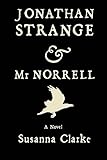
1. Jonathan Strange and Mr Norrell — 2004
The major undertaking. In an alternate 19th-century England where magic has been theorised for centuries but not practised, two magicians — the reclusive Mr Norrell and his brilliant, reckless pupil Jonathan Strange — attempt to restore English magic, with increasingly devastating consequences. At 800 pages with extensive footnotes about an entirely constructed magical history, it is one of the most complete fictional worlds ever built. Won the Hugo Award and the World Fantasy Award.
➡ Full review → | Buy on Amazon →
2. Piranesi — 2020
The best starting point for most readers. A man lives in a House whose halls contain statues and whose lower floors flood with tides. He has no memory of any other existence. He keeps meticulous journals. Something is wrong, and understanding what it is forms the novel’s plot. At 272 pages, one of the most precisely constructed and surprising novels of recent years.
➡ Full review → | Buy on Amazon →
Where to Start with Susanna Clarke
For most readers: Begin with Piranesi — it is shorter, more immediately gripping, and the kind of novel that makes you want to start reading Jonathan Strange immediately after you finish it.
For committed fantasy readers: Begin with Jonathan Strange and Mr Norrell — commit to the full 800-page immersion in Clarke’s alternate England. It rewards patience more than almost any other novel of its decade.
Two Novels, Twenty Years Apart
Susanna Clarke occupies an unusual place in contemporary fiction as the author of two highly acclaimed but very different novels, separated by a long interval and demonstrating a striking range, from the vast to the intimate. Clarke’s published fiction consists of two novels, her monumental debut and a much shorter and more intimate later work, and the long interval between them, as well as their striking difference in scale and approach, make her body of work distinctive. Her debut, Jonathan Strange and Mr Norrell, is a vast, intricate, and ambitious novel, while her second novel, Piranesi, published many years later, is short, spare, and intimate, and the contrast between the two demonstrates a remarkable range and versatility. The long interval between her two novels, and their striking difference in scale and character, reflect the distinctive shape of Clarke’s literary career, marked by these two acclaimed but very different works. That a writer should produce two such different novels, the vast and intricate debut and the short and intimate later work, demonstrates a striking range and an unwillingness to repeat herself. For readers, Clarke offers two highly acclaimed but very different novels, the monumental debut and the intimate later work, demonstrating a striking range from the vast to the spare. Two novels, twenty years apart, define Susanna Clarke’s distinctive body of work, the vast and intricate debut Jonathan Strange and Mr Norrell and the short, spare, and intimate Piranesi, separated by a long interval and demonstrating a striking range from the monumental to the intimate.
Magic, History, and the Uncanny
Susanna Clarke’s fiction is distinguished by its sophisticated and literary engagement with magic, by its rich evocation of history, and by its pervasive sense of the uncanny and the mysterious. Clarke writes a kind of literary fantasy that treats magic with sophistication, seriousness, and rich imaginative detail, and her fiction is distinguished by its intelligent and literary engagement with the magical and the supernatural. Her debut, Jonathan Strange and Mr Norrell, is set in an alternate version of history in which magic is real, and it evokes its historical setting with rich detail and a convincing texture, weaving magic into a meticulously imagined historical world. Throughout her fiction runs a pervasive sense of the uncanny and the mysterious, a feeling for the strange, the eerie, and the numinous that gives her work its distinctive atmosphere and its haunting power. This combination of sophisticated, literary magic, rich historical evocation, and a pervasive sense of the uncanny distinguishes Clarke’s fiction, lifting it above conventional fantasy into a literary engagement with the magical, the historical, and the mysterious. Her fiction treats magic not as mere spectacle but as a subject for sophisticated and literary imagination, and it is suffused with a sense of the strange and the numinous that gives it a haunting power. For readers, Clarke offers a sophisticated and literary engagement with magic, history, and the uncanny, a fiction distinguished by its intelligence, its rich historical texture, and its haunting atmosphere. Magic, history, and the uncanny distinguish Clarke’s fiction, which treats magic with sophistication and literary seriousness, evokes history with rich detail, and is suffused with a pervasive sense of the strange and the numinous that gives it a distinctive and haunting power.
The Imagination and Its Worlds
At the heart of Susanna Clarke’s fiction is a profound engagement with the imagination itself, with the creation of richly realized imaginary worlds and with the mystery and power of the imaginative realm. Clarke is a writer of extraordinary imaginative power, and her fiction is centrally concerned with the imagination, with the creation of fully realized imaginary worlds and with the mystery, beauty, and power of the imaginative realm. Her debut creates a vast and intricate imaginary world, an alternate history rich with magic and detail, while her second novel, Piranesi, creates a strange and haunting imaginary world of labyrinthine halls, and both reflect her profound engagement with the imagination and its capacity to create rich and mysterious worlds. Her fiction is, in a sense, about the imagination itself, about the power of the imaginative realm, the worlds it can create, and the mystery and meaning of the imaginative experience, and this deep engagement with the imagination gives her work its distinctive richness and resonance. Clarke’s worlds are realized with such imaginative power and detail that they acquire a haunting reality, and her fiction celebrates and explores the power of the imagination to create rich, mysterious, and meaningful worlds. For readers, Clarke offers a profound engagement with the imagination and its worlds, a fiction distinguished by its extraordinary imaginative power and its creation of richly realized imaginary realms. The imagination and its worlds are at the heart of Clarke’s fiction, which is centrally concerned with the creation of richly realized imaginary worlds and with the mystery and power of the imaginative realm, and whose extraordinary imaginative power gives her work its distinctive richness and haunting resonance.
What Makes Clarke Distinctive
Both novels are works of deep imagination that build their worlds from the inside: Clarke does not explain her world to readers, she deposits them inside it and lets them find their bearings. The footnotes in Jonathan Strange are not supplementary material but an essential part of the worldbuilding — they create the impression that this magical history predates the novel and will continue after it. In Piranesi, the world-building is the mystery itself.
Affiliate disclosure: Links to Amazon on this page are affiliate links. We earn a small commission at no extra cost to you.
Frequently Asked Questions
Do I need to read Jonathan Strange before Piranesi?
No. Piranesi and Jonathan Strange and Mr Norrell are entirely separate — different characters, different settings, different tone. Piranesi is shorter and more accessible; Jonathan Strange is a major 800-page undertaking. Most readers can begin with either.
Are Piranesi and Jonathan Strange set in the same world?
There is a possible connection — certain elements of Piranesi's magical system echo concepts in Jonathan Strange and Mr Norrell — but the two novels function completely independently and Clarke has not confirmed a shared world.
Why did it take Susanna Clarke ten years to write Piranesi after Jonathan Strange?
Clarke suffered from a chronic illness (later identified as long COVID-adjacent) that significantly limited her capacity to write for a decade. Piranesi, at 272 pages versus Norrell's 800, reflects in part what she could accomplish within that constraint.