UK
Science FictionFantasyLiterary Fiction
American · b. 1929
8 books reviewed Avg rating 4.3 / 5Top rating 4.5 / 5
Hugo Award, Nebula Award, National Book Award, PEN/Malamud Award, Library of Congress Living Legends
Ursula K. Le Guin was an American author whose science fiction and fantasy — including Earthsea, The Left Hand of Darkness, and The Dispossessed — redefined what the genres could imagine and question.
Ursula K. Le Guin was the daughter of the anthropologist Alfred Kroeber and the writer Theodora Kroeber, and the cross-disciplinary intelligence she inherited from that background infuses every book she wrote. The Earthsea sequence, beginning with A Wizard of Earthsea, is among the finest fantasy ever written for young readers: rooted, wise, and built on a moral framework — that power requires balance, and that the shadow self cannot simply be defeated but must be integrated — that is more sophisticated than most adult fiction. It is also one of the few fantasy series to put a dark-skinned protagonist at its centre, a decision that was quietly radical when the book appeared in 1968.
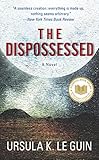
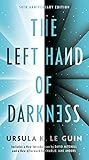
The Dispossessed and The Left Hand of Darkness are her central contributions to science fiction, and they demonstrate what the genre can uniquely do: thought experiment elevated to literature. The Left Hand of Darkness, set on a planet whose inhabitants have no fixed gender, asks what might remain if the edifice of gendered assumption were removed — and manages to make that abstract question emotionally urgent. The Dispossessed imagines an anarchist society alongside a capitalist one and refuses to make either simple. Both books are intellectually demanding and formally sophisticated, written by a writer who read widely in philosophy, anthropology, and Taoism and brought all of it to bear.
Le Guin died in 2018, widely understood to be one of the most important American fiction writers of the twentieth century regardless of genre classification.
Other Titles Worth Seeking Out
Devoted readers should not overlook The Other Wind.
Reading Guides