30 Best Fiction Books of All Time — The Ultimate Reading List
From Orwell to Coelho, Fitzgerald to Dostoevsky — the definitive list of the greatest fiction novels ever written. Ranked by literary impact, readability, and enduring relevance.
Great fiction doesn’t merely entertain — it expands your capacity for empathy, your understanding of the human condition, and your sense of what is possible in language. The books on this list have done all three for millions of readers across centuries.
We selected these novels using three criteria: enduring readership (still read and discussed decades or centuries after publication), literary achievement (exceptional use of language, structure, or perspective), and transformative impact (books that genuinely change how readers see the world).
The Essential Classics (Pre-1950)
Crime and Punishment — Fyodor Dostoevsky ⭐⭐⭐⭐⭐
The original psychological thriller. A young student murders a pawnbroker in St. Petersburg, convinced the crime is philosophically justified — and then spends 500 pages in the grip of guilt, paranoia, and spiritual crisis. Dostoevsky’s exploration of the criminal mind, free will, and redemption has never been surpassed.
Why read it: The most psychologically sophisticated novel ever written. Raskolnikov’s internal experience is more vivid than most real people’s reported experience.
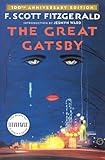
The Great Gatsby — F. Scott Fitzgerald ⭐⭐⭐⭐⭐
A short, perfect novel about the American Dream — and its hollow centre. Jay Gatsby’s obsession with Daisy Buchanan is a love story, yes, but also an anatomy of how wealth corrupts, how the past can trap you, and how easily we deceive ourselves about what we really want.
Why read it: The finest prose writing in the American literary canon. Every sentence is precise and revelatory.
To Kill a Mockingbird — Harper Lee ⭐⭐⭐⭐⭐
Scout Finch’s account of her father Atticus’s defence of a Black man falsely accused of rape in 1930s Alabama remains one of the most powerful indictments of racism and the most moving portraits of moral courage in fiction. Simple, perfect, and absolutely essential.
Why read it: The best novel for teaching empathy, moral courage, and the nature of justice — to adults as much as to the young readers for whom it was nominally written.
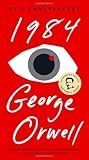
1984 — George Orwell ⭐⭐⭐⭐⭐
Orwell’s vision of a totalitarian super-state — Big Brother, doublethink, the memory hole — has become more relevant with every passing decade, not less. The most important political novel ever written.
Why read it: A masterclass in how power operates through control of language and information. Required reading in any era of disinformation.
➡ Read our full review → | Buy on Amazon →
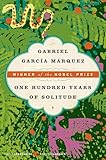
One Hundred Years of Solitude — Gabriel García Márquez ⭐⭐⭐⭐⭐
The Buendía family across seven generations in the fictional town of Macondo, where magical things happen as naturally as ordinary ones. García Márquez invented Latin American magical realism with this book and won the Nobel Prize for it. The most joyful, exuberant, and alive novel on this list.
Why read it: To experience what it means when a novelist is operating at the absolute limit of human capability with language. Nothing like it exists.
Brave New World — Aldous Huxley ⭐⭐⭐⭐½
If 1984 is about control through pain, Brave New World is about control through pleasure. Huxley’s dystopia — where human beings are genetically engineered, conditioned for contentment, and kept docile through a happiness drug called Soma — is in many ways a more accurate prediction of the 21st century than Orwell’s.
Why read it: The most prescient satire of consumer culture, pharmacological happiness, and the surrender of freedom for comfort ever written.
Post-War Modern Classics (1950–2000)
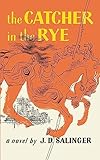
The Catcher in the Rye — J.D. Salinger ⭐⭐⭐⭐
Holden Caulfield’s voice — alienated, sardonic, desperate for authenticity in a world of “phonies” — captured adolescent experience so precisely in 1951 that it’s still doing it today. Banned more times than almost any other American novel; still required reading for the same reason.
Why read it: Salinger’s ear for voice is matchless. Even if you disagree with Holden’s worldview, the prose is extraordinary.
The Lord of the Rings — J.R.R. Tolkien ⭐⭐⭐⭐⭐
The foundational text of modern fantasy. Tolkien’s Middle-earth is not merely a setting but a complete secondary world with its own history, languages, and mythology. Frodo’s journey to destroy the One Ring is the most complete mythological narrative written since the Iliad.
Why read it: Tolkien invented modern fantasy. Every subsequent fantasy novel is in conversation with this one.
One Flew Over the Cuckoo’s Nest — Ken Kesey ⭐⭐⭐⭐⭐
Randle McMurphy’s battle against Nurse Ratched in an Oregon psychiatric institution is simultaneously a comic novel, a tragedy, and an allegory about conformity, authority, and the suppression of individual spirit. One of the most subversive and exhilarating novels ever written.
Why read it: The tension between freedom and control, and the cost of resisting institutional authority, has rarely been dramatised more vividly.
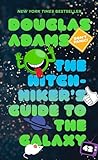
The Hitchhiker’s Guide to the Galaxy — Douglas Adams ⭐⭐⭐⭐⭐
Arthur Dent’s adventures after Earth is demolished to make way for a hyperspace bypass — with a terminally depressed robot, an improbable spaceship, and the answer to Life, the Universe, and Everything (42). The funniest book ever written, with more genuine philosophical insight hidden in its comedy than most philosophy books manage head-on.
Why read it: Because life is short and you should spend some of it laughing this hard.
The Kite Runner — Khaled Hosseini ⭐⭐⭐⭐½
Amir’s guilt over his failure to protect his childhood friend Hassan — and his attempt to atone across decades and continents — is set against the backdrop of Afghanistan’s catastrophic history from the 1970s to the early 2000s. Devastating and beautiful.
Why read it: The most accessible and emotionally direct account of Afghanistan’s transformation available in fiction.
Midnight’s Children — Salman Rushdie ⭐⭐⭐⭐⭐
Saleem Sinai is born at the exact moment of India’s independence and discovers he is connected to every other child born in that same midnight hour. Rushdie’s novel of post-colonial India — winner of the Booker Prize and the Booker of Bookers — is one of the great achievements of 20th-century fiction.
Why read it: The most ambitious post-colonial novel in English. Rushdie’s language at full power is unlike anything else.
Contemporary Masterworks (2000–Present)
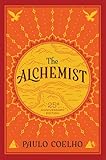
The Alchemist — Paulo Coelho ⭐⭐⭐⭐⭐
A young shepherd’s journey from Spain to the Egyptian pyramids in search of treasure, and the discovery that the real treasure is found in pursuing your Personal Legend. Sixty-five million copies sold for a reason.
➡ Read our full review → | Buy on Amazon →
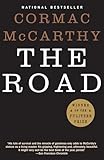
The Road — Cormac McCarthy ⭐⭐⭐⭐⭐
A father and son walk south through the ash-grey ruins of America toward the sea. The prose is stripped of punctuation and ornamentation; the violence is unsparing; the love between father and son is the most moving thing in modern American fiction. Pulitzer Prize winner.
Why read it: The most extreme test of the question “what makes life worth living” ever performed in fiction. Will break and remake you.
Wolf Hall — Hilary Mantel ⭐⭐⭐⭐⭐
Thomas Cromwell’s rise from blacksmith’s son to the most powerful man in England, told through Mantel’s revolutionary present-tense narrative that makes the Tudor court feel as immediate as a news broadcast. Two Booker Prizes. The greatest historical fiction ever written.
Why read it: Mantel reinvented the historical novel. An experience unlike any other in contemporary fiction.
The Goldfinch — Donna Tartt ⭐⭐⭐⭐½
Theo Decker’s life is shattered when his mother is killed in a terrorist attack at a museum. He escapes with a small Dutch masterpiece painting — and spends 20 years with the painting as his secret, his anchor, and his burden. Pulitzer Prize winner. Epic, unforgettable.
Why read it: Tartt’s prose is extraordinary and her narrative compass is unerring over 800 pages — a feat of craft.
How to Use This List
A reading list this long can be paralysing. Our suggested approach:
| If you want… | Start with… |
|---|---|
| The best novel ever | Crime and Punishment |
| The most important politically | 1984 |
| The most joyful | One Hundred Years of Solitude |
| The funniest | The Hitchhiker’s Guide to the Galaxy |
| The most emotionally devastating | The Road |
| The most beautifully written | The Great Gatsby |
| The most inspiring | The Alchemist |
FAQ
What is the #1 greatest novel of all time?
This is genuinely contested, but Crime and Punishment by Dostoevsky or One Hundred Years of Solitude by García Márquez appear most frequently on literary “greatest novels” lists compiled by critics and academics. For general readers, To Kill a Mockingbird and 1984 are among the most universally beloved.
What is the best fiction book to start with if I don’t read much?
The Alchemist (short, universal, uplifting) or The Hitchhiker’s Guide to the Galaxy (hilarious, short, addictive). Both will remind you why reading fiction is one of the great pleasures available to a human being.
Are classic novels worth reading?
Yes. The books that have been read and loved for 50–150 years have survived because they contain something true and universal about human experience. The “classics” label can be intimidating, but most of the books on this list read faster and more compulsively than most new releases.
Affiliate disclosure: Amazon links are affiliate links. We may earn a commission at no extra cost to you.
Frequently Asked Questions
What is considered the greatest novel ever written?
Don Quixote by Cervantes is most commonly cited by literary scholars as the first and arguably greatest novel. Among more recent works, One Hundred Years of Solitude by Gabriel Garcia Marquez, Middlemarch by George Eliot, and Ulysses by James Joyce appear most frequently on academic greatest novels lists.
What fiction books should every reader know?
The fiction books that appear on nearly every essential reading list are 1984 by George Orwell, To Kill a Mockingbird by Harper Lee, Pride and Prejudice by Jane Austen, Crime and Punishment by Dostoevsky, and One Hundred Years of Solitude by Garcia Marquez. These represent the full range of what literary fiction can do.
What modern novels are likely to become classics?
The modern novels most likely to endure are Lincoln in the Bardo by George Saunders, A Little Life by Hanya Yanagihara, Normal People by Sally Rooney, and Cloud Atlas by David Mitchell. These are the books that critics and readers consistently return to as defining examples of twenty-first century fiction.
What literary fiction is actually enjoyable to read?
The most readable literary fiction includes The Count of Monte Cristo by Alexandre Dumas, One Day by David Nicholls, The Shadow of the Wind by Carlos Ruiz Zafon, and A Gentleman in Moscow by Amor Towles. All are considered literary rather than genre fiction but read with the pace and pleasure of page-turners.