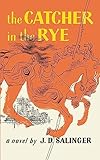
Editors Reads Verdict
Salinger's most celebrated and most controversial novel invented the alienated adolescent voice that has shaped American fiction and popular culture since 1951. Holden Caulfield is genuinely funny and genuinely sad — a consciousness rendered so precisely that readers either recognise themselves in him or find him intolerable.
What We Loved
- Holden's voice is one of American literature's great formal achievements — colloquial, ironic, unmistakable
- The portrait of adolescent isolation and the terror of adulthood is psychologically precise
- The Phoebe sections are genuinely moving — the best rendering of Holden's actual humanity
- The catcher fantasy is one of American literature's most resonant metaphors
Minor Drawbacks
- Holden's relentless use of 'phony' and his circular complaints can wear thin
- The novel's cultural impact has somewhat obscured its actual literary qualities
- The ending's therapeutic framing is deliberately unsatisfying — not everyone finds this a virtue
Key Takeaways
- → The terror of adulthood is partly the terror of having to pretend — of losing access to authentic feeling
- → The catcher fantasy — saving children from falling into adult corruption — is beautiful and impossible
- → Holden's alienation is both a personal condition and a social critique — the phoniness he sees is real
- → Connection, when Holden achieves it (with Phoebe, with the ducks, with the Museum of Natural History), is always with things that don't change
- → A breakdown can be the beginning of recovery rather than its failure
| Author | J.D. Salinger |
|---|---|
| Publisher | Little, Brown |
| Pages | 277 |
| Published | July 16, 1951 |
| Language | English |
| Genre | Fiction, Classic Literature, Coming of Age |
| Difficulty | Beginner |
| Best For | Readers who want to understand one of the century's most influential literary voices — and those who were ever seventeen and sure that the adult world was organised around pretence. |
How The Catcher in the Rye Compares
The Catcher in the Rye at a glance against 3 similar books readers weigh alongside it.
| Book | Author | Rating | Best for |
|---|---|---|---|
| The Catcher in the Rye (this book) | J.D. Salinger | ★ 4.3 | Readers who want to understand one of the century's most influential literary |
| Invisible Man | Ralph Ellison | ★ 4.7 | Every serious reader of American literature — *Invisible Man* is essential |
| On the Road | Jack Kerouac | ★ 4.1 | Readers interested in American cultural history and the Beat Generation — and |
| The Great Gatsby | F. Scott Fitzgerald | ★ 4.7 | Classic Fiction |
The Voice That Changed American Fiction
“If you really want to hear about it, the first thing you’ll probably want to know is where I was born, and what my lousy childhood was like, and how my parents were occupied and all before they had me, and all that David Copperfield kind of crap, but I don’t feel like going into it, if you want to know the truth.”
That opening — dismissive of its own novelistic tradition, addressed directly to the reader, performing the authenticity it claims — announced a new kind of American literary voice in 1951, and has influenced more novelists than any other first paragraph since the war.
Holden Caulfield, sixteen and recently expelled from Pencey Prep, wanders New York City for two and a half days before a mental breakdown that he is narrating from some unspecified therapeutic facility. His narration is, on its surface, a series of complaints about phoniness — the social performances and self-deceptions that Holden diagnoses in everyone he encounters. Beneath the surface, it is a portrait of extreme psychological distress, of someone who is genuinely incapable of finding a way to inhabit the adult world.
The Phoniness Problem
Holden’s central accusation — that almost everyone is a “phony” — has been read as adolescent narcissism (why should Holden’s perception be the standard?) and as genuine social critique (he is not entirely wrong about what he sees). The tension between these readings is the novel’s productive ambiguity: Holden is an unreliable narrator whose unreliability does not disqualify his observations.
What Holden fears in adulthood is the requirement to perform emotions you do not have, to pretend social solidarity with people you do not care about, to exchange the intensity of genuine feeling for the smooth functionality of social life. His terror is specifically the terror of inauthenticity — and the novel takes this terror seriously even while depicting its holder as immature, hypocritical, and occasionally insufferable.
The Catcher
The novel’s title comes from Holden’s fantasy: he imagines a field of rye at the edge of a cliff, full of children playing, and himself as the catcher — the person who prevents them from falling over the edge before they see it coming. His sister Phoebe correctly identifies his source as a misremembering of Robert Burns (“if a body meet a body”), but the fantasy stands as the novel’s deepest statement of what Holden wants: to protect innocence from the fall into adult corruption.
That he cannot be this is the novel’s sadness. He is himself falling, has been falling for years, and the catcher is not available.
Phoebe: The Antidote
The Phoebe sections — in which Holden visits his younger sister’s room at night, in which he watches her ride the carousel in the rain — are the novel’s most emotionally transparent moments, and the best evidence that Holden’s cynicism is a defence rather than a constitution. His love for Phoebe is uncomplicated and genuine, the one relationship in the novel not filtered through performance.
Our rating: 4.3/5 — The definitive portrait of adolescent alienation — essential for understanding American literary culture, and for recognising the seventeen-year-old still present in any adult.
A Voice That Defined a Genre
The lasting achievement of The Catcher in the Rye is its voice. Holden Caulfield’s restless, digressive, slang-soaked narration was so distinctive when it appeared that it effectively created a template for the adolescent narrator, and its echoes run through decades of coming-of-age fiction that followed. The voice is the book — its charm, its irritation, its sadness all carried in the rhythm of how Holden talks rather than in anything that happens to him. Salinger’s gamble was to let an unreliable, self-contradicting teenager narrate his own confusion without an adult frame to correct him, and the gamble is what gives the novel its enduring immediacy.
Alienation Beneath the Cynicism
Read carelessly, Holden seems merely a complainer cataloguing the “phonies” around him. Read more closely, the cynicism is armour over grief and fear — over the death of his brother, the loss of childhood innocence, and a terror of the adult world he cannot articulate. The famous image that gives the book its title, the wish to catch children before they fall off a cliff into adulthood, reveals what the bravado conceals: a desire to protect an innocence he feels himself losing. The novel’s power is in the gap between what Holden says and what he cannot bring himself to say.
Why It Still Divides Readers
Few canonical novels provoke such different reactions. Some readers find Holden’s voice perfectly capturing the loneliness and rage of adolescence; others find him insufferable, a privileged teenager feeling sorry for himself. Both responses are legitimate, and which one you have may depend partly on the age at which you read it — a book that lands like recognition at sixteen can read very differently at forty. That divisiveness is itself a sign of how completely Salinger committed to a single, unguarded perspective.
A Short Book With a Long Shadow
For all the controversy it has attracted over the decades — bans, debates, its strange association with notoriety — The Catcher in the Rye remains a brief, deceptively simple novel that can be read in a sitting and argued about for a lifetime. It captured something about postwar alienation and the pain of growing up that readers keep recognising, and its influence on the voice of modern fiction is hard to overstate. As a portrait of a young person at odds with a world he is not ready to enter, it has lost none of its raw immediacy.
Reading Guides
- Books Like The Catcher in the Rye: Teenage Alienation, Authenticity, and Phoniness
- Books Like Moon Palace: 11 Novels of Wandering, Chance, and American Identity
- 30 Best Fiction Books of All Time — The Ultimate Reading List
- The Great Gatsby vs The Catcher in the Rye: Which American Classic Should You Read First?
Frequently Asked Questions
What is "The Catcher in the Rye" about?
Holden Caulfield, expelled from his fourth prep school, wanders New York for three days before a breakdown — narrating his alienation with an intensity that defined adolescent literary voice.
Who should read "The Catcher in the Rye"?
Readers who want to understand one of the century's most influential literary voices — and those who were ever seventeen and sure that the adult world was organised around pretence.
What are the key takeaways from "The Catcher in the Rye"?
The terror of adulthood is partly the terror of having to pretend — of losing access to authentic feeling The catcher fantasy — saving children from falling into adult corruption — is beautiful and impossible Holden's alienation is both a personal condition and a social critique — the phoniness he sees is real Connection, when Holden achieves it (with Phoebe, with the ducks, with the Museum of Natural History), is always with things that don't change A breakdown can be the beginning of recovery rather than its failure
Is "The Catcher in the Rye" worth reading?
Salinger's most celebrated and most controversial novel invented the alienated adolescent voice that has shaped American fiction and popular culture since 1951. Holden Caulfield is genuinely funny and genuinely sad — a consciousness rendered so precisely that readers either recognise themselves in him or find him intolerable.
Ready to Read The Catcher in the Rye?
Check the current price on Amazon.
Check Price on Amazon (paid link)Prices and availability are subject to change. See Amazon for current price.
Review last updated: