Best Books for High School Students: Essential Reading List
The best books for high school students — classics and contemporary novels that challenge, inspire, and endure. From To Kill a Mockingbird to The Perks of Being a Wallflower.

The best books for high school students are not necessarily different from the best books for adults — the classics assigned in school are assigned because they are genuinely important, not simply because they are accessible. The Catcher in the Rye, Lord of the Flies, Fahrenheit 451: these books are in the curriculum because they raise the questions that matter most, in forms that reward reading at any age.
The list below includes the essential school classics alongside contemporary novels that the curriculum often misses — books that speak directly to high school experience with the same seriousness that the classics bring to universal themes.
The Essential School Classics
To Kill a Mockingbird — Harper Lee (1960)
The most important American novel about justice and moral courage, filtered through the eyes of Scout Finch, who watches her father Atticus defend a Black man falsely accused of rape in 1930s Alabama. Lee’s decision to narrate from a child’s perspective gives the novel its particular moral clarity — Scout sees the injustice before she has been taught to rationalise it — and Atticus’s famous defence has made him the defining fictional model of moral integrity in American culture.
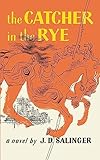
The Catcher in the Rye — J.D. Salinger (1951)
The canonical voice of adolescent alienation. Holden Caulfield’s contempt for ‘phoniness’ — for the performance of adult life that everyone around him seems to engage in cheerfully — resonates most strongly at exactly the age when the performance first becomes visible. Salinger’s first-person vernacular was unprecedented in American fiction and has influenced every subsequent voice in YA and literary fiction.
Lord of the Flies — William Golding (1954)
A group of British schoolboys stranded on an island without adults builds a society that rapidly descends into savagery. Golding’s allegory — about human nature, about the fragility of civilisation, about what happens when the structures that enforce social behaviour are removed — is the most efficiently disturbing of the classic school texts. The novel asks questions about human nature that have no comfortable answers.
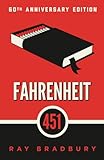
Fahrenheit 451 — Ray Bradbury (1953)
A fireman whose job is to burn books begins to question his society. Bradbury’s dystopia — a world in which books are banned because they make people unhappy by introducing complexity — is both a defence of reading and a warning about the specific pleasures of a culture that prefers entertainment to thought. The burning sequences are among the most visceral in American science fiction.
Contemporary Essential Reading
The Perks of Being a Wallflower — Stephen Chbosky (1999)
The most emotionally immediate novel about high school experience in the last thirty years. Charlie’s freshman year — the friendships, the music, the trauma gradually revealed — is rendered through letters to an anonymous ‘friend’ with a directness and vulnerability that no first-person narrator achieves. Essential for any high school reader who has ever felt like they were watching life from the outside.
The Outsiders — S.E. Hinton (1967)
Written by a sixteen-year-old about the specific experience of adolescent class conflict in Tulsa, Oklahoma, The Outsiders captures the feeling of loyalty, violence, and mortality that structures teenage social life in a way that no adult author has quite managed. Ponyboy Curtis’s voice is one of the most authentic in YA fiction.
Science Fiction for High Schoolers
Ender’s Game — Orson Scott Card (1985)
The most gripping high-school science fiction novel and one of the most ethically complex. Ender Wiggin is trained from childhood to command humanity’s forces against an alien invasion — and the novel’s revelation about the nature of his final ‘exam’ raises genuine questions about deception, the use of child soldiers, and the ethics of total war that have no easy answers. It reads like an action novel but rewards the questions it raises.
The Giver — Lois Lowry (1993)
The gateway dystopia — shorter and more accessible than 1984 or Brave New World, but raising the same essential questions about what we sacrifice for safety and social harmony. Jonas discovers that his community’s utopian stability is built on a specific erasure of memory and experience, and the novel’s ending remains one of the most debated in YA fiction.
Why These Books Belong in a High School Education
The selection of books for high school readers carries a weight that recreational reading lists do not, because these are formative years in which literature can decisively shape a young person’s intellectual and moral development, and the books chosen for this stage have a lasting influence on the readers, thinkers, and citizens that students become. High school is the period when young people are first capable of engaging seriously with complex literature, when their minds are expanding rapidly and their characters are still being formed, and the books they encounter during these years can open doors of understanding, ignite lifelong passions, and plant ideas that will mature over a lifetime. The titles on this list have earned their place in a high school education through their proven capacity to reward this kind of formative engagement — works substantial enough to challenge developing minds, rich enough to repay close reading and discussion, and significant enough to matter in the larger conversation of literature and ideas. Many are established classics whose presence in the curriculum reflects a hard-won consensus about their value, books that have demonstrated across generations their power to educate and to move young readers. Others are chosen for their particular relevance to the concerns and experiences of adolescence, their accessibility to readers still developing their literary capacities, or their ability to introduce important themes and ideas in a form that students can grasp and build upon. What they all share is their suitability for this crucial developmental moment, their capacity to do the serious work that literature can do in a young life: to expand understanding, to cultivate empathy, to develop critical thinking, and to introduce the great questions and themes that a thoughtful life will continue to explore. These are not merely books to be read but books to grow with.
Literature as Moral and Civic Formation
Among the most important functions that literature serves in a high school education, and a primary consideration in the selection of these books, is its role in moral and civic formation — its capacity to develop in young people the empathy, ethical understanding, and engaged citizenship that a good life and a healthy society require. Adolescence is a critical period for moral development, the time when young people move beyond the simple rule-following of childhood toward a more complex and independent ethical understanding, and literature is one of the most powerful instruments for guiding this growth. By inhabiting the lives of characters unlike themselves, students develop the empathy that is the foundation of moral life, learning to understand experiences, perspectives, and circumstances beyond their own and to recognize the full humanity of others. By grappling with the moral dilemmas and ethical complexities that serious literature presents, they develop the capacity for nuanced ethical reasoning, learning that real moral questions rarely have simple answers and that thoughtful judgment requires weighing competing values and perspectives. And by encountering literature that addresses questions of justice, freedom, prejudice, power, and the responsibilities of citizenship, they begin to develop the civic understanding and engagement that a democracy depends upon. The books on this list are chosen partly for this formative power, their ability to contribute to the development of young people into empathetic, ethically thoughtful, and civically engaged adults. This is not a matter of literature delivering simple moral lessons, which the best books never do, but of literature cultivating the deeper capacities — empathy, ethical imagination, critical judgment — from which genuine moral and civic maturity grows. In an age when these capacities are urgently needed, the role of literature in forming them is among the strongest arguments for its central place in education.
From Assigned Reading to Genuine Engagement
Perhaps the greatest challenge and the greatest opportunity in high school reading is the transformation of literature from a chore imposed by the curriculum into a source of genuine engagement, discovery, and even joy — the conversion of the reluctant student into a real reader. Too often, the experience of assigned reading in school produces the opposite of its intended effect, breeding resentment and boredom rather than appreciation, and turning young people away from literature precisely when they might have been won to it. The books on this list, and the way they are approached, can make the difference between these outcomes. The goal is not merely to have students complete the assignment but to create the conditions for authentic encounter — for the moment when a book ceases to be a task and becomes a genuine experience, when a student finds in literature something that speaks to their own life, illuminates their own questions, or simply seizes their attention and will not let go. This transformation is most likely when the books chosen are genuinely engaging rather than merely improving, when they connect to the real concerns and experiences of young people, and when they are approached as living works to be experienced rather than dead texts to be dissected. The stakes of this transformation are high, because the high school years often determine a person’s lifelong relationship with reading: students who discover during these years that literature can be a source of pleasure, insight, and meaning are likely to remain readers for life, while those who learn only that reading is a tedious obligation may never return to it. The books on this list are selected with this hope in mind — that they might be the ones to turn assigned reading into genuine engagement, and to send students out of high school not merely having read but having become readers.
Reading Order Suggestions
Essential sequence: The Outsiders → The Catcher in the Rye → Lord of the Flies → To Kill a Mockingbird.
Contemporary first: Perks of Being a Wallflower → The Outsiders → Catcher in the Rye.
Science fiction path: The Giver → Ender’s Game → Fahrenheit 451 → 1984.
Frequently Asked Questions
What are the best books for high school students to read?
The classics that most high school students encounter — To Kill a Mockingbird, The Catcher in the Rye, Lord of the Flies, Fahrenheit 451 — are genuine masterworks, not just school assignments, and deserve to be read on their own terms. Beyond the school list, The Perks of Being a Wallflower is the most emotionally immediate coming-of-age novel of the last thirty years. The Giver is a gateway to dystopian literature and essential for any reader interested in science fiction. Ender's Game combines genuine plot momentum with ideas about leadership, ethics, and the cost of winning.
What classics are typically read in high school?
The most commonly assigned classics in American high schools include To Kill a Mockingbird (Harper Lee), The Catcher in the Rye (J.D. Salinger), Lord of the Flies (William Golding), Of Mice and Men (John Steinbeck), Fahrenheit 451 (Ray Bradbury), The Great Gatsby (F. Scott Fitzgerald), 1984 (George Orwell), and Romeo and Juliet (Shakespeare). These are assigned because they raise important questions about justice, freedom, identity, and the human condition in accessible forms — they are also genuinely good books.
What should high school students read beyond the required list?
The Perks of Being a Wallflower by Stephen Chbosky is the most emotionally honest novel about high school friendship and trauma. Ender's Game by Orson Scott Card is a genuine page-turner that also raises serious ethical questions. The Hitchhiker's Guide to the Galaxy by Douglas Adams is the best introduction to comic science fiction. Brave New World by Aldous Huxley is the dystopia that most rewards reading alongside 1984. For non-fiction, The Glass Castle by Jeannette Walls is an accessible memoir that reads like a novel.
Is The Catcher in the Rye appropriate for high school students?
Yes — The Catcher in the Rye was not written as a young adult novel and has always been read by adults as well as teenagers, but its subject (Holden Caulfield's three days in New York after being expelled from school) is directly relevant to high school experience. Holden's contempt for 'phoniness' and his longing for authenticity resonate most strongly at the age when the performance of identity feels most oppressive. The novel contains some profanity and references to sex, but nothing beyond what high school students encounter in contemporary culture.