Best Coming-of-Age Novels: Essential Reading List
The best coming-of-age novels — from The Catcher in the Rye and The Perks of Being a Wallflower to Educated and The Kite Runner. Books that capture what it's like to become who you are.
The best coming-of-age novels do something that other novels cannot: they render the experience of becoming a self — the first encounters with injustice, with love, with loss, with the gap between the world as you expected it and the world as it is — with a freshness that adult fiction rarely achieves. This freshness is not naiveté; the best coming-of-age novels are written from the outside looking in, by authors who understand what their protagonists do not yet understand.
The list below ranges from canonical American classics to contemporary YA to adult literary fiction that uses coming-of-age as its framework.
The Essential Novels
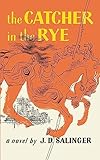
The Catcher in the Rye — J.D. Salinger (1951)
The canonical American coming-of-age novel. Holden Caulfield is expelled from his fourth prep school and spends three days in Manhattan before returning home — and the novel is his interior monologue during those days: his contempt for “phoniness,” his longing for his dead brother Allie, his visit to his little sister Phoebe, his disastrous encounter with an old teacher. Holden’s voice — the first-person adolescent vernacular, the specific rhythm of teenage self-justification and self-awareness — was unprecedented in American fiction and has influenced virtually every subsequent YA and literary narrator.
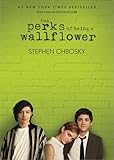
The Perks of Being a Wallflower — Stephen Chbosky (1999)
The most emotionally immediate coming-of-age novel of the last thirty years. Charlie, a shy fifteen-year-old, writes letters to an anonymous “friend” during his freshman year of high school — navigating friendships, first love, and the gradual revelation of the trauma that explains his particular kind of sensitivity and isolation. Chbosky’s epistolary structure gives the novel an intimacy unusual even in first-person narration, and the book’s conclusion — the revelation of what happened to Charlie — earns its emotional weight through everything that preceded it.
The Outsiders — S.E. Hinton (1967)
The novel that established that teenagers could write seriously about teenage experience. Hinton wrote The Outsiders at sixteen, and its account of class conflict and gang rivalry in 1960s Tulsa — the Greasers and the Socs — is both sociologically specific and universally legible. Ponyboy Curtis’s voice captures adolescent loyalty, violence, and the first encounters with mortality with a directness that older writers have rarely managed.
Adult Literary Fiction in the Coming-of-Age Mode
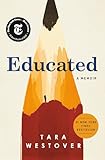
Educated — Tara Westover (2018)
The purest coming-of-age narrative in recent non-fiction. Westover grows up in a survivalist family in rural Idaho with no formal education, and the memoir is the account of her journey from that world to a Cambridge PhD — which is also the account of forming a self that is distinct from the self her family required her to be. The conflict at the memoir’s centre — loyalty to the family that formed her versus the knowledge she has acquired about what that formation involved — is the essential coming-of-age dilemma rendered without resolution.
The Kite Runner — Khaled Hosseini (2003)
Amir’s failure to protect his friend Hassan is a coming-of-age failure — the recognition that he is not who he wanted to be, reached at an age when the recognition can no longer be undone. The novel is adult historical fiction but its essential structure is bildungsroman: the formation of an identity through the experience of failure and the subsequent attempt to live with and eventually repair it.
Classic Coming-of-Age
Great Expectations — Charles Dickens (1860-61)
The greatest Victorian bildungsroman. Pip’s movement from the marshes of Kent to London society, and the disillusionment that follows — the revelation of who his benefactor actually is, the cost of his shame about his origins, his eventual understanding of what Joe Gargery’s loyalty was worth — is one of the most psychologically precise accounts of class aspiration and its consequences in English fiction.
Jane Eyre — Charlotte Brontë (1847)
Jane Eyre is both romance and bildungsroman: the account of a woman who maintains her moral independence and her sense of self-worth through conditions — poverty, subjugation, temptation, isolation — designed to destroy both. Jane’s capacity to say no — to Rochester, to St. John Rivers, to the various configurations of the world that would have her be something other than herself — is the spine of the novel and its most important subject.
The Universal Passage
The coming-of-age novel endures as one of literature’s most beloved and enduring forms because it depicts a passage that every human being undergoes — the transition from childhood to adulthood, from innocence to experience, from the unformed self to the formed one — and in doing so it speaks to a universal dimension of human experience that every reader recognizes from their own life. Whatever the particular circumstances of the protagonist, whatever the time, place, and culture in which the story unfolds, the coming-of-age novel dramatizes a transformation that all people share, the fundamental human passage from youth to maturity that constitutes one of the central experiences of every life. This universality is the deep source of the form’s enduring appeal, for every reader has undergone, or is undergoing, or will undergo this passage, and the coming-of-age story therefore speaks to something common to all human experience, offering the recognition of one’s own journey reflected in the protagonist’s. The form captures the particular intensities of this transitional period — the first encounters with the adult realities of love, loss, disillusionment, and moral complexity; the painful shedding of childhood innocence; the difficult formation of an identity and a place in the world; the discovery of who one is and who one will become — experiences that mark the passage to adulthood and that resonate with every reader who has lived through them. The coming-of-age novel thus taps into a universal reservoir of experience, allowing readers to recognize their own formative passage in the protagonist’s, to revisit and understand their own coming of age through the lens of fiction, and to feel the deep recognition that comes from seeing a shared human experience rendered in art. This universality ensures that the coming-of-age novel will never lose its power, for as long as human beings grow from childhood to adulthood, the literature that depicts this passage will continue to speak to the deepest experiences of every reader.
The Loss of Innocence
At the heart of the coming-of-age novel lies a theme of profound and sometimes painful significance: the loss of innocence, the inevitable and irreversible passage from the protected, unknowing world of childhood into the harder, more complex, and often disillusioning reality of adult experience — and the finest works in the form explore this loss with a depth and honesty that illuminate one of the most significant transitions of human life. The movement from innocence to experience is the essential drama of the coming-of-age story, the transformation through which the protagonist confronts realities from which childhood had sheltered them — the existence of cruelty, injustice, and moral complexity; the disillusioning gap between the ideals of youth and the compromises of the adult world; the painful knowledge of loss, betrayal, and the limits of life — and is changed irrevocably by the encounter. This loss of innocence is depicted in the best coming-of-age novels not as a simple tragedy but as a complex and necessary transformation, for while something precious is undeniably lost in the passage from the protected world of childhood to the harder reality of adulthood, something valuable is also gained: a deeper understanding, a more honest engagement with reality, the wisdom and maturity that only experience can bring. The greatest works in the form capture both dimensions of this transformation, the genuine loss and the genuine gain, the mourning for a vanished innocence and the hard-won wisdom of experience, and in doing so they illuminate the bittersweet truth of growing up, the necessary trade of innocence for understanding that constitutes the passage to maturity. This exploration of the loss of innocence gives the coming-of-age novel its emotional depth and its lasting resonance, for it speaks to an experience that every reader has undergone, the irreversible passage from the protected world of childhood into the complex reality of adult life, and the mingled loss and gain that this transformation entails.
The Search for Identity and Belonging
The coming-of-age novel is, at its core, a story about the search for identity — the protagonist’s struggle to discover who they are, what they believe, and where they belong — and this search, which lies at the heart of the form, speaks to one of the most fundamental and universal of human concerns. The passage to adulthood is, above all, a passage of identity formation, the period in which a young person must move beyond the inherited identity of childhood, the self defined by family and circumstance, toward an identity of their own choosing and making, working out what they value, what they believe, who they wish to become, and where and to whom they belong. The coming-of-age novel dramatizes this essential search, following the protagonist through the often difficult and confusing process of forming a self, of distinguishing their own identity from the expectations and definitions imposed by others, and of finding their place in a world that does not automatically provide one. This search for identity is frequently bound up with a search for belonging, for the young person’s effort to discover who they are is inseparable from their effort to find where and with whom they belong, to locate the community, the relationships, and the place in the world that will sustain and confirm their emerging identity. The greatest coming-of-age novels explore both dimensions of this search, the formation of an authentic self and the discovery of a place to belong, illuminating the difficult work of becoming a person that constitutes the central task of growing up. This focus on the search for identity and belonging gives the form its deep significance and its universal resonance, for the questions it explores — who am I, what do I believe, where do I belong — are among the most fundamental that any human being confronts, and the coming-of-age novel’s exploration of these questions speaks to a search that every reader has undertaken in their own passage to adulthood, and that some continue to pursue throughout their lives.
Reading Order
Classic American: The Catcher in the Rye → The Outsiders → The Perks of Being a Wallflower.
For adult readers: Educated → Great Expectations → The Kite Runner.
By emotional intensity: The Perks of Being a Wallflower (most immediate) → The Catcher in the Rye → Educated (most demanding).
Frequently Asked Questions
What is a coming-of-age novel?
A coming-of-age novel (or Bildungsroman, the German term) follows a protagonist's psychological and moral growth from youth to adulthood — the experience of forming an identity, understanding the world's complexity for the first time, and making choices that define who you will become. The genre spans from Dickens's Great Expectations to Tara Westover's Educated: what distinguishes it is not the age of the protagonist but the process of self-formation at the novel's centre.
What is the best coming-of-age novel of all time?
The Catcher in the Rye by J.D. Salinger is the canonical American coming-of-age novel — Holden Caulfield's voice captures adolescent alienation and resistance to the adult world's phoniness with such precision that generations of readers have experienced it as autobiography. Great Expectations by Dickens is the greatest Victorian coming-of-age novel. For contemporary readers, The Perks of Being a Wallflower by Stephen Chbosky reaches a similar emotional depth with a more immediate prose style.
Is The Catcher in the Rye appropriate for adults?
Absolutely — The Catcher in the Rye was not written as a young adult novel (the category barely existed in 1951) and has always been read by adults as well as teenagers. Many readers who read it at fifteen find it means something completely different at thirty. Holden's specific kind of alienation — the refusal to perform what adulthood seems to require — is recognisable at any age, though it hits differently depending on how far you are from the experience he is describing.
What coming-of-age novels are good for adults who don't usually read YA?
Great Expectations, Jane Eyre, and David Copperfield are all coming-of-age narratives in the Victorian tradition — serious, long, and not marketed to teenagers. Educated by Tara Westover is a memoir rather than a novel, but the process of self-formation it describes is the purest coming-of-age narrative in recent non-fiction. The Kite Runner by Khaled Hosseini is a coming-of-age story framed as adult historical fiction. None of these would be classified as YA, though all share the genre's essential subject.