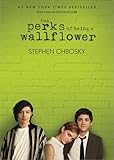
Editors Reads Verdict
Chbosky's epistolary coming-of-age novel has earned its classic status through the specific honesty of Charlie's voice — his blend of acute social observation and emotional innocence captures something essential about adolescence that more polished narratives miss.
What We Loved
- The epistolary format creates an intimacy that conventional narration cannot achieve
- Charlie's voice is specific and original — neither precociously sophisticated nor artificially naive
- The treatment of trauma and its delayed recognition is handled with unusual accuracy
- The friendship between Charlie, Sam, and Patrick is genuinely warm and complex
Minor Drawbacks
- The reveal about Charlie's trauma has been criticized as somewhat schematic
- Some cultural references are dated in ways that affect immersion for new readers
- The book has been challenged and banned repeatedly, limiting its school accessibility
Key Takeaways
- → The wallflower position — observing without participating — is both safety and deprivation
- → Participation, not just observation, is what makes you feel alive
- → Trauma that is unprocessed continues to operate in the background of every experience
- → The friends who invite you into their world when you expect rejection are the ones who matter
- → Being infinite — a moment of pure presence and connection — is available to everyone
| Author | Stephen Chbosky |
|---|---|
| Publisher | Pocket Books |
| Pages | 213 |
| Published | February 1, 1999 |
| Language | English |
| Genre | Young Adult, Coming-of-Age |
| Difficulty | Beginner |
| Best For | YA readers and adults revisiting the book that many remember as the one that felt like it was written for them specifically. |
How The Perks of Being a Wallflower Compares
The Perks of Being a Wallflower at a glance against 3 similar books readers weigh alongside it.
| Book | Author | Rating | Best for |
|---|---|---|---|
| The Perks of Being a Wallflower (this book) | Stephen Chbosky | ★ 4.3 | YA readers and adults revisiting the book that many remember as the one that |
| A Little Life | Hanya Yanagihara | ★ 4.4 | Literary fiction readers prepared for an emotionally demanding novel about |
| Looking for Alaska | John Green | ★ 4.2 | YA readers seeking literary depth and emotional intensity, particularly those |
| The Catcher in the Rye | J.D. Salinger | ★ 4.3 | Readers who want to understand one of the century's most influential literary |
Dear Friend
Charlie is fifteen and writing letters to someone he has never met. The letters are a confessional frame — Charlie tells this unnamed friend things he can’t tell anyone in his life directly — and their format shapes everything: the intimacy, the unreliability, the gaps that the reader must fill.
Stephen Chbosky wrote The Perks of Being a Wallflower as a love letter to the teenagers he had been and the books that had reached him when he felt unreachable. The 1999 publication found its audience not through conventional marketing channels but through word-of-mouth among teenagers who kept pressing copies on each other with the specific urgency of someone who has found a book that explains them.
The Wallflower Position
Charlie is an observer. He notices everything — the social dynamics of high school, the specific qualities of his English teacher’s sadness, the way his sister’s boyfriend’s cruelty operates beneath his charming exterior — and reports these observations in his letters with a combination of accuracy and emotional innocence that is the book’s distinctive register.
He is not a misfit in the way that misfit narratives usually portray: he is not particularly awkward, he has genuine intellectual gifts, and when Sam and Patrick adopt him into their friend group, he adapts without the elaborate social difficulty that other coming-of-age novels use as their central engine.
What he lacks is participation. He watches, he understands, he processes — but he doesn’t fully inhabit his own life. The book is about learning to do that.
The Trauma Underneath
The Perks of Being a Wallflower builds toward a revelation about Charlie’s past that explains his passivity and his specific form of emotional innocence. The reveal has been criticized as somewhat constructed — trauma functioning as a plot device rather than a fully integrated psychological reality. The criticism has some merit, though the book’s handling of delayed recognition and dissociation is more accurate than most YA fiction manages.
The climactic sequence, in which the suppressed memory surfaces, is written with genuine emotional power, and the understanding it produces for both Charlie and the reader is the novel’s central gift.
We Are Infinite
The tunnel scene — Charlie, Sam, and Patrick in a truck bed, music playing, the speed and the city lights and the specific feeling of being completely present and completely alive — has become one of YA fiction’s most replicated moments. “We are infinite” is the sort of statement that should be embarrassing but isn’t, because Chbosky earned it.
Our rating: 4.3/5 — A coming-of-age classic whose epistolary format and specific emotional register have made it one of the most recommended books in the history of teenage reading.
A Voice of Genuine Intimacy
The defining quality of The Perks of Being a Wallflower is its voice. Told entirely through letters that the shy, observant Charlie writes to an unnamed “friend,” the novel creates an unusual intimacy, as if the reader were the confidant receiving these private, vulnerable confessions. Charlie’s sincere, searching, sometimes naive narration gives the book its emotional directness, and that epistolary form — the sense of overhearing a real person trying to make sense of his life — is central to why the novel has meant so much to so many young readers.
The Pain and Wonder of Adolescence
Chbosky captures the peculiar intensity of being a teenager — the loneliness, the longing to belong, the overwhelming first experiences of friendship, love, and music — with a tenderness that avoids both condescension and false drama. Charlie’s gradual emergence from isolation, drawn out by a circle of older friends who accept him, is rendered with real feeling, and the novel honours the way adolescence can be simultaneously the best and the worst of times. The famous line about feeling infinite captures the book’s gift for elevating ordinary teenage moments into something transcendent.
Difficult Material, Handled With Care
Beneath its coming-of-age warmth, the novel deals frankly with serious and painful subjects — mental illness, trauma, abuse, and the long shadow they cast — and part of its power is its refusal to look away from them. Chbosky handles this difficult material with sensitivity rather than sensationalism, and the slow revelation of what lies behind Charlie’s fragility gives the book its emotional weight. Readers should know it engages directly with these subjects, which is exactly why it has offered recognition and comfort to so many.
Why It Became a Touchstone
The Perks of Being a Wallflower has become a defining novel of adolescence, beloved across generations of young readers and frequently both taught and challenged, because it takes the inner life of a sensitive teenager entirely seriously. It validates the feeling of being on the outside looking in, and it insists that such young people are worthy of attention, love, and a story of their own. As an intimate, emotionally honest, and deeply compassionate coming-of-age novel, it remains one of the most cherished books of its kind, and the clear starting point for readers new to Chbosky. Few coming-of-age novels have spoken so directly to the experience of being young and unsure, and fewer still have been pressed from reader to reader with quite the same devotion — a measure of how completely it captures the loneliness and the wonder of those years.
A Soundtrack and a Sensibility
Part of what gives the novel its lasting hold on readers is its sensibility — the mixtapes Charlie makes, the books a teacher presses on him, the particular way music and literature become lifelines for a lonely young person discovering that art can name what he cannot. Chbosky captures the intensity with which adolescents attach to songs, novels, and friends, and the way those attachments can save a life. That texture, more than any single plot point, is why so many readers have found a version of themselves in Charlie, and why the book has remained a touchstone passed quietly from one young reader to the next across more than two decades.
Frequently Asked Questions
What is "The Perks of Being a Wallflower" about?
Through a series of letters to an anonymous friend, fourteen-year-old Charlie navigates his first year of high school while carrying secrets he doesn't yet understand.
Who should read "The Perks of Being a Wallflower"?
YA readers and adults revisiting the book that many remember as the one that felt like it was written for them specifically.
What are the key takeaways from "The Perks of Being a Wallflower"?
The wallflower position — observing without participating — is both safety and deprivation Participation, not just observation, is what makes you feel alive Trauma that is unprocessed continues to operate in the background of every experience The friends who invite you into their world when you expect rejection are the ones who matter Being infinite — a moment of pure presence and connection — is available to everyone
Is "The Perks of Being a Wallflower" worth reading?
Chbosky's epistolary coming-of-age novel has earned its classic status through the specific honesty of Charlie's voice — his blend of acute social observation and emotional innocence captures something essential about adolescence that more polished narratives miss.
Ready to Read The Perks of Being a Wallflower?
Check the current price on Amazon.
Check Price on Amazon (paid link)Prices and availability are subject to change. See Amazon for current price.
Review last updated: