Best Books About Friendship: Essential Reading List
The best books about friendship — from A Little Life and The Kite Runner to My Brilliant Friend and Tuesdays with Morrie. Literature's most moving friendships.
Books about friendship are books about the self — because the friendships we form reveal who we are and who we are becoming, and because the best friendships in literature show us something about human connection that is harder to see in romantic love or family relationships: the chosen quality of it, the specific pleasure of being known by someone who has no obligation to know you.
The novels below range from the intensity of A Little Life’s male friendships to the competition and solidarity of Ferrante’s Elena and Lila, from the mentorship of Tuesdays with Morrie to the adolescent rescue of The Perks of Being a Wallflower.
The Great Friendship Novels
A Little Life — Hanya Yanagihara (2015)
The most intense treatment of friendship in contemporary literary fiction. Four men — Willem, JB, Malcolm, and Jude — meet at college and remain bound together across decades of New York life, success, and catastrophe. The novel is structured around the friendship between Willem, an actor, and Jude, a lawyer whose childhood trauma is revealed in layers throughout the book — and the friendship between them, which becomes something more than friendship without losing the essential quality of friendship, is rendered with a precision and emotional force that has no equivalent in recent fiction.
Yanagihara’s decision to track a group of friends rather than a romantic couple allows her to examine what friendship sustains and what it cannot — the specific way that friends who have known each other for decades hold versions of each other that the individuals can no longer access alone.
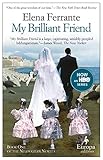
My Brilliant Friend — Elena Ferrante (2011)
The most acclaimed treatment of female friendship in contemporary fiction, and the first volume of the Neapolitan Novels — four books following Elena and Lila from childhood in postwar Naples through their entire lives. Elena narrates from old age, summoned back to her earliest memories of Lila by the older woman’s mysterious disappearance.
The friendship between Elena and Lila is competitive, resentful, supportive, defining, and ultimately unresolvable — neither woman can escape what the other means to her. Ferrante’s rendering of the specific way female friendship operates under conditions of poverty, limited opportunity, and social constraint is unlike anything else in fiction.
Friendship and Betrayal
The Kite Runner — Khaled Hosseini (2003)
The most widely read novel about friendship and its betrayal. Amir and Hassan grow up together in Kabul, the son of a wealthy Pashtun and the son of his Hazara servant — and the novel is the story of Amir’s failure to protect Hassan when it mattered most, and the decades-long reckoning that follows. Hosseini’s treatment of friendship across the lines of class and ethnicity, and of what betrayal does to the person who commits it, is psychologically precise and emotionally devastating.
The novel is also a friendship between father and son — and between Afghanistan and the Afghan diaspora — that adds resonance to the central betrayal.
Mentorship and Chosen Bonds
Tuesdays with Morrie — Mitch Albom (1997)
The most beloved memoir about mentorship and friendship. Mitch Albom reconnects with his former sociology professor Morrie Schwartz, who is dying of ALS, and visits him every Tuesday. What follows is both a friendship renewed and a course of instruction — Morrie’s final teachings on love, work, aging, death, and what constitutes a life well lived.
The book’s power comes from the specificity of what Morrie teaches and the honesty with which Albom admits how far he has drifted from what he was taught. The friendship is also about the mentor’s gift to the student: being given permission to matter, to choose differently, to return.
Adolescent Friendship
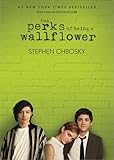
The Perks of Being a Wallflower — Stephen Chbosky (1999)
The most emotionally immediate account of friendship as rescue. Charlie, fifteen and isolated, finds his first real friends in Sam and Patrick — older students who take him under their protection, introduce him to music and experience, and see him in ways that no one else has. The friendship is not without complexity (Charlie’s love for Sam is more than friendly, Patrick’s life has its own difficulties) but its essential quality — the experience of being found and claimed — is rendered with unusual directness.
For readers who experienced friendship as the thing that made adolescence survivable, Perks captures that experience more precisely than almost any other novel.
Classic Friendships
The Adventures of Huckleberry Finn — Mark Twain (1884)
The foundational American friendship novel. Huck Finn and Jim — the white boy from a violent household and the enslaved man seeking freedom — travel down the Mississippi together, and their friendship is the novel’s moral centre: the relationship through which Huck works out what he actually believes about human worth and what he is willing to do for another person. Twain’s genius is to present this as comic adventure while making the moral stakes absolutely clear.
The Relationship We Choose
Friendship occupies a singular place among human relationships, and the literature that explores it illuminates what makes these bonds so distinctive: that friendship, almost alone among our deepest attachments, is freely chosen rather than given. We do not choose our families, and even romantic love is shadowed by biological drives and social expectations, but friendship is the relationship of pure election, entered into for no reason other than mutual affinity, affection, and the simple pleasure of another’s company. This voluntary quality gives friendship a peculiar purity and a peculiar fragility, for it is sustained by nothing but the ongoing choice of both parties to value and maintain it, unsupported by the bonds of blood, law, or biological imperative that hold other relationships together. The literature of friendship explores this distinctive character, illuminating bonds that exist purely because two people have chosen each other, and that endure only as long as that mutual choice persists. This is why great friendships in literature can be so moving, for they represent a kind of love freely given and freely received, a connection that two people have built and maintained through nothing but their own continued devotion. The voluntary nature of friendship also makes it, in some ways, the truest mirror of who we are, for our friends reflect our chosen affinities and values, the people we have selected as companions in life. The best books about friendship capture this distinctive quality of the chosen bond, exploring relationships that exist purely through mutual election and affection, and illuminating one of the most valuable and least examined of human connections: the love between friends, freely given, that asks nothing and offers everything.
The Friendships That Shape a Life
The literature of friendship reveals how profoundly these chosen bonds shape the course and character of a human life — how friends form us, sustain us, and accompany us through the passages of existence, often influencing who we become as decisively as family or circumstance. We tend to underestimate the formative power of friendship, treating it as a pleasant accompaniment to life rather than one of its central shaping forces, but the great books about friendship correct this underestimation, revealing how deeply our friends influence and define us. Friends shape us through their influence on our values, tastes, and aspirations, for we become, in part, like those we choose to spend our lives among, absorbing their perspectives and being drawn by their example. They sustain us through the difficulties of existence, offering the support, understanding, and companionship that help us endure life’s trials and that make its joys richer for being shared. And they accompany us through the passages of life, the friendships of childhood, youth, and maturity marking the stages of our journey and providing the continuity of companionship that gives life much of its meaning. The literature of friendship illuminates all these dimensions of friendship’s formative power, depicting bonds that shape, sustain, and accompany the characters who form them, and revealing how decisively our chosen companions influence the course and character of our lives. This recognition of friendship’s formative power is among the most valuable contributions of the literature, for it corrects the tendency to undervalue these chosen bonds and reveals friendship as one of the central shaping forces of a human life, as influential in its way as the families we are born into and the circumstances we cannot choose.
The Trials and Endurance of Friendship
The most powerful literature of friendship explores not merely the pleasures of these bonds but their trials and their endurance — the conflicts, betrayals, separations, and changes that test friendship, and the remarkable capacity of the deepest friendships to survive and even deepen through difficulty. Friendship, for all its pleasures, is not immune to trial, and the great books about friendship often find their deepest material in the testing of these bonds: the conflicts and misunderstandings that strain them, the betrayals that threaten to destroy them, the separations of distance and time that test their durability, and the changes in circumstance and character that can erode or transform them. These trials reveal the true nature and strength of friendship, for it is in the testing that the depth of a bond is proven, and the friendships that survive conflict, betrayal, separation, and change demonstrate a strength and a value that untested bonds cannot match. The literature of friendship explores these trials with insight and honesty, refusing the sentimental picture of effortless and untroubled friendship in favor of a fuller and truer depiction of bonds that must weather difficulty to endure. And in depicting the endurance of friendship through trial, the best books reveal the remarkable resilience of the deepest friendships, their capacity not merely to survive difficulty but sometimes to deepen through it, the bond strengthened by the trials it has weathered and the forgiveness, understanding, and renewed commitment that overcoming difficulty requires. This exploration of the trials and endurance of friendship gives the literature its depth and its truth, illuminating both the fragility and the remarkable durability of these chosen bonds, and revealing that the deepest friendships, like the deepest of all human relationships, are proven and strengthened by the difficulties they survive. The friendships that endure through trial are among the most valuable of human possessions, and the literature that explores their testing and their endurance illuminates one of the deepest and most rewarding of human connections.
Reading Order
Start with contemporary: A Little Life → The Kite Runner → My Brilliant Friend.
For female friendship specifically: My Brilliant Friend → The Color Purple → The Perks of Being a Wallflower.
By emotional intensity: Tuesdays with Morrie (warmest) → The Kite Runner → A Little Life (most intense).
Frequently Asked Questions
What is the best novel about friendship?
A Little Life by Hanya Yanagihara is the most intense literary treatment of male friendship in contemporary fiction — four men who meet at college and remain bound together across decades, with the friendship between Willem and Jude at the novel's centre rendered with extraordinary psychological depth and emotional force. My Brilliant Friend by Elena Ferrante is the most acclaimed treatment of female friendship — Elena and Lila's relationship, competitive and loving simultaneously, is among the most complex friendships in fiction. The Kite Runner by Khaled Hosseini is the most widely read novel about friendship and its betrayal.
What are the best books about female friendship?
My Brilliant Friend by Elena Ferrante is the gold standard — Elena and Lila's friendship spans childhood, adolescence, and adulthood in postwar Naples, with Ferrante rendering the specific ways that female friendship can be simultaneously supportive and competitive, loving and resentful. The Color Purple by Alice Walker is the most important American novel about female friendship and solidarity. The Perks of Being a Wallflower features Sam and Patrick's friendship with Charlie as one of the most moving depictions of friendship as rescue.
What is Tuesdays with Morrie about?
Tuesdays with Morrie by Mitch Albom is a memoir about the author's weekly visits to his former professor Morrie Schwartz, who is dying of ALS. The two meet every Tuesday, and Morrie — a sociology professor who had been Albom's mentor in college — teaches his final lessons about life, love, aging, and death. The book is both a friendship story and a meditation on what matters, distilled through the specific form of a mentor's final teachings to a student who had lost his way.
What is My Brilliant Friend about?
My Brilliant Friend by Elena Ferrante is the first book in the Neapolitan Novels quartet, following Elena Greco and Lila Cerullo from childhood through old age in Naples. Elena narrates their friendship — which begins in competition (who can be the most brilliant, the most successful, the most free?) and deepens into something that neither woman can fully understand or name. The series is a study of how female friendship works under conditions designed to limit both women's possibilities, and how the relationship shapes each woman's sense of self across a lifetime.