Best Books About Family: Essential Reading List
The best books about family — from East of Eden and One Hundred Years of Solitude to The Corrections and Homegoing. Family novels that reveal how we are shaped by where we come from.
By Lena Fischer
Books about family are books about inheritance — not just biological but psychological, moral, and historical. The family novels that endure are those that treat the family not merely as a setting but as a structure: the primary environment in which character is formed, freedom is negotiated, and the past is either repeated or escaped.
The novels below range from the multigenerational sweep of One Hundred Years of Solitude to the intimate contemporary realism of The Corrections, from the historical weight of Homegoing to the memoir clarity of The Glass Castle.
The Great Family Sagas
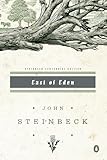
East of Eden — John Steinbeck (1952)
The most ambitious American family novel. Steinbeck spent three years writing what he described as his most important book — a retelling of the story of Cain and Abel across two California families, the Trasks and the Hamiltons, through three generations and half a century. The question at the novel’s centre — whether the Hebrew word “timshel” grants humans genuine moral freedom, or whether our natures are determined — is explored not as philosophy but as story, through characters whose choices and failures embody the argument.
The novel contains Steinbeck’s most complex characters, including Cathy Ames, one of the most chilling figures in American fiction, and Sam Hamilton, one of the most humane.
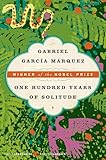
One Hundred Years of Solitude — Gabriel García Márquez (1967)
The greatest family novel in world literature. The Buendía family across seven generations in the mythical Colombian town of Macondo, narrated in a prose that treats the miraculous as ordinary and renders the ordinary with the same sustained intensity. García Márquez tracks the repetition of names (José Arcadio and Aureliano alternate through the generations), of character types, of failures and obsessions — making the point that family patterns are not merely psychological but almost deterministic, and that escaping them requires a kind of heroism rarely achieved.
Contemporary Family Fiction
The Corrections — Jonathan Franzen (2001)
The most critically acclaimed American family novel of the last thirty years. The Lambert family — Alfred, the patriarch with advancing Parkinson’s, and his three adult children Chip, Gary, and Denise — are summoned for a final Christmas. Franzen tracks each family member with a ruthlessness and sympathy that makes even the most self-deceived character fully human. The novel is simultaneously a comedy of manners, a portrait of the American Midwest in decline, and a study of how families assign roles to their members that the members spend their lives either fulfilling or escaping.
Homegoing — Yaa Gyasi (2016)
The most structurally innovative family novel in recent fiction. Gyasi traces two lineages — descended from two half-sisters separated by the slave trade in 18th-century Ghana — across fourteen chapters and eight generations, to the present day. Each chapter is its own complete story, connected to the others by what is inherited across time. The result is both an intimate family novel and a three-century history of slavery, colonialism, and their consequences in both Ghana and America.
Family Memoirs
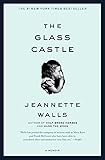
The Glass Castle — Jeannette Walls (2005)
The most widely read family memoir in recent decades. Walls grew up with parents who rejected conventional life — her father Rex, brilliant and charismatic and alcoholic, with plans always just beyond reach; her mother Rose Mary, an artist who believed that her creative needs took precedence over her children’s. The memoir is remarkable for its clarity and its refusal to sentimentalise either the hardship or the parents. Walls neither condemns nor excuses — she renders, with a precision that makes the reader do the moral calculation themselves.
Generational and Historical
Little Women — Louisa May Alcott (1868)
The foundational American novel about sisters and the family as the primary moral environment. The March sisters — Meg, Jo, Beth, and Amy — come of age during the Civil War, and Alcott’s interest is in the specific ways that each sister’s character is shaped by the family’s values and by the different opportunities available to women with different temperaments. Jo March’s resistance to the roles available to her remains the novel’s most vital subject.
The Family as Literature’s Oldest Subject
The family has been a central subject of literature since storytelling began, and for reasons that go to the heart of what fiction is for. No other human institution shapes us so profoundly or so early; the family is where we are formed, where we first learn love and conflict, loyalty and betrayal, where our deepest patterns and wounds originate, and where the fundamental dramas of human connection are first enacted. To write about the family is therefore to write about the most universal of human experiences, since everyone, whatever their circumstances, comes from one and is marked by it. This universality is the source of the subject’s enduring power: a reader may never have fought a war, committed a crime, or traveled to a distant land, but every reader knows the particular intensities of family life — the love that can be suffocating as well as sustaining, the conflicts that run deeper than any other, the way the people who know us most intimately can wound us most precisely. The family novel taps into this shared reservoir of experience, and the best examples of the form achieve a recognition so acute that readers feel their own families exposed on the page. The subject is also inexhaustible, because while the basic dynamics are universal, their particular configurations are infinitely various, each family a unique world with its own history, secrets, and pathologies. This combination of the universal and the particular is what makes the family such fertile ground for fiction, allowing each new family novel to feel at once intimately familiar and wholly its own, and ensuring that the subject, ancient as it is, never exhausts its capacity to move and illuminate.
Inheritance and the Long Shadow of the Past
One of the most powerful themes that family literature explores, and a recurring concern across the books on this list, is inheritance — not merely of property or wealth but of patterns, wounds, secrets, and ways of being that pass from generation to generation, shaping descendants who may not even understand the forces acting upon them. The family is the great transmitter of the past into the present, and family fiction is often, at its deepest level, about how the sins, traumas, and unresolved conflicts of one generation reach forward to shape the next. Children inherit not only their parents’ physical traits but their emotional legacies — the consequences of choices made before they were born, the silences and secrets that warp a family’s life, the cycles of behavior that repeat across generations until someone finds the strength to break them. The best family novels trace these transmissions with great subtlety, revealing how a grandmother’s loss, a father’s unspoken shame, or a long-buried family secret continues to exert its influence decades later, shaping people who feel its effects without knowing its source. This theme gives family fiction much of its tragic depth and its psychological richness, because it dramatizes the way we are formed by forces that precede and exceed us, carried along by currents set in motion before our birth. It also offers, in the best works, a measure of hope, the possibility that understanding these inherited patterns is the first step toward freeing oneself from them, that the cycles of damage can be interrupted by awareness and will. The family novel thus becomes a meditation on determinism and freedom, on how much of our lives is written for us by those who came before, and on what room remains for us to write our own.
The Ties That Bind and Chafe
What distinguishes family bonds from all others, and what family literature explores with unmatched depth, is their peculiar permanence and involuntariness — the fact that we do not choose our families and cannot fully escape them, that these are the relationships we are born into rather than elect, and that they therefore possess a power and a complexity unlike any other human connection. The best family fiction understands and dramatizes this defining paradox: that family bonds are simultaneously the source of our greatest love and our deepest frustration, the relationships in which we are most fully known and most painfully constrained, the ties that both bind and chafe. Unlike friendships, which can be ended, or romantic partnerships, which can be dissolved, family relationships persist across a lifetime regardless of conflict, disappointment, or distance, held together by bonds of blood, history, and obligation that resist severance even when love itself seems to have failed. This permanence intensifies everything: family conflicts cut deeper because they cannot be walked away from; family love endures through betrayals that would end any other relationship; and the family becomes the arena in which the most consequential dramas of loyalty, forgiveness, resentment, and reconciliation are played out over decades. The greatest family novels capture this full ambivalence, refusing both the sentimental fantasy of the perfectly loving family and the cynical reduction of family to mere dysfunction, and rendering instead the genuine complexity of bonds that contain love and resentment, comfort and constraint, in inseparable measure. In doing so they illuminate one of the central facts of human existence: that we are most ourselves, for better and for worse, within the families that made us, and that the people we cannot choose remain, throughout our lives, the ones who matter most.
Reading Order
Classic sagas: East of Eden → One Hundred Years of Solitude → Little Women.
Contemporary: The Corrections → Homegoing → The Glass Castle (memoir).
For the widest view: Homegoing (historical depth) → East of Eden (American tradition) → The Corrections (contemporary realism).
Frequently Asked Questions
What is the best novel about family?
East of Eden by John Steinbeck is the most ambitious American family novel — Steinbeck's retelling of Cain and Abel across two families in California's Salinas Valley spans generations and confronts the central question of whether people can choose to be good. One Hundred Years of Solitude by Gabriel García Márquez is the greatest family novel in world literature — the Buendía family across seven generations, in a prose that treats the extraordinary as ordinary and the ordinary as extraordinary. For contemporary family fiction, The Corrections by Jonathan Franzen is the most critically acclaimed American family novel of the last thirty years.
What is Homegoing about?
Homegoing by Yaa Gyasi follows two half-sisters in 18th-century Ghana — Effia, who marries a British slaver, and Esi, who is enslaved and sent to America — and then tracks one chapter per generation through their descendants, down to the present day. Each chapter is a complete story of one person's life, connected to the others by what was inherited — not just blood but trauma, aspiration, and the specific weight of history. It is both a family novel and a history of slavery and its consequences in two countries across three centuries.
What family memoirs should I read?
The Glass Castle by Jeannette Walls is the most widely read family memoir — her account of growing up with a brilliant, alcoholic father and an eccentric mother who refused conventional life is remarkable for its clarity and its refusal of easy condemnation. Educated by Tara Westover is the most critically acclaimed recent family memoir — her account of growing up in a survivalist family with no formal education, and of the self she formed by leaving, is the purest coming-of-age narrative in recent non-fiction. Angela's Ashes by Frank McCourt is the most celebrated Irish family memoir.
What is East of Eden about?
East of Eden by John Steinbeck is a multigenerational novel following two families — the Trasks and the Hamiltons — in California's Salinas Valley from the Civil War era through World War I. Steinbeck consciously modelled the novel on the story of Cain and Abel, with the Trask family repeating the pattern across generations. The novel's central question — whether human beings can choose their own nature, whether the Hebrew word 'timshel' ('thou mayest') means we have genuine freedom — is the most serious philosophical inquiry in American popular fiction.