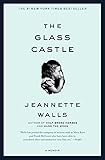
Editors Reads Verdict
One of the defining memoirs of the early twenty-first century, The Glass Castle is a masterwork of narrative restraint — Walls lets readers feel the horror and the love simultaneously, refusing to simplify a family that resists simplification.
What We Loved
- Walls's refusal to sentimentalize or condemn her parents creates moral complexity
- Prose is clean, direct, and devastatingly effective
- The book's structural clarity makes 288 pages feel perfectly proportioned
- Genuinely complex portrait of intelligence coupled with irresponsibility
Minor Drawbacks
- Some readers want more explicit authorial judgment than Walls provides
- The New York section feels compressed compared to the childhood chapters
- Sibling perspectives are underrepresented
Key Takeaways
- → Love and neglect can coexist without one negating the other
- → Resilience built in childhood can sustain an adult life even without conventional support
- → Extraordinary intelligence is not a substitute for basic parental responsibility
- → Narrative restraint is often more devastating than explicit condemnation
- → The families we come from shape us in ways we spend lifetimes negotiating
| Author | Jeannette Walls |
|---|---|
| Publisher | Scribner |
| Pages | 288 |
| Published | March 1, 2005 |
| Language | English |
| Genre | Memoir, Biography |
| Difficulty | Beginner |
| Best For | Readers of narrative memoir, especially those interested in unconventional childhoods, resilience, and the complicated emotional legacy of difficult families. |
How The Glass Castle Compares
The Glass Castle at a glance against 3 similar books readers weigh alongside it.
| Book | Author | Rating | Best for |
|---|---|---|---|
| The Glass Castle (this book) | Jeannette Walls | ★ 4.4 | Readers of narrative memoir, especially those interested in unconventional |
| Born a Crime | Trevor Noah | ★ 4.8 | Anyone interested in apartheid South Africa, memoir as a form, questions of |
| Educated | Tara Westover | ★ 4.7 | Anyone interested in memoir, education, or the psychology of escaping |
| Wild | Cheryl Strayed | ★ 4.2 | Memoir readers, hikers, and anyone who has experienced significant loss and is |
The Family That Couldn’t Be Conventional
The Glass Castle opens with Jeannette Walls, now a successful New York journalist, spotting her mother digging through a dumpster from the window of a taxi. She asks the driver to turn around. That opening scene — the collision between the life Walls has built and the life she came from — establishes everything the memoir will interrogate: how we explain our origins to ourselves, how we carry our families, and what we owe the people who made us.
Rex and Rose Mary Walls are among American memoir’s most vivid characters. Rex is a brilliant, charismatic alcoholic who taught his children physics and geology while moving them across the American Southwest and South to escape creditors and his own demons. Rose Mary is a free-spirited artist who prioritized her painting over her children’s meals. The glass castle of the title is Rex’s perpetual dream — a solar-powered home he would build someday, always someday, when things were different.
The Art of Not Condemning
What separates The Glass Castle from lesser dysfunctional-family memoirs is Walls’s prose strategy: she presents events with a child’s perspective and a journalist’s economy, and she allows readers to feel the terror and the wonder simultaneously. She doesn’t tell us her parents were irresponsible — she describes a three-year-old cooking her own hotdogs on the stove, burning herself, and receiving a lecture from her father about the nature of fire.
That restraint is the memoir’s great literary achievement. Walls loved her parents. She also knows, now, that what they did was wrong. The book holds both truths without collapsing into either sentimentality or denunciation.
A Portrait of Extreme Intelligence Misapplied
Rex Walls is the book’s tragic center. He is genuinely brilliant — his knowledge of geology, science, and survival is vast and real — and his poverty is partly the product of choices, partly the product of alcoholism, partly the product of a genuine antipathy for any system that would constrain him. His children adored him and were failed by him in ways they still live with.
The glass castle — that perpetual unbuilt promise — is the memoir’s central metaphor: the brilliant idea that never materializes, the hope that sustains and deceives simultaneously.
Why It Endures
Two decades after publication, The Glass Castle remains one of the most taught and most read memoirs in American literature. Its resistance to easy moral conclusions makes it the rare book that genuinely provokes conversation rather than confirming what readers already believed.
Our rating: 4.4/5 — A masterpiece of restrained narrative craft that presents an impossible family with love, honesty, and profound moral complexity.
A Childhood Rendered Without Bitterness
What distinguishes Jeannette Walls’s memoir from the crowded field of difficult-childhood stories is its tone. Raised by brilliant, charismatic, and deeply irresponsible parents — a father whose dreams and alcoholism repeatedly uprooted the family, a mother who chose her art over feeding her children — Walls recounts genuine poverty, hunger, and neglect, and yet she writes almost entirely without self-pity or blame. The result is a memoir that holds love and damage together at once, refusing to flatten her parents into villains even as it records the harm they did.
The Glass Castle Itself
The title refers to the magnificent house her father forever promised to build — a glass castle in the desert, complete with blueprints, that of course was never constructed. It becomes the book’s controlling symbol: the gap between her father’s soaring imagination and his inability to provide, the dreams that enchanted his children even as they failed them. Walls uses it to capture the painful double truth of her upbringing, that the same man who could not keep his children fed could also make the world feel full of wonder.
Resilience Without Easy Lessons
The memoir traces how Walls and her siblings eventually escaped to build stable lives, and it would be easy to read it as a simple triumph-over-adversity story. But Walls resists that neatness; her parents remain unrepentant, even choosing homelessness in New York while their successful adult children look on, and the book holds the unresolved complexity of loving people who hurt you. That refusal of a tidy ending is part of its honesty and its power.
Its Lasting Appeal
The Glass Castle became a long-running bestseller because it tells an extraordinary story with restraint and grace, trusting the events to carry their own weight. It is unflinching about poverty and neglect, yet generous toward the flawed people at its centre, and that balance has made it both a beloved memoir and a frequent choice for readers and classrooms exploring resilience, family, and forgiveness. Readers should know it deals frankly with neglect and hardship, but they will find a book remarkable above all for its lack of bitterness — a memoir that chooses understanding over accusation and is the more devastating for it, which is exactly why readers and book clubs keep returning to it decades after publication. It has become a touchstone for anyone trying to make sense of loving difficult parents, and a model of how to write about hardship with grace rather than grievance.
Reading Guides
- Books Like The Glass Castle: Dysfunctional Families, Resilience, and the Memoir of Escape
- Books Like Educated: 11 Memoirs About Survival, Family, and Finding Yourself
- 15 Books Like Becoming to Read Next
- 15 Books Like Born a Crime to Read Next
- 15 Books Like Daring Greatly to Read Next
- 15 Books Like The Body Keeps the Score to Read Next
- 25 Best Books for Women: Fiction, Memoir, and Non-Fiction
Frequently Asked Questions
What is "The Glass Castle" about?
Jeannette Walls recounts her extraordinary childhood, raised by brilliant but dysfunctional nomadic parents who flouted convention and neglected their children's basic needs.
Who should read "The Glass Castle"?
Readers of narrative memoir, especially those interested in unconventional childhoods, resilience, and the complicated emotional legacy of difficult families.
What are the key takeaways from "The Glass Castle"?
Love and neglect can coexist without one negating the other Resilience built in childhood can sustain an adult life even without conventional support Extraordinary intelligence is not a substitute for basic parental responsibility Narrative restraint is often more devastating than explicit condemnation The families we come from shape us in ways we spend lifetimes negotiating
Is "The Glass Castle" worth reading?
One of the defining memoirs of the early twenty-first century, The Glass Castle is a masterwork of narrative restraint — Walls lets readers feel the horror and the love simultaneously, refusing to simplify a family that resists simplification.
Ready to Read The Glass Castle?
Check the current price on Amazon.
Check Price on Amazon (paid link)Prices and availability are subject to change. See Amazon for current price.
Review last updated: