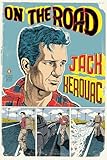
Editors Reads Verdict
The Beat Generation's defining text, typed in three weeks on a continuous scroll of paper, remains the most visceral and controversial account of postwar American freedom — intoxicating and exhausting in equal measure, a work that demands to be read for what it is rather than what its reputation suggests.
What We Loved
- The improvisational energy of the prose — Kerouac's 'spontaneous prose' — is genuinely original
- The American landscape (Denver, San Francisco, New Orleans, Mexico) is rendered with lyrical intensity
- Dean Moriarty is one of American fiction's great vital, destructive forces
- The novel's longing for authenticity and connection is genuinely moving despite its chaos
Minor Drawbacks
- The women characters are treated as objects for the men's emotional needs — a serious limitation
- The repetitive structure (drive across America, come back, drive again) can become exhausting
- Dean's charm wears thin faster on the page than presumably in life
Key Takeaways
- → The road is America's most persistent metaphor for freedom — and Kerouac shows why and how it fails
- → The Beat longing for 'IT' — pure spontaneous presence — is incompatible with settled human life
- → Dean Moriarty is what happens when pure vitality operates without moral framework
- → The longing for experience over meaning is itself a kind of meaning — and a distinctly American one
- → The novel documents the moment before the counterculture — the conditions that made the 1960s possible
| Author | Jack Kerouac |
|---|---|
| Publisher | Penguin Books |
| Pages | 307 |
| Published | September 5, 1957 |
| Language | English |
| Genre | Fiction, Classic Literature, Beat Literature |
| Difficulty | Beginner |
| Best For | Readers interested in American cultural history and the Beat Generation — and those who have felt the pull of the road as a metaphor for freedom, even (especially) while understanding its limitations. |
How On the Road Compares
On the Road at a glance against 3 similar books readers weigh alongside it.
| Book | Author | Rating | Best for |
|---|---|---|---|
| On the Road (this book) | Jack Kerouac | ★ 4.1 | Readers interested in American cultural history and the Beat Generation — and |
| Brave New World | Aldous Huxley | ★ 4.5 | Readers of 1984 and other dystopian fiction, philosophy and ethics enthusiasts, |
| The Catcher in the Rye | J.D. Salinger | ★ 4.3 | Readers who want to understand one of the century's most influential literary |
| The Sun Also Rises | Ernest Hemingway | ★ 4.4 | Readers interested in American modernism and the 1920s Paris scene — and those |
The Scroll and the Freedom
In April 1951, Jack Kerouac taped together sheets of tracing paper into a 120-foot scroll and typed his novel in three weeks without stopping for paragraph breaks. This is the founding myth of On the Road — spontaneous, unrevised, produced at the speed of thought, the written equivalent of bebop improvisation. The reality is more complicated (Kerouac had been writing the book for years; the scroll version was revised before publication), but the myth is in some ways more accurate to the book’s spirit than the facts.
On the Road is about movement — physical, emotional, existential. Sal Paradise, a young writer in postwar New York, is captivated by his friend Dean Moriarty, a charismatic, brilliant, entirely amoral product of Denver’s margins who drives cars at terrifying speed and talks nonstop about “IT” — the pure moment of spontaneous experience that is always just ahead, always slightly beyond reach.
Dean Moriarty: The American Vital Force
Dean — modelled on Neal Cassady, Kerouac’s real-life friend and correspondent — is the novel’s engine and its most complex moral problem. He is genuinely extraordinary: his intelligence is improvisational and street-educated, his energy is overwhelming, his commitment to pure experience uncompromising. He is also incapable of sustained obligation to anyone: he abandons wives, children, and friends with equal facility, chasing “IT” across the continent.
Sal’s relationship with Dean is one of fascination rather than simple admiration — he sees what Dean costs others, is himself abandoned by him, and yet returns repeatedly. The novel is partly a portrait of this fascination and its costs.
The Road and Its America
Kerouac’s America is 1940s — its Midwestern cities, Southern border towns, San Francisco jazz clubs, Mexican highways. The physical descriptions are often the novel’s best writing: the specific quality of light in Denver at night, the Great Plains at dawn, the approach to San Francisco over the Bay Bridge. The road is real as well as symbolic, and Kerouac is a precise observer of American landscape.
The jazz clubs of New York and San Francisco — the musical context that gave Kerouac his aesthetic — are rendered with genuine love. Bebop’s improvisational structure is the model for the prose: the way meaning accumulates through accumulated gesture rather than argument.
The Limitations
The novel’s treatment of women — as domestic obstacles or exotic sexual objects, rarely as people with their own interiority — is the clearest marker of its historical limitation. The Mexican women Sal and Dean encounter are particularly badly served by a prose that aestheticises them as part of the exotic landscape. These are not merely period failures; they affect the novel’s claim to honesty about the American life it documents.
Our rating: 4.1/5 — Flawed, essential, and genuinely alive — the beat novel that defined a generation’s longing and documented its costs.
Spontaneous Prose and Its Risks
Kerouac’s stated method — “spontaneous prose,” modelled on the breath-driven improvisation of bebop and the unedited rush of his letters to Neal Cassady — is both the source of the book’s vitality and the reason it divides readers. At its best the style produces a propulsive, present-tense immediacy: long sentences that accumulate sensation and movement, paragraphs that seem to be discovering their destination as they travel, a prose that mimics the experience of motion across a continent. At its worst the same method produces shapelessness and repetition, a structure that loops — east, west, east again, Mexico — without quite developing, so that the reader can feel the exhaustion the characters feel without the redeeming arrival they keep chasing. Whether one experiences this as a flaw or as the truthful form of a book about people who cannot stop moving depends largely on temperament, but the method is inseparable from the meaning: Kerouac is trying to make the sentence itself perform the restlessness the novel is about.
The Costs the Book Half-Sees
On the Road is most honest, and most troubling, in what it half-acknowledges about its own ecstasy. The road’s freedom is purchased at others’ expense, and the novel registers this without ever fully reckoning with it. Dean’s charisma leaves a wake of abandoned wives, neglected children, and used-up friends, and Sal is both witness to and beneficiary of this damage. The women, especially, exist mainly as the domestic ground against which male flight is defined or as exoticised objects of desire, and the Mexican episodes in particular reveal the limits of a vision that aestheticises the very people it passes through. Yet the novel is not naïve about all of this: Sal’s fascination with Dean is shadowed throughout by his awareness of what Dean costs, and the book’s final image of Dean, diminished and abandoned, is an act of clear-eyed grief rather than celebration. The longing the novel documents — for pure experience, for an unmediated “IT” always just ahead — turns out to be incompatible with any sustained human obligation, and On the Road is, in the end, as much an elegy for that longing as an endorsement of it.
The Book and the Decade It Made Possible
Part of what gives On the Road its lasting significance is its position in time — it documents the moment just before the counterculture it helped bring into being. Published in 1957, after years in which Kerouac could not find a publisher, the novel reached a generation of young Americans chafing against the conformity and consumerism of the postwar settlement and offered them a vocabulary of refusal: the road, the search for “IT,” the rejection of the nine-to-five life in favour of intensity and presence. The Beats were a small literary circle, but On the Road carried their sensibility into the wider culture, and the hitchhiking, the jazz, the spiritual hunger, and the suspicion of respectability that define the book would resurface, transformed, in the 1960s. To read it now is to encounter both the exhilaration of that founding impulse and its built-in limits — the carelessness toward others, the narrowness of who gets to be free — and the novel is most valuable precisely because it contains both the promise and its cost in a single, restless, genuinely alive performance.
Reading Guides
Frequently Asked Questions
What is "On the Road" about?
Sal Paradise and Dean Moriarty — alter egos of Kerouac and Neal Cassady — drive back and forth across America in search of sensation, connection, and the meaning of the American road.
Who should read "On the Road"?
Readers interested in American cultural history and the Beat Generation — and those who have felt the pull of the road as a metaphor for freedom, even (especially) while understanding its limitations.
What are the key takeaways from "On the Road"?
The road is America's most persistent metaphor for freedom — and Kerouac shows why and how it fails The Beat longing for 'IT' — pure spontaneous presence — is incompatible with settled human life Dean Moriarty is what happens when pure vitality operates without moral framework The longing for experience over meaning is itself a kind of meaning — and a distinctly American one The novel documents the moment before the counterculture — the conditions that made the 1960s possible
Is "On the Road" worth reading?
The Beat Generation's defining text, typed in three weeks on a continuous scroll of paper, remains the most visceral and controversial account of postwar American freedom — intoxicating and exhausting in equal measure, a work that demands to be read for what it is rather than what its reputation suggests.
Ready to Read On the Road?
Check the current price on Amazon.
Check Price on Amazon (paid link)Prices and availability are subject to change. See Amazon for current price.
Review last updated: