Great travel writing does more than describe places — it makes you feel the heat, hear the language, and understand a culture from the inside. From classic expedition narratives to literary wanderings by Bryson, Theroux, and others, these books are the next best thing to going yourself, and often better.
Bill Bryson returns to America after twenty years in England and decides to hike the Appalachian Trail — 2,200 miles from Georgia to Maine — with his out-of-shape friend Stephen Katz. They complete a memorable portion of it.
Part memoir, part urban history, Pamuk's portrait of Istanbul through his own childhood and adolescence explores the concept of hüzün—the melancholy that permeates the city's self-understanding after the fall of the Ottoman Empire—through family photographs, street scenes, and the Western writers who tried to capture Istanbul from the outside.
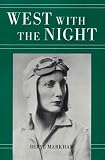
Beryl Markham's memoir of growing up in Kenya in the early twentieth century, training horses, becoming the first person to fly solo non-stop from England to North America west to east, and living a life that defied every category available to women of her era.
Bill Bryson travels across Australia — a country he cheerfully admits he knows almost nothing about — and discovers that it is simultaneously one of the most beautiful, most deadly, most overlooked, and most underrated countries on earth.
Peter Matthiessen and zoologist George Schaller trek 250 miles into the Himalayas to study the bharal (Himalayan blue sheep) and their predator, the nearly mythical snow leopard — a physical journey that becomes a meditation on grief, Zen Buddhism, and the nature of consciousness.
New Yorker editor Bill Buford quits his job to apprentice in Mario Batali's chaotic Babbo kitchen, then traces Italian cooking to its source — apprenticing with a Tuscan butcher and a pasta master in Emilia-Romagna.
Bruce Chatwin's account of travelling through Patagonia — the vast, wind-scoured southern cone of South America — in search of a piece of skin he remembered from his grandmother's cabinet, which turned out to belong to a mylodon.
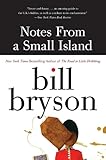
Before moving back to America after twenty years in Britain, Bill Bryson makes a farewell tour of the country that adopted him — by bus, train, and foot, from Dover to the Highlands — in search of what makes Britain lovably, infuriatingly, irreducibly itself.
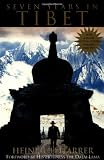
Austrian mountaineer Heinrich Harrer escapes a British prisoner-of-war camp in India during World War II and, after a twenty-one-month crossing of the Himalayas, reaches Lhasa — where he becomes a tutor and friend to the young Dalai Lama as the Chinese invasion closes in.
Macfarlane descends — into caves beneath Somerset, into the Paris catacombs, into a salt mine in Slovenia, into the bedrock of Finland where nuclear waste will be buried for 100,000 years. A book about what lies beneath: time, death, and the dark matter of the planet.
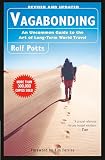
A practical and philosophical guide to long-term travel — arguing that extended independent travel is not a luxury but a choice, and that most people can afford it if they are willing to rethink their relationship to money, time, and consumer culture.
Peter Mayle and his wife abandon advertising careers in England to restore a farmhouse in the Luberon region of Provence — and spend a year navigating unpredictable tradesmen, extraordinary markets, and a way of life entirely organised around food.
Paul Theroux, one of the great travel writers in the English language, travels overland from Cairo to Cape Town — by bus, truck, ferry, and train — through some of the most troubled and beautiful countries in Africa, forty years after teaching there as a Peace Corps volunteer.
In 1952, twenty-three-year-old medical student Ernesto Guevara and his friend Alberto Granado set off on a motorcycle to travel the length of South America — a nine-month, 8,000-mile journey that transformed the future revolutionary's understanding of his continent.
Macfarlane follows ancient paths on foot — the Icknield Way, pilgrimage routes in the Himalayas, sea-roads in the Outer Hebrides, paths through Palestine. A meditation on what walking old routes does to the mind and body, and what landscapes remember.
A desk-bound travel editor retraces Hiram Bingham's 1911 journey to Machu Picchu through the Peruvian Andes, interweaving his own misadventures with the controversial history of the 'discovery' that wasn't.
After a painful divorce, Elizabeth Gilbert spends a year travelling — eating in Italy, praying in India, and finding love in Bali — in this memoir that became one of the bestselling travel narratives of the century.
Actor Ewan McGregor and his friend Charley Boorman ride motorcycles east from London through Europe, Ukraine, Russia, Kazakhstan, Mongolia, Siberia, and Alaska to New York — 31,000 miles through some of the most extreme terrain on earth.
Gerald Durrell's account of his third Cameroon expedition, during which he collected animals specifically to found his own zoo on the island of Jersey — the origin of what became the Jersey Zoo and Wildlife Preservation Trust.
Anthony Doerr and his wife win the Rome Prize and spend a year at the American Academy in Rome with their newborn twin sons. A memoir about learning to see in a city built from layers of history, trying to write with two newborns, and what the death of John Paul II looks like from inside Rome.
A philosophical meditation on why we travel, what we hope to find, and why the reality so rarely matches the anticipation — structured around de Botton's own journeys and the writers, artists, and thinkers who have illuminated the meaning of travel.
NPR foreign correspondent Eric Weiner travels to ten countries ranked at the extremes of happiness surveys — Netherlands, Bhutan, Qatar, Iceland, Switzerland, Thailand, India, Moldova, Britain, and the USA — to investigate what makes some places measurably happier than others.
Gerald Durrell's first book, an account of his animal-collecting expedition to the Cameroons in 1947-48. The book that launched his career and established his voice as one of the finest natural history writers in English.
Frances Mayes, a poet and university professor, buys a ruined villa in the Tuscan hills, restores it with her partner Ed, and discovers the rhythms of Italian rural life — its food, its seasons, its ancient craftsmanship, and its unhurried beauty.
In Patagonia by Bruce Chatwin, The Great Railway Bazaar by Paul Theroux, and A Walk in the Woods by Bill Bryson are landmarks of the genre. For immersive cultural travel, Jan Morris and Colin Thubron are among the most admired writers.
The best travel writing combines a strong narrative, a curious and self-aware narrator, and genuine insight into place and people — not just what somewhere looks like, but what it means. Humour and a willingness to be uncomfortable usually help.
Travel writing focuses outward, on place, culture, and journey. A travel memoir uses a journey as the frame for a more personal, inward story of change. Many of the best books, such as Cheryl Strayed's Wild, are both at once.
Disclosure: Amazon links on this page are affiliate links. If you purchase through them we earn a small commission at no extra cost to you.
We use cookies to understand how visitors use our site (Google Analytics). No data is collected until you accept.
Privacy Policy