Editors Reads Verdict
The warmest book Bryson has written, and the one that best demonstrates his particular gift: finding the extraordinary in the apparently ordinary. A love letter to Britain from an American who understood it better than most of its inhabitants.
What We Loved
- The affection for Britain is genuine and earned — Bryson spent twenty years there and clearly loved it
- The comedy is consistently warm rather than satirical — he is laughing with Britain, not at it
- The descriptions of British towns, landscapes, and eccentricities are specific enough to be recognisable to anyone who has been there
- The book holds up — much of what Bryson describes has not changed, which is part of his point
Minor Drawbacks
- Some descriptions of run-down areas have dated; parts of northern England that Bryson found depressing have since regenerated
- The episodic structure means the book lacks a sustained narrative arc
- Readers from the regions Bryson passes through quickly have occasionally found his treatment superficial
Key Takeaways
- → Britain's genius lies in its improbable density — extraordinary history, landscape, and eccentricity compressed into a small island
- → The British seaside resort is one of the great underappreciated cultural institutions in the world
- → Much of what makes Britain distinctive is not what it is now but the accumulated weight of what it has been
- → The British relationship with queuing, complaint, and the cup of tea is not a cliché but an accurate observation
| Author | Bill Bryson |
|---|---|
| Publisher | Avon Books |
| Pages | 324 |
| Published | January 1, 1995 |
| Language | English |
| Genre | Travel, Humour, Memoir |
| Difficulty | Beginner |
| Best For | Anyone who has lived in Britain and wants their experience reflected back with comic precision — or anyone visiting who wants a guide that is about character rather than attractions. |
How Notes from a Small Island Compares
Notes from a Small Island at a glance against 3 similar books readers weigh alongside it.
| Book | Author | Rating | Best for |
|---|---|---|---|
| Notes from a Small Island (this book) | Bill Bryson | ★ 4.4 | Anyone who has lived in Britain and wants their experience reflected back with |
| A Walk in the Woods | Bill Bryson | ★ 4.4 | Anyone interested in American wilderness, hiking culture, or Bill Bryson's |
| A Year in Provence | Peter Mayle | ★ 4.3 | Readers who fantasise about leaving their careers for a slower life in Southern |
| The Art of Travel | Alain de Botton | ★ 4.2 | Philosophical readers who want to think about why they travel as much as where |
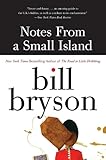
Bill Bryson had lived in Britain for twenty years — he arrived from Iowa in 1973 and worked his way up from night porter to travel writer — when he and his family decided to return permanently to America in 1995. Before leaving, he undertook a farewell tour: three weeks travelling by bus and train and on foot through as much of Britain as he could reach, from Dover in the south to the northern tip of Scotland, stopping wherever seemed worth stopping and sometimes wherever the bus stopped. Notes from a Small Island is his account of that journey, and it became — and remains — one of the bestselling travel books about Britain ever written.
The book’s animating quality is genuine affection. Bryson arrived in Britain in 1973 as a young American with no particular credentials and spent two decades learning to love a country that can be difficult to love from the outside: the weather, the reserved social style, the paradoxical coexistence of world-historical grandeur and provincial pettiness, the particular British genius for making excellent things difficult to enjoy. His comedy is rooted in this intimacy rather than in the satirical distance of an outsider, and the difference is apparent in every chapter. When Bryson describes arriving in a Yorkshire town on a wet Tuesday in November and finding the guest house shut and the pub not yet open, the comedy comes from recognition, not condescension.
The portrait of Britain that emerges across the book’s three hundred pages is not a comprehensive survey — Bryson moves too quickly, and spends his time according to his interests rather than a balanced geography — but it is a portrait of a country’s character, which is something more valuable than a guide to its attractions. He is particularly good on the seaside resorts of the English coast, on the industrial towns of the north, on the particular quality of the English countryside in the early morning, and on the kind of civic architecture — the Victorian town hall, the municipal park, the seaside pier — that represents a kind of now-forgotten ambition for public life.
Notes from a Small Island was voted the book that best represented England in a BBC poll conducted in 2003, which tells you something about the way the English recognise themselves in Bryson’s account. The answer is probably his accuracy about the country’s self-deprecating tolerance for difficulty — the readiness to queue, to complain without expecting the complaint to produce results, to appreciate small pleasures because large ones are considered slightly improper. Twenty-five years after publication, the book remains one of the more persuasive arguments that Britain, for all its problems, is an extraordinary place.
Reading Guides
- Books Like A Walk in the Woods: Comic and Wilderness Trail Narratives
- Books Like A Year in Provence: Expat Life, Food, and Life Abroad
- Best Travel Books of All Time: 20 Essential Reads for Every Kind of Wanderer
The View From an Adopted Home
What gives Notes from a Small Island its particular warmth is that Bryson was never quite a tourist in Britain and never quite a native either. He arrived from Iowa in 1973, worked his way up from night porter to journalist, married, raised children, and spent two decades absorbing the country’s rhythms before deciding, in the mid-1990s, to move his family back to the United States. The farewell tour that became this book is therefore the leave-taking of someone who knows the place from the inside but can still see it with an outsider’s clarity. That double vision is the source of the comedy: he notices what the British have stopped noticing about themselves, and he loves it precisely because he had to learn it rather than inherit it.
A Portrait of Character, Not a Guide
The book makes no pretence of being comprehensive. Bryson moves fast, doubles back, lingers where his interest holds and skips what bores him, and the result is a portrait of national character rather than a survey of attractions. He is at his best on the things Britain undervalues in itself — the faded seaside resort, the Victorian town hall, the municipal park, the whole vanished architecture of civic ambition — and on the national talent for enduring difficulty with good humour: the readiness to queue, to complain without expecting redress, to take pleasure in small things because large ones seem faintly improper.
Why Britain Claimed It
That the country recognised itself in the portrait was confirmed in 2003, when a BBC poll voted Notes from a Small Island the book that best represented England. The verdict says as much about the British as about Bryson: a nation comfortable enough with its own absurdities to crown an affectionate American’s account of them. A quarter-century on, the book remains among the more persuasive arguments that Britain, for all its grumbling, is an extraordinary place.
The Architecture of Affection
Bryson is at his most distinctive when he writes about the parts of Britain the British themselves have learned to overlook. The faded seaside resort, the municipal park, the Victorian town hall, the pier — these are, for him, the surviving evidence of a now-unfashionable ambition for public life, a belief that ordinary people deserved grand and beautiful shared spaces. His comedy about run-down guest houses and shuttered Tuesday-afternoon towns is real, but it sits alongside a genuine mourning for civic confidence in decline. Some of those gloomier passages have dated — parts of the industrial north he found depressing have since regenerated — and that dating is itself revealing, a reminder that the book is a snapshot of a particular mid-1990s moment. What does not date is the underlying argument: that Britain’s true distinction lies less in what it is at any given instant than in the accumulated weight of everything it has been, compressed improbably onto a small and crowded island.
Frequently Asked Questions
What is "Notes from a Small Island" about?
Before moving back to America after twenty years in Britain, Bill Bryson makes a farewell tour of the country that adopted him — by bus, train, and foot, from Dover to the Highlands — in search of what makes Britain lovably, infuriatingly, irreducibly itself.
Who should read "Notes from a Small Island"?
Anyone who has lived in Britain and wants their experience reflected back with comic precision — or anyone visiting who wants a guide that is about character rather than attractions.
What are the key takeaways from "Notes from a Small Island"?
Britain's genius lies in its improbable density — extraordinary history, landscape, and eccentricity compressed into a small island The British seaside resort is one of the great underappreciated cultural institutions in the world Much of what makes Britain distinctive is not what it is now but the accumulated weight of what it has been The British relationship with queuing, complaint, and the cup of tea is not a cliché but an accurate observation
Is "Notes from a Small Island" worth reading?
The warmest book Bryson has written, and the one that best demonstrates his particular gift: finding the extraordinary in the apparently ordinary. A love letter to Britain from an American who understood it better than most of its inhabitants.
Ready to Read Notes from a Small Island?
Check the current price on Amazon.
Check Price on Amazon (paid link)Prices and availability are subject to change. See Amazon for current price.
Review last updated: