Best Travel Writing Books: Essential Adventures and Journeys
The best travel writing books — from Into the Wild and In Patagonia to A Walk in the Woods and The Snow Leopard. Essential travel memoirs and adventure writing.
By Natalie Osei
Travel writing at its best is not about the destination but about the attention — what a particular mind notices and makes of it while moving through unfamiliar country. The books below span the spectrum from adventure narrative (Krakauer) to literary meditation (Matthiessen) to comic memoir (Bryson), and together they define what the genre can do.
The Essential Starting Point
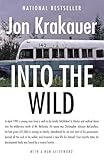
Into the Wild — Jon Krakauer (1996)
The most widely read travel narrative of the past thirty years — Krakauer’s account of Christopher McCandless, a twenty-four-year-old who gave away his savings, abandoned his car, and hitchhiked to Alaska to live alone in the wilderness. He was found dead four months later. Krakauer (himself a mountaineer who has nearly died in the wilderness) is fascinated by McCandless and by the question of why young men seek radical solitude and risk. The book is as much a meditation on the desire to leave one’s life behind as it is an adventure story, and it has inspired hundreds of thousands of readers to go outdoors and, occasionally, to die there.
The Literary Classics
In Patagonia — Bruce Chatwin (1977)
The book that invented the modern literary travel narrative — a series of linked chapters covering Chatwin’s journey through the tip of South America, in search of a piece of brontosaurus skin his grandmother kept in a cabinet (it turned out to be a giant sloth). The writing is extraordinary: precise portraits of the Welsh settlers in Argentine Patagonia, the descendants of Butch Cassidy’s associates, the vanished Tehuelche people. Chatwin’s method — moving between present observation, historical research, and pure prose style — transformed what travel writing could be.
The Snow Leopard — Peter Matthiessen (1978)
The greatest American nature writing of the twentieth century — a journey to the Himalayan plateau of northwest Nepal, shortly after the death of Matthiessen’s wife, interweaving the physical journey with Buddhist teaching and grief. The snow leopard itself — almost certainly in the surrounding mountains, almost certainly never to be seen — is the book’s central figure: the thing you travel toward that may never reveal itself. Won the National Book Award. The most spiritually serious book in this list.
A Moveable Feast — Ernest Hemingway (1964)
Hemingway’s memoir of Paris in the 1920s — the years of poverty and writing and friendship with Gertrude Stein, Ezra Pound, and Fitzgerald. The most elegant and melancholy of travel memoirs, and the book that fixed the image of 1920s Paris as the site of literary modernism for all subsequent readers. Hemingway revised it until his death; the posthumously published version may not represent his final intentions, but it is the book as the world has read it.
Comic and Accessible Travel Writing
A Walk in the Woods — Bill Bryson (1998)
Bryson and an old friend attempting the 2,200-mile Appalachian Trail — the comedy of middle-aged incompetence is the vehicle for genuine reflection on the American wilderness, its history, and the threats to it. The most immediately entertaining book in this list, and the best introduction to Bryson’s method of combining comic memoir with detailed research.
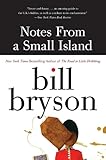
Notes from a Small Island — Bill Bryson (1995)
Bryson’s farewell journey around Britain before returning to America — taking local transport through places most travel writers ignore (Wigan, Hull, Morecambe), discovering what makes Britain distinctive through the eyes of an American who has lived there long enough to be surprised by it. The most affectionate account of British culture and landscape in travel writing.
In a Sunburned Country — Bill Bryson (2000)
Bryson’s account of Australia — the most dangerous, most isolated, and most improbable continent, where almost everything can kill you and where the most significant events in the history of the landscape went entirely unrecorded until recently. The funniest of his travel books, and the most informative account of Australia available to non-specialist readers.
The Travel Writer’s Double Vision
The finest travel writing depends on a peculiar double vision — the capacity to see a place at once with the fresh, astonished eyes of the newcomer and with the deeper understanding that comes from knowledge, reflection, and craft. This combination is harder to achieve than it sounds and is what separates literary travel writing from mere description or guidebook reportage. The newcomer’s eye is essential, because it registers as remarkable everything that residents have long ceased to notice, catching the strangeness, the vividness, the surprising detail that familiarity erases; without this freshness, travel writing goes flat and dutiful. But the fresh eye alone produces only superficial impressions, the tourist’s catalogue of surfaces. What elevates the best travel writing is the marriage of that initial astonishment to genuine understanding — historical, cultural, and personal — so that the writer not only sees the place vividly but comprehends what they are seeing, placing it in context, perceiving its depths, and reflecting on its meaning. The great travel writers are at once perpetual newcomers, alive to wonder and surprise, and serious students of the places they visit, bringing learning and thought to bear on their impressions. They also turn this double vision inward, observing not only the foreign place but their own responses to it, so that the journey becomes a means of self-discovery as well as discovery of the world. This is why the best travel books outlast the particular journeys they record and the moment in which they were written: they are not merely accounts of places but works of perception and reflection, in which a sensibility encounters the unfamiliar and makes something lasting of the meeting. The double vision — fresh wonder disciplined by deep understanding — is the travel writer’s essential art, and its presence or absence is what distinguishes literature from the merely informational.
Place, Privilege, and the Ethics of the Traveler
Travel writing is a genre that cannot honestly be read today without an awareness of its ethical complexities, for it is bound up with questions of privilege, power, and the troubled history of how the privileged have written about the places and peoples they visit. The very ability to travel for pleasure and to write about it has historically belonged to the relatively wealthy and powerful, and the genre carries the legacy of an era in which Western travelers surveyed the rest of the world from a position of assumed superiority, exoticizing other cultures, reducing complex societies to colorful backdrops, and presenting the foreign primarily as material for the traveler’s own experience. The thoughtful contemporary reader of travel writing holds these problems in view, attentive to the perspective from which a place is being described, alert to the difference between genuine engagement with a culture and the consumption of it as spectacle, and conscious of whose voices are heard and whose are rendered merely as scenery. This critical awareness does not invalidate the genre, but it sharpens the reading of it, distinguishing the travel writers who approach other places and peoples with humility, curiosity, and respect from those who treat them as a stage for self-display. The best travel writing is acutely conscious of these very problems, interrogating its own position, acknowledging the asymmetries of power that structure the encounter, and resisting the temptation to make the foreign exist merely for the traveler’s benefit. To read the genre well is to bring this same consciousness to it — to enjoy the pleasures of vicarious journey while remaining alert to the ethics of how places and people are represented, and to value most the writers who meet the wider world not as conquerors or consumers but as guests.
Why Travel Writing Outlasts the Journey
It is fair to ask what enduring value travel writing holds in an age when images of every corner of the earth are instantly available and physical travel itself is easier than ever — and the answer reveals why the genre, far from being made obsolete, retains a unique and lasting worth. A photograph or a video can show a place, but it cannot convey understanding, reflection, or meaning; it captures the surface and nothing beneath. Travel writing does what no image can: it interprets, contextualizes, and reflects, turning the raw fact of a place into comprehension, weaving together observation, history, culture, and personal response into something that deepens rather than merely depicts. Nor is the genre’s value confined to the practical business of knowing where to go; the greatest travel books are read long after the places they describe have changed beyond recognition, because they are fundamentally about perception, encounter, and the human experience of confronting the unfamiliar, subjects that do not date. Travel writing also offers something increasingly precious: a model of slow, attentive, reflective engagement with the world, the opposite of the hurried, superficial consumption of places that characterizes much modern tourism and digital scrolling. To read a fine travel book is to be reminded of what it means to truly attend to a place, to learn it, to be changed by it — a depth of engagement that no quantity of images can supply. And for the armchair reader who may never make the journey, travel writing offers the irreplaceable gift of vicarious experience enriched by a guiding intelligence, a way of encountering the wider world through the eyes and mind of a perceptive companion. In these ways the genre transcends its apparent obsolescence, offering understanding where images offer only sights, and reflection where the modern world offers only speed.
Reading Order
Start accessible: Into the Wild → A Walk in the Woods → In Patagonia.
Literary travel writing: In Patagonia → The Snow Leopard → A Moveable Feast.
Bryson in order: Notes from a Small Island → In a Sunburned Country → A Walk in the Woods.
Frequently Asked Questions
What is the best travel book to start with?
Into the Wild (1996) by Jon Krakauer is the most widely read travel book — the story of Christopher McCandless, who gave away his savings, abandoned his car, and walked into the Alaskan wilderness, where he died. It is as much a meditation on why people leave their lives behind as a travel narrative. In Patagonia (1977) by Bruce Chatwin is the most purely literary travel book — a series of linked essays and encounters from the tip of South America, structured around Chatwin's search for a piece of giant sloth skin his grandmother kept in a cabinet. Notes from a Small Island (1995) by Bill Bryson is the most immediately entertaining — a farewell journey around Britain before Bryson returned to America.
What is The Snow Leopard about?
The Snow Leopard (1978) by Peter Matthiessen is widely considered the greatest American nature writing of the twentieth century — a journey to the Himalayan plateau of northwest Nepal, ostensibly to study the Himalayan blue sheep but really a spiritual pilgrimage following the death of Matthiessen's wife. Matthiessen, a practicing Zen Buddhist, interweaves the physical journey (the altitude, the cold, the passes, the villages) with Buddhist teaching and with his grief. The snow leopard — almost certainly in the region, almost certainly never to be seen — is the book's central metaphor. Won the National Book Award.
What is In Patagonia about?
In Patagonia (1977) by Bruce Chatwin is the book that invented the modern literary travel narrative — a series of linked chapters covering Chatwin's journey through Argentine and Chilean Patagonia, nominally in search of a piece of brontosaurus skin (actually a giant sloth) his grandmother kept. The book moves between present travel, historical research (Butch Cassidy hid in Patagonia; the Welsh settlers established a colony; the Tehuelche people were exterminated), and Chatwin's characteristically precise prose portraits of the people he encounters. The most literary travel book in English.
What is A Walk in the Woods about?
A Walk in the Woods (1998) by Bill Bryson follows Bryson and his old friend Stephen Katz as they attempt to hike the Appalachian Trail — 2,200 miles from Georgia to Maine. Bryson interweaves his account of the walk with the natural and social history of the trail and the Appalachian mountains, and the comedy of two middle-aged men discovering how difficult it is to walk very long distances is the vehicle for genuine reflection on the American wilderness, the threats to it, and what it is for. The most entertaining nature writing in this list.