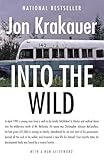
Editors Reads Verdict
Jon Krakauer's account of Christopher McCandless's fatal Alaskan adventure is a masterwork of narrative nonfiction that refuses to settle the question it raises — whether McCandless was a fool, a hero, or something more complicated that those categories cannot contain.
What We Loved
- Krakauer's first-person intrusion into the narrative is unusual but illuminating
- The research is exceptional — Krakauer tracked down everyone McCandless encountered
- The book refuses to resolve its central moral question about McCandless
- The Alaskan wilderness writing is some of the finest in adventure literature
Minor Drawbacks
- Readers who find McCandless's death self-inflicted and unromantic will find the book frustrating
- The inclusion of Krakauer's personal climbing story is useful but disrupts the main narrative
- Some of Krakauer's speculations about McCandless's psychology are necessarily uncertain
Key Takeaways
- → The idealization of self-sufficiency without preparation has specific, lethal consequences
- → Youth and intelligence are not protection against the indifference of nature
- → The desire to walk away from inherited comfort can be a form of authenticity or a form of avoidance
- → The same personality traits that make people exceptional make them vulnerable in specific ways
- → Adventure narrative requires honesty about the costs as well as the rewards
| Author | Jon Krakauer |
|---|---|
| Publisher | Anchor Books |
| Pages | 224 |
| Published | January 1, 1996 |
| Language | English |
| Genre | Non-Fiction, Adventure, Biography |
| Difficulty | Beginner |
| Best For | Readers interested in adventure nonfiction, wilderness literature, and the psychology of young men who seek extreme experience in nature. |
How Into the Wild Compares
Into the Wild at a glance against 3 similar books readers weigh alongside it.
| Book | Author | Rating | Best for |
|---|---|---|---|
| Into the Wild (this book) | Jon Krakauer | ★ 4.3 | Readers interested in adventure nonfiction, wilderness literature, and the |
| Educated | Tara Westover | ★ 4.7 | Anyone interested in memoir, education, or the psychology of escaping |
| The Devil in the White City | Erik Larson | ★ 4.5 | Readers who enjoy narrative nonfiction that reads like a novel, particularly |
| Unbroken | Laura Hillenbrand | ★ 4.6 | Readers of narrative nonfiction and World War II history who want a true story |
The Man in the Bus
In April 1992, Christopher McCandless — twenty-four years old, recently graduated from Emory University, from a wealthy Virginia family — walked alone into the Alaskan wilderness with minimal supplies and no map. He called himself Alexander Supertramp and had been working his way across the country for two years, abandoning his car, burning his cash, giving away his savings, reading Tolstoy and London and Thoreau in a converted bus abandoned near the Stampede Trail.
In September 1992, a group of moose hunters found him dead in that bus, weighing approximately 67 pounds, dead of starvation. He was 24 years old.
Jon Krakauer wrote the original article about McCandless for Outside magazine in 1993, and the response — hundreds of letters, many from young men who identified completely with McCandless — told him there was a book here. Into the Wild is that book.
The Moral Question
The central and unresolved question of Into the Wild is: what do we make of Christopher McCandless? Krakauer is explicit that this question has no clean answer. McCandless was clearly intelligent, principled, and drawn to ideas about simplicity and self-sufficiency that have a long and honorable American tradition. He was also clearly unprepared, reckless about the specific dangers of the Alaskan wilderness, and left people who loved him to deal with his absence without explanation or farewell.
The book’s most honest sections are the ones where Krakauer acknowledges that he found McCandless’s story personally resonant because he recognized aspects of himself in it — the young man’s romantic idealization of wilderness and solitude, his rejection of conventional success, his belief that he could handle whatever the natural world offered.
Krakauer’s Intrusion
The inclusion of Krakauer’s own near-fatal Alaskan climbing expedition as a counterpoint to McCandless’s story is the book’s most formally unusual choice. It acknowledges directly that the narrator is not an objective documentarian but a person for whom the story has personal stakes — and this acknowledgment makes the book more honest rather than less.
The Sean Penn Film
Sean Penn’s 2007 film adaptation, with Emile Hirsch as McCandless, introduced the story to a new generation and sparked the ongoing cultural debate about McCandless’s legacy. Some Alaskans resent what they see as the romanticization of a death caused by carelessness; others find in the story a genuine statement about the limits of what conventional life offers.
Our rating: 4.3/5 — A masterwork of narrative nonfiction that refuses the easy verdict its subject seems to invite, settling instead for the harder truth that McCandless was more and less than either his admirers or his critics want him to be.
A Death That Resists Easy Judgment
Jon Krakauer’s account of Christopher McCandless, the young man who gave away his savings, abandoned his car and possessions, and walked alone into the Alaskan wilderness only to die there, endures because Krakauer refuses to settle the argument the story provokes. To some, McCandless was a foolish, arrogant romantic whose ignorance killed him; to others, an idealist who lived more intensely than his cautious critics ever would. Krakauer holds both views in tension, and the book’s honesty about its own uncertainty — its refusal to deliver a tidy verdict on a young man it clearly admires and worries over — is what lifts it above sensationalism.
The Author in the Story
Part of what makes Into the Wild so compelling is that Krakauer does not pretend to objectivity. He weaves in his own youthful brushes with reckless adventure and the stories of other young men drawn to wild, dangerous places, using his own experience to try to understand a young man he never met. This personal investment gives the book its emotional depth and its argument: that the impulse which drove McCandless — the hunger for raw experience, for a life stripped to essentials, for a test against nature — is not madness but a recognisable, even noble, part of the human character, however badly it ended here.
What Drew McCandless In
The book is finally an investigation into a particular American romanticism — the idealism of Thoreau and Tolstoy that McCandless carried in his backpack, the dream of purity and self-reliance found by leaving society behind. Krakauer takes these ideas seriously rather than dismissing them, which is why the book has spoken so powerfully to young readers who feel the same pull. It treats McCandless’s hunger for meaning as worthy of respect even as it counts the cost of his mistakes.
Why It Endures
Into the Wild has become a modern classic of adventure and reportage because it transforms a single death into a meditation on idealism, risk, family, and the dangerous beauty of the wilderness. Krakauer’s reporting is meticulous and his prose spare and gripping, but the lasting power is in the questions he leaves open: whether McCandless was reckless or brave, lost or found, foolish or free. Readers continue to argue about it precisely because the book is wise enough not to decide for them.
Reading Guides
- Warrior Cats Books in Order: The Complete Reading Guide
- Books Like Into the Wild: Escape, Nature, and the American Wilderness
- Books Like A Walk in the Woods: Comic and Wilderness Trail Narratives
- Books Like In Patagonia: Literary Adventure Travel at Its Finest
- Books Like Seven Years in Tibet: Himalayan Adventure and Escape Narratives
- Books Like The Snow Leopard: Spiritual and Himalayan Travel Narratives
- Books Like Vagabonding: Long-Term Travel and the Philosophy of the Open Road
- Best Travel Books of All Time: 20 Essential Reads for Every Kind of Wanderer
Frequently Asked Questions
What is "Into the Wild" about?
The story of Christopher McCandless, a young man from a privileged background who walked into the Alaskan wilderness alone in 1992 — and was found dead in an abandoned bus four months later.
Who should read "Into the Wild"?
Readers interested in adventure nonfiction, wilderness literature, and the psychology of young men who seek extreme experience in nature.
What are the key takeaways from "Into the Wild"?
The idealization of self-sufficiency without preparation has specific, lethal consequences Youth and intelligence are not protection against the indifference of nature The desire to walk away from inherited comfort can be a form of authenticity or a form of avoidance The same personality traits that make people exceptional make them vulnerable in specific ways Adventure narrative requires honesty about the costs as well as the rewards
Is "Into the Wild" worth reading?
Jon Krakauer's account of Christopher McCandless's fatal Alaskan adventure is a masterwork of narrative nonfiction that refuses to settle the question it raises — whether McCandless was a fool, a hero, or something more complicated that those categories cannot contain.
Ready to Read Into the Wild?
Check the current price on Amazon.
Check Price on Amazon (paid link)Prices and availability are subject to change. See Amazon for current price.
Review last updated: