Editors Reads Verdict
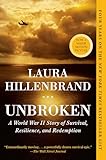
Laura Hillenbrand's account of Louis Zamperini's impossible survival story is one of the most extraordinary narrative nonfiction books of the century — an account of human endurance and degradation so extreme it reads like fiction, written with the same craft that made Seabiscuit a classic.
What We Loved
- The research is extraordinary — Hillenbrand interviewed Zamperini extensively and spent years in archives
- The narrative pace is exceptional — it reads like the most intense thriller
- Zamperini's story is genuinely extraordinary — fact exceeds almost any fictional equivalent
- The POW sections are unflinching without being gratuitous
Minor Drawbacks
- Some secular readers find the religious conversion ending less narratively satisfying than the survival story
- The book's length means the early life section requires patience before the main story begins
- Hillenbrand's chronic illness, which prevented her from meeting Zamperini in person, is poignant context
Key Takeaways
- → Human endurance under impossible conditions exceeds almost any prior estimate of its limit
- → Dignity can survive physical degradation — the guards who tried to break Zamperini failed
- → PTSD from captivity and combat is real and requires specific treatment — faith is one path, not the only one
- → Physical performance under extreme duress reveals psychological resources previously unknown
- → Forgiveness for profound wrong is possible but is a choice requiring extraordinary internal resources
| Author | Laura Hillenbrand |
|---|---|
| Publisher | Random House |
| Pages | 473 |
| Published | November 16, 2010 |
| Language | English |
| Genre | Biography, History, World War II Non-Fiction |
| Difficulty | Beginner |
| Best For | Readers of narrative nonfiction and World War II history who want a true story of survival and endurance that reads with the pacing of the best thriller fiction. |
How Unbroken Compares
Unbroken at a glance against 3 similar books readers weigh alongside it.
| Book | Author | Rating | Best for |
|---|---|---|---|
| Unbroken (this book) | Laura Hillenbrand | ★ 4.6 | Readers of narrative nonfiction and World War II history who want a true story |
| All the Light We Cannot See | Anthony Doerr | ★ 4.6 | Literary fiction readers who want a Pulitzer-caliber World War II novel with |
| The Book Thief | Markus Zusak | ★ 4.6 | Readers of historical fiction who appreciate literary prose, formally inventive |
| The Nightingale | Kristin Hannah | ★ 4.6 | Readers of women-centered historical fiction, World War II narratives, and |
The Impossible Story
Louis Zamperini was a troubled California teenager who was redirected by his brother toward track and field, became one of the fastest mile runners in the world, and ran in the 1936 Berlin Olympics — where he briefly met Adolf Hitler after a spirited final lap that attracted the dictator’s attention. He enlisted after Pearl Harbor, flew B-24 bombing missions over the Pacific, and in May 1943 survived a crash in the ocean with two other airmen.
For 47 days, the three survivors drifted in the Pacific on two small inflatable rafts. They caught birds with their bare hands. They fought off sharks, some of enormous size, that circled continuously. They were strafed twice by Japanese aircraft. One man died. After 47 days, the two survivors were picked up — by the Japanese Navy, which deposited them in a series of prisoner of war camps, where they would spend two more years.
Laura Hillenbrand tells this story with the craft of a novelist and the rigor of a historian.
The Bird
The POW camps Zamperini endured are remarkable in their cruelty, but the book’s central antagonist is a specific guard — a Japanese corporal the POWs nicknamed “the Bird,” whose sadistic fixation on Zamperini drove him to specific, sustained, escalating attempts to break the former Olympian’s spirit. The confrontation between the Bird’s need to destroy and Zamperini’s refusal to yield constitutes the book’s dramatic spine.
Hillenbrand is careful not to make the Bird simply a monster — she provides context for the pathology, the cultural pressure of Japanese military culture, the specific psychology of a man who had been denied the officer’s commission he craved. This doesn’t excuse what he did, but it makes him comprehensible, which is the more difficult and more useful achievement.
Hillenbrand’s Achievement
Laura Hillenbrand wrote Unbroken while dealing with severe chronic fatigue syndrome that prevented her from leaving her house for extended periods. She never met Zamperini in person, conducting their hundreds of hours of interviews by telephone and letter. The book’s immersive quality — the reader feels present in the raft, in the camp — is the result of research that reconstructed physical experience that the author could not directly access.
The Resilience of the Body
The first half of Unbroken is, among other things, an astonishing catalogue of what a human body can endure, and Hillenbrand renders it with such physical precision that the reader feels every privation. The forty-seven days adrift — the starvation, the sun, the circling sharks, the strafing planes, the slow shrinking of two men to skeletons — would be the climax of an ordinary survival narrative; here it is merely the prelude. What gives these sections their power is Hillenbrand’s refusal to let the extraordinary become abstract. She grounds Zamperini’s survival in concrete, often horrifying detail: the bird caught and eaten raw, the rainwater hoarded, the mental games the men devised to keep their minds from disintegrating. The achievement is to make an almost unbelievable true story feel utterly, viscerally real, so that the reader never doubts it even as the events strain credulity.
The War on the Spirit
If the ocean tested Zamperini’s body, the prison camps tested something harder to name. The book’s second movement, set in a succession of Japanese POW camps, shifts the conflict from survival against nature to survival against deliberate human cruelty, embodied above all in the sadistic guard the prisoners called “the Bird.” Hillenbrand’s insight is that the Bird’s campaign was aimed not at Zamperini’s life but at his dignity — a sustained effort to break a famous Olympian’s spirit through systematic degradation. The drama of these chapters is psychological and moral: the question is not whether Zamperini will live but whether he will be reduced to nothing. Hillenbrand resists the temptation to flatten the Bird into a cartoon, providing the cultural and psychological context that makes his cruelty comprehensible without ever excusing it, which is the harder and more valuable achievement.
Redemption After the War
The portion of Zamperini’s story that follows liberation is, in some ways, the book’s most quietly devastating and its most hopeful. Hillenbrand does not end with the war’s conclusion but follows Zamperini into a postwar life nearly destroyed by what we would now call post-traumatic stress — the nightmares, the alcoholism, the consuming fantasies of revenge against the Bird that threatened to undo everything his survival had won. His eventual recovery, catalyzed by a religious conversion at a Billy Graham crusade and culminating in a genuine, hard-won forgiveness of his captors, completes the book’s emotional arc. This refusal to treat survival as the end of the story — its insistence that the war continued inside Zamperini long after it ended in the Pacific — is what lifts Unbroken above the conventional inspirational war narrative into something more honest about the lasting costs of trauma.
Hillenbrand’s Craft
The book’s power is inseparable from the circumstances and skill of its author. Laura Hillenbrand, who has lived for decades with severe chronic fatigue syndrome that frequently confines her to her home, conducted her research into Zamperini’s life almost entirely by telephone, letter, and document, never traveling to the places she describes. That a writer so physically limited could reconstruct the raft, the camps, and the Pacific theater with such immersive immediacy is its own quiet testament to endurance, an echo of the resilience she chronicles. Following her acclaimed Seabiscuit, Unbroken confirmed Hillenbrand as one of the finest narrative nonfiction writers of her generation, capable of marshaling exhaustive research into prose that reads with the momentum of a thriller. The result, adapted into a 2014 film directed by Angelina Jolie, is one of the most widely read and beloved works of American nonfiction of the century.
Our rating: 4.6/5 — One of the most extraordinary true stories in American nonfiction, told with a craft and pace that make its impossible events feel completely real.
Reading Guides
Frequently Asked Questions
What is "Unbroken" about?
The true story of Louis Zamperini — Olympic runner turned World War II bombardier who survived 47 days adrift in the Pacific and then two years in Japanese POW camps — and his eventual path to redemption through faith.
Who should read "Unbroken"?
Readers of narrative nonfiction and World War II history who want a true story of survival and endurance that reads with the pacing of the best thriller fiction.
What are the key takeaways from "Unbroken"?
Human endurance under impossible conditions exceeds almost any prior estimate of its limit Dignity can survive physical degradation — the guards who tried to break Zamperini failed PTSD from captivity and combat is real and requires specific treatment — faith is one path, not the only one Physical performance under extreme duress reveals psychological resources previously unknown Forgiveness for profound wrong is possible but is a choice requiring extraordinary internal resources
Is "Unbroken" worth reading?
Laura Hillenbrand's account of Louis Zamperini's impossible survival story is one of the most extraordinary narrative nonfiction books of the century — an account of human endurance and degradation so extreme it reads like fiction, written with the same craft that made Seabiscuit a classic.
Ready to Read Unbroken?
Check the current price on Amazon.
Check Price on Amazon (paid link)Prices and availability are subject to change. See Amazon for current price.
Review last updated: