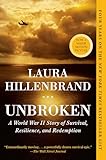
Laura Hillenbrand is an American narrative nonfiction author whose meticulous, propulsive storytelling in Seabiscuit and Unbroken transformed true accounts of endurance into modern classics.
Laura Hillenbrand wrote both of her books while severely limited by chronic fatigue syndrome — she has described being too ill to leave her home for extended periods — which makes the ambition and rigor of her research all the more remarkable. Unbroken, published in 2010, follows Louis Zamperini, a former Olympic runner who survived 47 days on a raft in the Pacific after his bomber was shot down in World War II, then years of brutal imprisonment in Japanese POW camps. It spent over four years on the New York Times bestseller list.
The achievement of Unbroken is the completeness of its immersion. Hillenbrand is a literary journalist at heart, and she constructs Zamperini’s story with the pacing of a thriller and the evidentiary care of serious history. The survival sequence on the raft is as gripping as anything in adventure fiction, but Hillenbrand doesn’t let the narrative become merely an endurance spectacle — she is genuinely interested in what the experience does to a person, and her portrait of Zamperini’s post-war struggle with trauma is honest about the costs of what he survived.
Some readers have noted that Hillenbrand’s treatment of the Japanese captors is less nuanced than her treatment of the American and Allied figures — the moral framing is clear throughout. Others find the religious dimension of Zamperini’s later life given too prominent a role in a book that had functioned as secular narrative up to that point. These are fair observations. But as a work of narrative nonfiction — patient, visceral, and deeply researched — Unbroken is exceptional.
Reading Guides