Where to Start with Laura Hillenbrand: A Reading Guide
Where to start with Laura Hillenbrand — how to approach Unbroken, her essential account of Louis Zamperini's impossible survival story. A complete reading guide.
By Oliver Kane
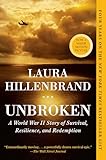
Laura Hillenbrand (born 1967) is an American author who has published two books, both of which became major bestsellers and cultural phenomena: Seabiscuit (2001) about a Depression-era racehorse, and Unbroken (2010) about WWII bombardier Louis Zamperini. Both were adapted into films (Ron Howard directed Seabiscuit; Angelina Jolie directed Unbroken). Hillenbrand has suffered from severe chronic fatigue syndrome since her college years, which means she has conducted most of her research from her Washington DC home, unable to travel to the locations she describes.
Where to Start: Unbroken (2010)
The essential Hillenbrand — and one of the most extraordinary narrative non-fiction books of the century. Unbroken opens a life that could not be invented: a mischief-making Italian-American boy from Torrance, California who finds his discipline in running, qualifies for the 1936 Berlin Olympics as a nineteen-year-old, and is expected to break the four-minute mile within a few years. Then Pearl Harbor.
Zamperini’s wartime experience is so extreme that Hillenbrand’s task as a writer is partly to make the reader believe it. The B-24 crash in the Pacific, the 47 days on the raft — during which the three surviving crew members fought sharks, hallucinated from sun exposure, fended off Japanese strafing attacks, caught albatrosses and ate them raw, and watched one crew member die — is among the most harrowing survival narratives in literature. The POW camp sections are more sustained and in some ways harder: the systematic dehumanisation, the beatings administered by the camp guard Mutsuhiro Watanabe (whom the Allied forces listed as a war criminal and whom Zamperini called ‘The Bird’), the deliberate targeting of Zamperini as a famous American athlete.
Hillenbrand’s craft is the reason the book works as well as it does. She does not explain the emotional significance of what she is describing; she builds the scenes carefully enough that the emotion is produced in the reader rather than stated. The pacing is exceptional — the raft sections in particular have the momentum of the best thriller fiction — and the research depth is visible in the specificity of every scene without ever becoming academically heavy.
The postwar sections, which follow Zamperini through PTSD (before it had the name), alcoholism, and eventual conversion to Christianity through a Billy Graham crusade, are the book’s least dramatic but in some ways most honest: the war does not end when the prisoner is liberated.
Why Unbroken Is the Ideal First Book
For a reader new to Laura Hillenbrand, Unbroken is the ideal first book because it is her most celebrated work and the fullest expression of her distinctive gift, the rendering of an extraordinary true story of survival and resilience with masterful narrative power. Unbroken tells the astonishing true story of a man who survived a plane crash, weeks adrift at sea, and brutal imprisonment as a prisoner of war, and who endured it all with remarkable resilience, all rendered with the deep research and gripping storytelling that are Hillenbrand’s hallmarks. As an entry point, it offers the fullest expression of her gifts, the extraordinary true story, the masterful narrative skill, and the profound exploration of survival, endurance, and the resilience of the human spirit. It welcomes the newcomer with its astonishing story, its gripping narrative, and its emotional power, drawing the reader into an unforgettable true story of survival. It is her best-known book and the one that best represents her gifts, so that the new reader encounters Hillenbrand at her finest. For the newcomer, then, Unbroken is the natural and ideal starting point.
What to Expect as a New Reader
As a new reader, you can expect Unbroken to be a gripping, masterfully told true story of survival, resilience, and the endurance of the human spirit. You can expect an extraordinary true story, for the book recounts the astonishing real-life ordeal of a man who survived a plane crash, weeks adrift at sea, and brutal imprisonment as a prisoner of war during the Second World War. You can expect masterful narrative power, for Hillenbrand combines deep research with the storytelling skill of a gifted writer, rendering the true story with the tension, momentum, and emotional power of the finest fiction. You can expect a profound exploration of survival and resilience, for the book is ultimately about the endurance of the human spirit, the will to survive, and the capacity to endure and recover from the most extreme suffering. You can expect an emotionally powerful and inspiring reading experience. Expect, in short, a gripping, masterfully told true story of survival and the endurance of the human spirit, an unforgettable introduction to Hillenbrand’s gifts.
Going Deeper After Your First Book
Once Unbroken has introduced you to Hillenbrand’s narrative gifts, the reader who wishes to go deeper can turn to her other acclaimed work of narrative nonfiction, which displays the same deep research and masterful storytelling in a very different true story. Her other book tells the true story of an unlikely champion racehorse and the people around it during the Great Depression, rendering this story with the same research, narrative power, and emotional resonance that mark her work. Reading it after Unbroken deepens your appreciation of Hillenbrand’s distinctive gifts, the deep research, the masterful narrative skill, and the rendering of extraordinary true stories with the power of the finest fiction. Her characteristic qualities run through her work, and the reader who has been gripped by Unbroken will find them in her other book. Hillenbrand’s output is small but each book is a masterful achievement of narrative nonfiction. Building your reading journey through Hillenbrand’s work is a matter of following her masterful true stories from one acclaimed book to the other. The reader who begins with Unbroken and continues through her work will find one of the finest practitioners of narrative nonfiction.
Reading Laura Hillenbrand
Begin with Unbroken — it is her most celebrated work. Seabiscuit (2001) is her other major book, with comparable narrative craft applied to a very different subject. Both standalone.
For the full Laura Hillenbrand bibliography, reviews, and biography, visit the Laura Hillenbrand author page on Editors Reads.
Affiliate disclosure: Links to Amazon on this page are affiliate links. We earn a small commission at no extra cost to you.
Frequently Asked Questions
Where should I start with Laura Hillenbrand?
Unbroken (2010) is Hillenbrand's essential and most celebrated book — the account of Louis Zamperini, an Olympic runner turned World War II bombardier who survived 47 days adrift in the Pacific Ocean and then two years in Japanese prisoner of war camps. One of the most extraordinary narrative non-fiction books of the century; the research is meticulous and the narrative craft is exceptional.
What is Unbroken about?
Unbroken follows Louis Zamperini from his Torrance, California childhood (a juvenile delinquent turned distance runner) through his appearance at the 1936 Berlin Olympics, his enlistment as a bombardier after Pearl Harbor, the crash of his B-24 in the Pacific, 47 days on a raft with two surviving crew members, his capture by the Japanese Navy, and over two years of imprisonment in POW camps — particularly his treatment at the hands of the camp guard known as 'The Bird.' The book follows Zamperini through the postwar years and his eventual path to reconciliation and peace.
How did Hillenbrand research Unbroken?
Hillenbrand spent seven years researching Unbroken, conducting extensive interviews with Zamperini (who was in his eighties during the primary research period), searching military archives on multiple continents, and tracking down surviving POW camp inmates and their families. Hillenbrand herself suffers from debilitating chronic fatigue syndrome and conducted much of the research from her home by telephone and correspondence — she did not travel to Japan or the Pacific locations she describes. The research depth is evident throughout the book's exceptional accuracy.
What should I read after Unbroken?
After Unbroken, Hillenbrand's Seabiscuit (2001) — about a Depression-era racehorse and its unlikely human team — is her other major work, with the same narrative craft applied to a different story. For comparable WWII survival narrative non-fiction, Sebastian Junger's Tribe and Michael Lewis's The Blind Side both cover extreme human endurance from different angles. For the Pacific War specifically, James Bradley's Flags of Our Fathers covers the Iwo Jima campaign with comparable research depth.