Best Sports Books: Essential Reading for Athletes and Fans
The best sports books — from Moneyball and Born to Run to Unbroken and The Blind Side. Memoirs, analytics, and narratives that go beyond the game.
By Priya Anand

The best sports books are not really about sports — they are about human limits, systems and how they can be broken, what drives people to physical extremity, and what games reveal about the larger world. The list below includes narrative journalism, memoir, and analysis that repay readers whether or not they follow the sport in question.
Analytics and the Mind of the Game
Moneyball — Michael Lewis (2003)
The book that changed professional sports — and then finance, politics, and almost every other field where entrenched expert intuition meets statistical evidence. Lewis tells the story of Billy Beane’s Oakland A’s: a low-budget team that competed with wealthy franchises by using sabermetrics to identify players whose value traditional scouting had systematically missed.
The deeper argument is about expertise: how professional communities develop shared beliefs about value that become resistant to contradictory evidence, and how those beliefs can be profitably wrong for decades before someone with a different framework exposes them.
Endurance and Human Limits
Born to Run — Christopher McDougall (2009)
The most infectious sports narrative of the last twenty years, and the book credited with reviving interest in barefoot and minimalist running. McDougall’s investigation into his own chronic running injuries leads him to the Copper Canyons of Mexico and the Tarahumara — an indigenous people who run extraordinary distances in flat sandals with joy and without injury. He organises a race between the Tarahumara and American ultrarunners.
The book is simultaneously an adventure story, a piece of cultural anthropology, and a serious engagement with the science of human endurance and running form.
What I Talk About When I Talk About Running — Haruki Murakami (2008)
Murakami’s memoir of running — training for marathons and ultramarathons in his fifties — is the best account of what long-distance running means to someone who is not competing. The parallel between running and writing fiction (both require daily commitment, tolerance for solitude, and the knowledge that there are no shortcuts) is Murakami’s central subject, and his account of physical limits and what one chooses to push through is moving without sentimentality.
Survival and Athletic Biography
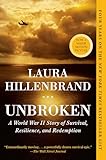
Unbroken — Laura Hillenbrand (2010)
The biography of Louis Zamperini — 1936 Olympic runner, survivor of a B-24 crash in the Pacific, forty-seven days adrift on a life raft, two years as a Japanese prisoner of war. Hillenbrand’s narrative is constructed with the same propulsive craft as Seabiscuit and is just as hard to put down. Zamperini’s story is extreme, but Hillenbrand is particularly good at the athletic sections — the account of his 1936 Olympic mile and his attempts to qualify for the 1940 games (which were cancelled) — which establish who he is before catastrophe.
Football and American Culture
The Blind Side — Michael Lewis (2006)
Lewis’s second great sports book — the story of Michael Oher, a homeless African American teenager from Memphis who is taken in by a wealthy white family and becomes an elite left tackle in the NFL. Lewis uses Oher’s story to explain the economic transformation of the left tackle position: how the NFL’s rules changed, how quarterbacks became more valuable, and how left tackles (who protect their blind side) became among the highest-paid players in the sport. The personal story and the systemic analysis work together as they do in Moneyball.
Why the Best Sports Books Aren’t About Sports
The central paradox of great sports writing, and the principle that unites this otherwise varied list, is that the finest sports books are rarely really about sports at all. They use games and athletes as a lens through which to examine subjects far larger than any final score: human limits and what drives people to test them, the way entrenched systems of belief resist contradictory evidence, the relationship between the body and the will, survival against impossible odds, and what competition reveals about a society’s values. This is why these books reward readers who have no particular interest in the sports they describe. Moneyball is ostensibly about baseball, but its true subject is the universal phenomenon of expert communities clinging to flawed conventional wisdom in the face of better evidence — a story so transferable that it reshaped thinking in finance, medicine, politics, and management. Born to Run uses ultramarathoning to investigate human evolution, the science of endurance, and a culture’s different relationship to the body and to joy. Unbroken is framed by athletics but becomes a study of survival, resilience, and the human capacity to endure the unendurable. The sport, in each case, is the entry point rather than the destination, a concrete and dramatic arena in which abstract questions about excellence, character, and limits become vivid and testable. The reader comes for the game and stays for the illumination of something much larger, which is precisely what distinguishes a great sports book from mere fan service.
The Marriage of Story and System
A recurring feature of the strongest entries on this list, exemplified above all by the two Michael Lewis books, is their ability to weave together two kinds of narrative that lesser writers keep separate: the intimate human story and the analysis of the system that gives it meaning. Lewis perfected this technique. Moneyball is simultaneously the personal drama of Billy Beane and the analytical account of how statistical thinking exposed decades of mispriced talent; The Blind Side is at once the moving individual story of Michael Oher and a lucid explanation of how rule changes transformed the economics of an entire position. Neither dimension would be as powerful alone — the human story gives the systemic analysis emotional stakes, while the systemic analysis gives the human story significance beyond the individual. This fusion has become the gold standard for narrative nonfiction well beyond sports, and it is on display throughout this list. Hillenbrand grounds her account of survival in the specific, fully realized character of Zamperini before catastrophe strikes; McDougall embeds his investigation of running science within an adventure story and a cast of unforgettable eccentrics. The lesson these books teach about writing itself is that ideas become memorable when they are carried by people we come to care about, and that the most effective way to explain how a system works is to show its consequences in a single human life. It is a technique sports writing has done as much as any genre to refine.
A Genre for Every Reader
Sports books occupy a uniquely accessible place in nonfiction, and this list is designed to demonstrate the genre’s range and to serve as an entry point regardless of a reader’s athletic interests. The variety here is deliberate: analytical and intellectual sports writing in Lewis; visceral adventure and popular science in McDougall; introspective, philosophical memoir in Murakami’s meditation on running and writing; epic biography and survival narrative in Hillenbrand. Whatever a reader’s temperament, some door into the genre stands open. Those who love ideas and systems will be gripped by Moneyball; those who crave adventure and endurance will devour Born to Run and Unbroken; those drawn to quiet reflection will find a kindred spirit in Murakami. Beyond this list, the genre extends in every direction worth exploring: the boxing writing of A.J. Liebling and Joyce Carol Oates, the baseball essays of Roger Angell, the immersive basketball and football narratives of writers like John Feinstein, the cycling and climbing literature that probes the outer edges of human endurance, and the growing body of sports journalism that uses games to examine race, money, and power in modern society. What makes the genre so rewarding is exactly what this list aims to show — that a great sports book asks nothing of the reader except curiosity about the human beings at its center, and gives back, in return, insight into ambition, failure, resilience, and excellence that reaches far beyond the playing field. For readers who have never thought of themselves as interested in sports, these books are the most persuasive possible argument that the category was always larger than they assumed.
Reading Order
Start with narrative: Born to Run → Unbroken → Moneyball.
Running focus: What I Talk About When I Talk About Running → Born to Run.
Michael Lewis double: Moneyball → The Blind Side.
Frequently Asked Questions
What is the best sports book ever written?
Moneyball by Michael Lewis is the most intellectually influential sports book — it changed how baseball teams (and eventually all professional sports) evaluate talent and make decisions. Born to Run by Christopher McDougall is the most captivating narrative sports book, combining endurance running anthropology with the story of the Tarahumara runners of Mexico. Unbroken by Laura Hillenbrand is the most compelling sports biography, following Olympic runner Louis Zamperini from the 1936 Olympics through capture and torture as a prisoner of war.
What is Moneyball about?
Moneyball (2003) by Michael Lewis tells the story of Oakland A's general manager Billy Beane's attempt to build a winning baseball team on a fraction of the budget of wealthy franchises by using statistical analysis (sabermetrics) to identify undervalued players that traditional scouts dismissed. The book is not really about baseball — it is about how entrenched expertise resists evidence, how markets misprice value, and how one person with a new framework can disrupt a system built on received wisdom. Lewis wrote it as a story rather than an argument, which is why it worked.
What is Born to Run about?
Born to Run (2009) by Christopher McDougall begins as a personal investigation into why the author keeps getting injured while running. It leads him to the Tarahumara, a tribe of indigenous Mexicans in the Copper Canyons who run ultramarathons in sandals and report almost no injuries, and to a cast of eccentric ultrarunners and a reclusive American known as Caballo Blanco. The book weaves running science (the barefoot running debate, the persistence hunting hypothesis), adventure reporting, and character study into a narrative that has inspired more people to run than almost any other book.
What is What I Talk About When I Talk About Running about?
What I Talk About When I Talk About Running (2008) is Haruki Murakami's memoir of running — specifically, his account of training for a marathon and an ultramarathon in his fifties, and what long-distance running has meant to him as a novelist. The book is less about competitive athletics than about what running gives a solitary creative person: the daily commitment, the physical knowledge of one's own limits, the parallel with the discipline of writing fiction. It is the best account of what running means to someone who runs for reasons that are not about winning.