Best Biography Books: Essential Reading in Life Writing
The best biography books — from The Power Broker and Alexander Hamilton to Educated and The Autobiography of Malcolm X. Essential biography and memoir reading.
By Oliver Kane
Biography at its best does two things simultaneously: it renders a particular human life with enough specificity to make it feel real, and it illuminates something larger — a political system, a historical moment, a question about human nature. The books below represent the essential range of the form, from the towering political biography (The Power Broker) to the personal memoir of self-transformation (Educated) to the political autobiography (Malcolm X).
The Great Political Biographies
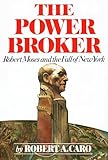
The Power Broker — Robert Caro (1974)
The greatest American biography — Robert Moses’s fifty-year domination of New York’s physical landscape, achieved without electoral office through legal creativity, political manipulation, and an absolute conviction that he knew what cities needed better than the people who lived in them. Caro’s investigation of how Moses obtained and used power is the most searching account of American political power in non-fiction. At 1,162 pages, the most demanding book on this list — and the most rewarding. Won the Pulitzer Prize.
Team of Rivals — Doris Kearns Goodwin (2005)
Lincoln’s decision to appoint his three main rivals for the Republican presidential nomination to his cabinet — and what that decision reveals about his political genius. Goodwin follows William Seward, Salmon Chase, and Edward Bates as well as Lincoln, making the book as much a group biography of the Civil War’s political leadership as a life of Lincoln. The most accessible of the major Lincoln biographies.
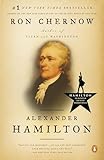
Alexander Hamilton — Ron Chernow (2004)
The most compelling life of the most interesting Founding Father — Hamilton’s rise from illegitimate poverty in the Caribbean to the centre of American power, his role in creating the financial institutions that made the United States viable, his feud with Jefferson, and his death in a duel with Aaron Burr. Chernow writes narrative biography at the highest level; the book inspired the Broadway musical. The best starting point for readers new to serious biography.
Grant — Ron Chernow (2017)
Chernow’s rehabilitation of Ulysses S. Grant — arguing that the conventional picture of Grant as a military genius and political failure is wrong, and that his presidency, specifically his aggressive enforcement of civil rights legislation in the post-Civil War South, was a moral achievement that has been systematically undervalued by historians sympathetic to the Lost Cause. The most important revision of Grant’s historical reputation.
Washington: A Life — Ron Chernow (2010)
Chernow’s complete life of Washington — the most humanly rounded portrait of a man who has tended to be rendered as a marble statue rather than a person. Chernow’s Washington is cautious, proud, aware of his own deficiencies, and deeply concerned with his historical reputation.
Autobiography and Memoir
The Autobiography of Malcolm X — Malcolm X with Alex Haley (1965)
One of the most important American books of the twentieth century — Malcolm X’s account of his transformation from petty criminal to political leader, his conversion to Islam, his break with the Nation of Islam after his pilgrimage to Mecca, and his assassination. The prose is urgent and direct; the argument about racism and American self-deception is as relevant now as it was in 1965.
Long Walk to Freedom — Nelson Mandela (1994)
Mandela’s account of his life from his childhood in the Transkei through his 27 years in prison on Robben Island to his release and the negotiations that ended apartheid and made him South Africa’s first democratically elected president. The most important political autobiography of the twentieth century and the most moving account of personal perseverance.
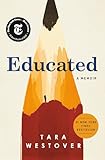
Educated — Tara Westover (2018)
Westover’s memoir of educating herself out of an isolated, survivalist family in rural Idaho — a story of self-transformation that is also an account of what education actually is and what it costs. The most compelling American memoir of the 2010s.
The Glass Castle — Jeannette Walls (2005)
Walls’s memoir of growing up with brilliant, chaotic, negligent parents — an alcoholic father who was always about to make good and a mother who prioritised her painting over her children’s basic needs. The most readable memoir on this list and the one that most clearly illuminates the seductive power of a parent’s mythology.
The Diary of a Young Girl — Anne Frank (1947)
Anne Frank’s diary from her two years in hiding in Amsterdam, from 1942 to 1944, before the family was arrested and Anne died in Bergen-Belsen. The most widely read personal document of the Holocaust and one of the most significant books of the twentieth century — its power comes from the specific, ordinary humanity of the young girl writing it.
Living Another Life
The deepest appeal of biography, and the source of its unique power among literary forms, is the opportunity it offers to live, vicariously and completely, another human life — to enter fully into the experience, the circumstances, and the consciousness of another person, and to follow the entire arc of a life from beginning to end with an intimacy and completeness that no other form of writing provides. Biography offers a profound and distinctive form of vicarious experience, allowing the reader to inhabit another life in its entirety, to see the world through another’s eyes, to understand the circumstances and choices that shaped another’s existence, and to follow the complete trajectory of a human life with all its struggles, achievements, failures, and meaning. This experience of living another life is among the most enriching that reading can offer, for it expands the reader’s understanding of human experience beyond the narrow limits of their own single life, allowing them to know, from the inside, lives utterly different from their own, to understand experiences and circumstances they could never directly encounter, and to grasp the full range and variety of human existence. Through biography, the reader can live the life of a great leader or a humble figure, a genius or an ordinary person, someone of a distant age or a foreign culture, and in doing so can vastly expand their understanding of what it is to be human and of the countless forms that a human life can take. This power to let the reader live another life, fully and intimately, is the deepest appeal of biography and the source of its unique value, offering an enrichment of experience and understanding that comes from inhabiting, through the biographer’s art, the complete life of another human being. To read a great biography is to live, for a time, another life, and to emerge with one’s understanding of human experience deepened and expanded by the encounter.
The Art of Capturing a Life
Biography is not merely the recording of facts about a person’s life but a demanding art — the art of capturing a human life on the page, of selecting and shaping the vast material of an existence into a coherent and revealing portrait, of penetrating to the truth of another’s character and conveying it to the reader — and appreciating this art is essential to understanding what the greatest biographies achieve. The biographer faces a formidable challenge: to take the immense and chaotic material of a human life, the countless facts, events, relationships, and experiences that compose it, and to shape this material into a coherent narrative that captures the essential truth of the person, conveying who they really were, what shaped them, and what their life meant. This requires not merely diligent research but profound art: the art of selection, choosing from the overwhelming abundance of material the details that reveal and illuminate; the art of interpretation, penetrating beneath the surface of events to the truth of character and motive; the art of narrative, shaping the material into a compelling and coherent story; and the art of empathy and understanding, entering imaginatively into another’s experience and conveying it with insight and truth. The greatest biographies are works of real art, achieving through the biographer’s skill a portrait that captures the living truth of another human being, conveying not merely the facts of a life but its essential character and meaning. To appreciate biography fully is to recognize this art, to understand the formidable challenge the biographer faces and the skill required to meet it, and to admire the achievement of the great biographies in capturing, through the biographer’s art, the living truth of a human life. The art of capturing a life is among the most demanding in all of literature, and the greatest biographies, in meeting its challenge, achieve a portrait of another human being that combines the truth of history with the power of art.
History Through a Single Life
One of the most valuable functions of biography, and a key to its enduring importance, is its capacity to illuminate history through the lens of a single life — to make the vast and abstract forces of history concrete and comprehensible by showing how they shaped and were shaped by an individual human being, and to provide, through the story of one life, a window onto the larger world and age in which it was lived. The great biographies are not merely portraits of individuals but illuminations of history, for the life of any significant figure is inevitably bound up with the larger forces and events of their time, and the biography that captures that life also captures, through it, the age and world in which it unfolded. By following a single life through its historical context, biography makes the abstractions of history concrete and human, showing how the great forces and events of an age were experienced and influenced by an actual person, and providing a comprehensible human entry point into the larger historical reality. This is why biography is so valuable a form of history, for it grounds the vast and often abstract subject of history in the concrete reality of an individual human life, making it vivid, comprehensible, and humanly meaningful in a way that more abstract historical writing often fails to achieve. Through the lens of a single life, the reader can grasp the character of an age, the forces that shaped it, and the experience of living through it, gaining a human understanding of history that the study of impersonal forces and events alone cannot provide. The biography that illuminates history through a single life offers a double enrichment, capturing both the individual and the age, and providing, through the intimate story of one human being, a comprehensible and vivid window onto the larger world and history in which that life was lived. This power to illuminate history through a single life is among the most valuable contributions of biography, making the form not merely a portrait of individuals but a humane and comprehensible illumination of the larger historical reality.
Reading Order
Essential: The Power Broker → The Autobiography of Malcolm X → Educated.
American history: Alexander Hamilton → Team of Rivals → Grant.
Complete: The Autobiography of Malcolm X → The Diary of a Young Girl → The Glass Castle → Alexander Hamilton → Team of Rivals → Long Walk to Freedom → The Power Broker → Educated.
Frequently Asked Questions
What is the best biography to start with?
The Power Broker (1974) by Robert Caro is the greatest American biography ever written — 1,162 pages on Robert Moses, the New York planner who shaped twentieth-century American cities without ever being elected to public office. It is simultaneously a biography, a history of New York, and the most searching investigation of political power in American non-fiction. Alexander Hamilton (2004) by Ron Chernow is the most readable starting point for readers new to serious biography — a comprehensive and compelling life of the most interesting of the Founding Fathers, which inspired the Broadway musical.
What is The Power Broker about?
The Power Broker (1974) by Robert Caro is the life of Robert Moses — the urban planner who built most of modern New York, from its highways and bridges to its parks and housing projects, between the 1920s and the 1960s. Moses was never elected to any office but wielded more power than any elected official in New York's history, using a combination of legal creativity, political maneuvering, and sheer determination to reshape the physical landscape of the city. Caro's biography is as much about power — how it is obtained, used, and abused — as it is about Moses specifically. Won the Pulitzer Prize.
What is Educated about?
Educated (2018) by Tara Westover is a memoir of growing up in a survivalist family in rural Idaho — parents who did not register their children's births, who kept them out of school, who refused medical care, who believed in an imminent apocalyptic collapse of civilization. Westover taught herself enough to pass the ACT, entered Brigham Young University, and eventually earned a PhD from Cambridge, all while managing the psychological aftermath of the family violence and isolation she had survived. One of the most compelling self-education stories in American memoir.
What is The Autobiography of Malcolm X about?
The Autobiography of Malcolm X (1965), as told to Alex Haley, traces Malcolm X's transformation from Malcolm Little, a petty criminal from Lansing, Michigan, through his imprisonment and conversion to the Nation of Islam under Elijah Muhammad, his rise to become the Nation's most prominent spokesperson, his pilgrimage to Mecca and conversion to Sunni Islam, and his assassination in 1965 at the age of 39. The autobiography is simultaneously a conversion narrative, a political argument, and one of the most vivid accounts of Black American life in the mid-twentieth century. One of the most important American books of the twentieth century.