Where to Start with David McCullough: A Reading Guide
Where to start with David McCullough — whether to begin with John Adams, 1776, Truman, or The Wright Brothers. A complete reading guide.
By Oliver Kane
David McCullough (1933–2022) was the American author, historian, and narrator who — across twelve books including two Pulitzer Prize-winning biographies — became the most widely read popular historian of American history of his generation. His books on the founding era (John Adams, 1776), the nineteenth century (The Path Between the Seas, The Johnstown Flood, The Great Bridge), and the twentieth century (Truman, The Wright Brothers) sold millions of copies and established him as the primary voice through which educated Americans encountered their own history. He was also the narrator of Ken Burns’s documentary series The Civil War (1990), one of the most watched public television events in American history.
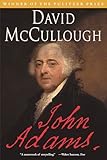
Where to Start: John Adams (2001)
The essential McCullough — and the most compelling case for a founder who has been consistently undervalued. John Adams served as the second President, was the principal drafter of the Massachusetts Constitution, negotiated the peace treaty that ended the Revolutionary War, and was the first American ambassador to Britain. He was also irascible, vain, stubbornly honest, and constitutionally incapable of the flattery and self-promotion that Jefferson, Hamilton, and Washington managed with varying degrees of success. He was defeated for re-election, lived in his successor’s shadow, and is largely absent from the popular mythology of the founding.
McCullough restores him — not through hagiography but through the extraordinary documentation Adams left behind. Adams and his wife Abigail were compulsive letter writers; the correspondence between them across decades of separation is one of the great epistolary records of any political marriage in history, and McCullough uses it as the emotional spine of the biography. The political narrative (the Revolution, the Constitutional Convention, the presidency, the bitter rivalry with Jefferson) is told with clarity and with genuine sympathy for Adams’s particular virtues.
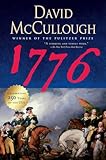
1776 (2005)
McCullough’s most thriller-like book — a year-by-year account of the military campaigns of the Revolutionary War’s pivotal year. Washington’s army, vastly outgunned and out-trained, retreating across New York and New Jersey; the surprise attack on the Hessians at Trenton on Christmas night; the victory at Princeton that kept the Revolution politically alive. McCullough focuses on the soldiers and commanders rather than the politicians; the result is immersive and surprisingly tense despite the reader knowing the outcome.
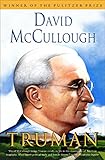
Truman (1992)
McCullough’s largest and most comprehensive biography — 1,000+ pages on Harry Truman, the accidental president who may have been the most consequential of the twentieth century. The key decisions (Hiroshima, the Truman Doctrine, NATO, Korea) are rendered with the specific detail of primary documents and interviews with surviving participants. McCullough’s sympathy for Truman — for his plainness, his stubbornness, his refusal to enrich himself from the presidency — is evident on every page; the biography is affectionate without being uncritical.
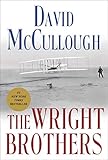
The Wright Brothers (2015)
McCullough’s later and shorter book — a focused account of Orville and Wilbur Wright and the years of experimentation, failure, and eventual breakthrough that produced the first powered flight. The Wright Brothers section focuses on the specific mechanical and aeronautical problems they solved and the character of their partnership; the human story is as compelling as the technical achievement. Accessible and fast-paced; a good entry point for readers who want McCullough’s method in a shorter form.
Why John Adams Is the Ideal First Book
For a reader new to David McCullough, John Adams is the ideal first book because it is among his most celebrated works, a Pulitzer Prize winner, and a fine expression of his distinctive gifts, the masterful storytelling, the deep research, and the warm, humane bringing-to-life of history and its people. John Adams is McCullough’s acclaimed biography of the founding father and second president, a rich and intimate portrait of Adams, his marriage, and the birth of the American republic. As an entry point it is ideal, for it is one of his best-known books and a perfect example of his engaging, deeply researched, and humane narrative history. It welcomes the newcomer with its compelling subject, its rich storytelling, and its warmth, drawing the reader into the past as he renders it. It is among his major works and a fine representation of his gifts, so the new reader encounters McCullough at his most characteristic. For the newcomer, then, John Adams is an excellent starting point.
What to Expect as a New Reader
As a new reader, you can expect John Adams to be a masterful, deeply researched, and warmly humane work of narrative history. You can expect masterful storytelling, for McCullough is celebrated for his ability to make history read like a great story. You can expect deep research, for the biography is grounded in extensive sources, including the rich correspondence of Adams and his wife Abigail. You can expect a humane portrait, for McCullough brings Adams to life as a full, flawed, admirable human being, and renders his marriage with warmth. You can expect a vivid picture of the Revolutionary era and the birth of the American republic. You can expect engaging, accessible, and richly detailed prose. You can expect a long but absorbing and rewarding read. Expect, in short, a masterful, deeply researched, and warmly humane work of narrative history, a fine introduction to McCullough’s gifts.
Going Deeper After Your First Book
Once John Adams has introduced you to McCullough’s gifts, the reader who wishes to go deeper can explore his other books, which apply the same masterful storytelling, deep research, and humane vision to a wide range of American historical subjects. His other acclaimed works include his Pulitzer Prize-winning biography of another president, his histories of great endeavors and turning points in American history, and his portraits of remarkable figures and achievements, each marked by his engaging, humane narrative style. Reading these after John Adams deepens your appreciation of McCullough’s distinctive gifts, the masterful storytelling, the deep research, and the warm bringing-to-life of history. His characteristic strengths run through his work, and the reader who has enjoyed John Adams will find them across his books. Building your reading journey through McCullough is a matter of following his histories from John Adams into his other books. The reader who begins here and continues will find one of the most beloved and accomplished narrative historians of his generation.
Reading David McCullough
Begin with John Adams for the fullest version of McCullough’s biographical method; read 1776 as the military complement to its political story. Truman is the essential read for anyone interested in the twentieth century presidency; The Wright Brothers is the best short introduction to his work. All McCullough’s books can be read independently; read in any order that follows your interests.
Frequently Asked Questions
Where should I start with David McCullough?
John Adams (2001) is the most widely recommended starting point — McCullough's biography of the second President of the United States and one of the Founding Fathers most overlooked in favour of Washington, Jefferson, and Hamilton. The book won the Pulitzer Prize for Biography, spent nearly a year on the New York Times bestseller list, and was adapted as an HBO miniseries with Paul Giamatti. McCullough writes with warmth for Adams's particular kind of stubborn integrity; the biography is accessible to readers with no prior knowledge of the period.
What is 1776 about?
1776 (2005) is McCullough's account of the pivotal year of American independence — specifically the military campaigns of 1776, from Washington's desperate retreat across New Jersey and New York to the surprise victories at Trenton and Princeton that kept the Revolution alive. The book focuses on the military story rather than the political one (the Declaration of Independence and the Continental Congress appear only in the background); it is McCullough's most thriller-like book in its narrative structure. Shorter and faster-paced than John Adams or Truman.
What is the Truman biography about?
Truman (1992) is McCullough's biography of Harry S. Truman — the haberdasher from Missouri who became one of America's most consequential presidents, overseeing the end of World War Two (including the decision to use atomic bombs), the beginning of the Cold War, the Berlin Airlift, and the Korean War. The biography is over 1,000 pages and won the Pulitzer Prize; it is considered the definitive account of Truman's life and presidency. McCullough was sympathetic to Truman from the beginning; the portrait is affectionate without being uncritical.
Do McCullough's books need to be read in any order?
No — all of McCullough's books are entirely self-contained and can be read in any order. Each is a stand-alone biography or history of a specific subject (John Adams, Harry Truman, the Wright Brothers, the Panama Canal, the Brooklyn Bridge, the Civil War). They share a style — narrative, accessible, sympathetic to the American democratic tradition — but no recurring characters. Most readers follow their own interests: those interested in the founding era will prefer John Adams; those interested in the twentieth century will prefer Truman; those interested in technology and innovation will prefer The Wright Brothers.