Best Books About Resilience: Essential Reading on Overcoming Adversity
The best books about resilience — from Man's Search for Meaning and Educated to Unbroken and When Things Fall Apart. Essential reading on overcoming adversity.
By Lena Fischer
Resilience — the capacity to adapt to adversity, to recover from difficulty without being permanently destroyed by it — is not a fixed character trait but a practice: something that is developed through engagement with difficulty rather than through the avoidance of it. The best books about resilience are honest about what adversity costs; they do not present suffering as simply productive or difficulty as uniformly beneficial. What they demonstrate is that the experience of adversity, when met with the right orientation, can develop capacities that could not be developed any other way.
The Essential List
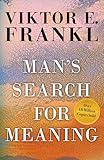
Man’s Search for Meaning — Viktor Frankl (1946)
The essential book about resilience under extreme conditions. Frankl, a Viennese psychiatrist who survived Auschwitz, Dachau, and other concentration camps, observed that the prisoners who maintained a sense of purpose — a reason to survive, something to live for — were more likely to endure than those who had lost hope. He developed logotherapy — the therapeutic approach premised on the belief that the primary human motivational force is the search for meaning — from these observations. The first half is memoir; the second is psychological theory. The most widely read Holocaust book in the English-speaking world and the most important book about meaning and resilience available.
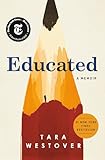
Educated — Tara Westover (2018)
The most powerful contemporary resilience memoir. Westover grew up in a survivalist family in rural Idaho — no birth certificate, no formal schooling, a father who believed the government was the enemy and hospitals were death traps, a brother whose violence was tacitly sanctioned. Her account of educating herself, reaching Brigham Young University, and eventually completing a PhD at Cambridge is the most dramatic account of individual self-reinvention available in recent nonfiction. Westover does not present her story as a simple triumph; its most honest passages concern the cost of her departure — what she gained in knowledge and what she lost in family.
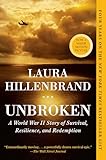
Unbroken — Laura Hillenbrand (2010)
The best-selling account of physical and psychological endurance under extreme conditions. Louis Zamperini’s story — Olympic runner, USAF bombardier, survivor of forty-seven days adrift on a Pacific raft after his plane went down, and then prisoner in Japanese camps where he was systematically tortured — is the most dramatically compelling resilience narrative in contemporary nonfiction. Hillenbrand’s prose is cinematic and relentless; the book’s portrait of Zamperini’s defiant refusal to break under his torturer Watanabe (‘the Bird’) is the most visceral account of the relationship between mental resilience and physical survival available.
When Things Fall Apart — Pema Chödrön (1997)
The most widely read Buddhist guide to adversity. Chödrön’s argument — that the attempt to achieve permanent stability, to avoid uncertainty and difficulty, is itself the source of most suffering, and that resilience comes from learning to open to groundlessness rather than resist it — is presented with warmth and personal honesty. The book draws on Tibetan Buddhist teachings but requires no prior knowledge of Buddhism; its practical guidance (sitting with discomfort, developing ‘bodhichitta’ or compassion for oneself and others under pressure) is universally applicable. The most spiritually serious of the resilience books listed here.
The Obstacle Is the Way — Ryan Holiday (2014)
The most practically actionable guide to Stoic resilience. Holiday’s argument — drawing on Marcus Aurelius, Epictetus, and historical examples from Theodore Roosevelt to Thomas Edison — is that the obstacle is not an impediment to progress but the material through which progress is made. The central Stoic insight: that what happens to us is less important than how we respond, and that the correct response to adversity is to ask what it demands of us rather than to resent it. The most accessible introduction to Stoic philosophy for a modern audience.
Becoming — Michelle Obama (2018)
The most widely read memoir of the 2010s and the most accessible account of resilience through systemic adversity. Obama’s account of her childhood on Chicago’s South Side, her education at Princeton and Harvard Law, her career, and her years as First Lady is structured as an argument that becoming is ongoing — that the self is not a fixed destination but a continuing project. Her account of the specific obstacles she faced (racial prejudice, the constraints of the First Lady role, the sacrifices of political life) is honest without being embittered.
The Glass Castle — Jeannette Walls (2005)
A memoir of childhood resilience under conditions of parental negligence. Walls’s account of growing up with her charismatic, irresponsible father Rex and her self-absorbed artist mother — moving constantly to avoid creditors, often without food, shelter, or heat — is told with a remarkable absence of self-pity. The memoir’s most difficult question is the one it leaves unanswered: whether Walls’s resilience was developed through her circumstances or achieved despite them, and whether the childhood she describes was formative in a way that justifies any of what her parents did.
Resilience as a Capacity That Can Grow
A central and encouraging insight that the literature of resilience offers is the recognition that resilience is not a fixed trait possessed by some and lacking in others, but a capacity that can be developed, strengthened, and grown — that the ability to recover from adversity and to endure difficulty is something that can be cultivated rather than a fixed endowment of nature. There is a common assumption that resilience is an innate quality, that some people are simply born resilient while others are not, but the literature of resilience challenges this assumption, revealing that resilience is far more a developed capacity than a fixed trait. The ability to recover from setbacks, to endure hardship, and to bounce back from adversity is, the literature shows, something that can be cultivated and strengthened over time, developed through experience, practice, and the cultivation of the attitudes and resources that resilience requires. This recognition is profoundly encouraging, for it means that resilience is available to anyone willing to develop it, that the capacity to endure and recover from difficulty is not the fixed possession of a fortunate few but a quality that can be grown and strengthened by anyone. The literature of resilience illuminates how this capacity can be developed, the attitudes, practices, and resources that strengthen resilience and that anyone can cultivate. This understanding of resilience as a developable capacity rather than a fixed trait is among the most valuable insights the literature offers, for it transforms resilience from an innate endowment that one either has or lacks into a capacity that anyone can develop and strengthen, and it offers hope and practical guidance to all who wish to become more resilient in the face of life’s inevitable difficulties. Resilience, the literature reveals, is not a fixed trait but a capacity that can grow, available to anyone willing to cultivate it, and this recognition offers encouragement and practical guidance to all who would develop their capacity to endure and recover from adversity.
The Roles of Meaning and Connection
The literature of resilience reveals that the capacity to endure and recover from adversity depends crucially on two resources above all others: meaning, the sense that one’s suffering and one’s life have purpose and significance, and connection, the support and belonging provided by relationships with others — and understanding the central importance of these two resources is essential to understanding resilience and to cultivating it. When the literature of resilience examines what enables some people to endure and recover from even the most severe adversity, two resources emerge as crucial above all others. The first is meaning, the sense that one’s life and even one’s suffering have purpose and significance, that there is a reason to endure and something to live for beyond the suffering itself. Those who can find or maintain a sense of meaning in the face of adversity, who can connect their suffering to some larger purpose or hold onto something that gives their life significance, prove far more able to endure and recover than those for whom suffering is merely meaningless. The second crucial resource is connection, the support and belonging provided by relationships with others, the bonds of love, friendship, and community that sustain people through difficulty. Those who face adversity within a web of supportive relationships, who are sustained by the love and support of others and by a sense of belonging, prove far more resilient than those who face difficulty alone and isolated. These two resources, meaning and connection, emerge from the literature as crucial to resilience, the deep sources from which the capacity to endure and recover most powerfully flows. Understanding the central importance of meaning and connection is essential to understanding resilience, for it reveals that the capacity to endure and recover depends not merely on individual strength or willpower but on these deeper resources of purpose and relationship. It is also essential to cultivating resilience, for it directs those who would become more resilient toward the cultivation of meaning and connection, the deep sources from which resilience most powerfully flows. Meaning and connection, the literature reveals, are crucial to resilience, and understanding their central importance is essential to understanding and to cultivating the capacity to endure and recover from adversity.
Resilience in Ordinary Life
While the literature of resilience often draws on extreme examples of survival and endurance, its deepest relevance lies in ordinary life, in the everyday adversities, setbacks, and difficulties that every person faces, and in the recognition that the capacity for resilience is needed and valuable not only in extraordinary circumstances but in the ordinary course of a human life. The dramatic stories of survival and endurance that the literature of resilience often features can make resilience seem a quality relevant only to extreme circumstances, to those who face catastrophe, disaster, or extraordinary adversity, but the deepest relevance of resilience lies in ordinary life. Every person, in the ordinary course of a human life, faces adversity, setbacks, and difficulties: failures and disappointments, losses and griefs, hardships and struggles, the inevitable difficulties that life imposes on everyone. The capacity for resilience, the ability to endure these difficulties and to recover from these setbacks, is needed and valuable not only in extraordinary circumstances but in the ordinary course of every life, for everyone faces adversity and everyone has need of the capacity to endure and recover. The literature of resilience, though it often draws on extreme examples, offers lessons of profound relevance to ordinary life, illuminating the capacity that everyone needs to meet the everyday adversities, setbacks, and difficulties that are the inevitable lot of every person. This relevance to ordinary life is among the most important things to recognize about resilience, for it reveals that resilience is not a quality reserved for extreme circumstances but a capacity needed by everyone in the ordinary course of life, and that the lessons of the literature of resilience apply not only to those who face catastrophe but to every person facing the inevitable difficulties of existence. To recognize the relevance of resilience to ordinary life is to understand that the capacity to endure and recover is needed by everyone, that the everyday adversities and setbacks of ordinary existence call for resilience no less than the dramatic crises, and that the lessons of the literature of resilience are of profound relevance to every person navigating the inevitable difficulties of a human life. Resilience in ordinary life, the capacity to meet the everyday adversities and setbacks that everyone faces, is the deepest relevance of the literature of resilience, and its lessons apply not only to extraordinary circumstances but to the ordinary course of every human life.
What Resilience Requires
The books listed here converge on several findings about what resilience actually requires. It is not the absence of suffering but the capacity to find meaning within it. It is not the absence of fear but the capacity to act despite it. It is not the avoidance of difficulty but the development — through engagement with difficulty — of the specific capacities that difficulty demands. And it is not achieved alone: almost every resilience narrative involves the presence of at least one other person who made the difference between survival and collapse. Resilience is relational as much as individual.
Frequently Asked Questions
What is the best book about resilience?
Man's Search for Meaning (1946) by Viktor Frankl is the essential book about resilience — a psychiatrist's account of surviving the Nazi concentration camps through the discovery of meaning and purpose. Educated (2018) by Tara Westover is the best contemporary resilience memoir — her account of escaping a survivalist family in rural Idaho to earn a PhD from Cambridge is the most dramatic account of individual self-reinvention available. Both are essential; both demonstrate that resilience is not a trait but a practice.
What is Educated about?
Educated (2018) by Tara Westover is a memoir of Westover's childhood in a survivalist family in rural Idaho — her father's refusal to allow formal education, her brother's violence, the near-fatal accidents she witnessed — and her eventual escape through self-education, college, a PhD from Cambridge. The memoir raises difficult questions about family loyalty, the nature of knowledge, and the cost of intellectual independence; Westover does not frame her story as a simple triumph but as a complicated accounting of what she gained and what she lost. The most powerful American memoir of the 2010s.
What is Unbroken about?
Unbroken (2010) by Laura Hillenbrand follows Louis Zamperini, an Olympic runner who survived a plane crash over the Pacific in 1943, forty-seven days adrift on a raft, and two years in Japanese prison camps. Hillenbrand's narrative is relentlessly paced and meticulously researched; its portrait of Zamperini's resilience — his physical endurance and his psychological refusal to break under systematic torture — is the most dramatic account of human endurance available in popular nonfiction. The book is the best-selling contemporary biography of resilience.
What is When Things Fall Apart about?
When Things Fall Apart (1997) by Pema Chödrön is a Buddhist guide to working with difficulty and uncertainty rather than trying to avoid them. Chödrön's central argument — that the attempt to achieve permanent security, to make things comfortable and stable, is the source of most human suffering, and that genuine peace comes from opening to impermanence and groundlessness rather than resisting them — is presented through personal stories, Buddhist teachings, and practical meditation guidance. The most widely read contemporary Buddhist guide to adversity.