Where to Start with Viktor Frankl: A Reading Guide
Where to start with Viktor Frankl — how to approach Man's Search for Meaning, his essential memoir and psychological masterwork. A complete reading guide.
By Elena Marsh
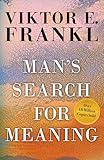
Viktor Frankl (1905–1997) was an Austrian psychiatrist and neurologist who developed logotherapy — a form of existential analysis centred on meaning as the primary human motivation — before the Second World War. He survived four Nazi concentration camps, including Auschwitz, and wrote Man’s Search for Meaning in nine days in 1945 shortly after his liberation. The book has sold over sixteen million copies and been named one of the ten most influential books in America. It remains, eighty years after its composition, one of the great works of the twentieth century.
Where to Start: Man’s Search for Meaning (1946)
The essential Frankl — and perhaps the most profound book ever written on how to endure suffering and find purpose. The authority Man’s Search for Meaning carries is inseparable from the conditions under which it was written and the observations on which it is based. Frankl was a trained psychiatrist; what the camps gave him was psychological data of a kind no laboratory could provide. He watched — even as he suffered, even as people around him died — how human beings respond to extreme deprivation and the imminence of death.
His central finding is the book’s most famous line: everything can be taken from a man but one thing — the last of the human freedoms, to choose one’s attitude in any given set of circumstances, to choose one’s own way. This is not a comforting platitude. Frankl earned it in Auschwitz, watching prisoners who gave away their last piece of bread not from weakness but from an inner freedom that the SS could not strip from them. He also watched a man keep himself alive until a specific date because he believed he would be liberated by then — and die two days after that date passed, not from wounds or disease, but from the withdrawal of meaning.
The observation is the foundation of the book’s second part: logotherapy, the therapeutic system Frankl developed from his experience. Where Freud placed pleasure at the centre of human motivation and Adler placed power, Frankl places meaning — the will to find or create a reason for one’s existence. When meaning is absent, the result is what he calls the existential vacuum: the Sunday-afternoon emptiness that arrives when the week’s distractions fall away, the sense that nothing matters and nothing is worth doing.
Frankl identifies three paths to meaning. Through work and what we create. Through love and whom we encounter. And through the attitude we take toward unavoidable suffering — the most difficult path and, for those in circumstances where suffering cannot be avoided, the only available one. He is not recommending suffering; he is observing that when suffering cannot be escaped, meaning can still be chosen. He calls this capacity tragic optimism: the ability to affirm life in spite of pain, guilt, and death. It is not naive positivity — it is a philosophical stance earned through the worst conditions a human being can experience.
At 200 pages, Man’s Search for Meaning can be read in a single sitting. Many readers find that its brevity is part of its power: the argument is concentrated, the evidence is harrowing, and by the end there is nothing to argue with.
Why Man’s Search for Meaning Is the Essential First Book
For a reader new to Viktor Frankl, Man’s Search for Meaning is the essential first book because it is his masterpiece, one of the most influential books of the twentieth century, and the fullest expression of his profound vision, the conviction that meaning can be found even in the worst suffering. Man’s Search for Meaning combines Frankl’s account of his experiences as a prisoner in Nazi concentration camps with his psychological and philosophical conclusions, above all his idea that the primary human drive is the search for meaning. As an entry point it is both natural and essential, for it is his defining work and the clearest statement of his thought. It welcomes the reader, insofar as so harrowing a subject allows, with its profound testimony, its hard-won wisdom, and its enduring hope, drawing the reader into one of the most important works of testimony and psychology. It is his most important work and the foundation of his reputation, so the new reader encounters Frankl whole. For the newcomer, then, Man’s Search for Meaning is the natural and essential starting point, on difficult subject matter handled with profound seriousness.
What to Expect as a New Reader
As a new reader, you can expect Man’s Search for Meaning to be a profound, harrowing, and ultimately hopeful work of testimony and psychology. You can expect testimony, for the first part of the book is Frankl’s account of his experiences as a prisoner in Nazi concentration camps. You can expect psychological insight, for Frankl reflects on how prisoners endured, and on what allowed some to find meaning and hope amid unimaginable suffering. You can expect his central idea, that the primary human drive is the search for meaning, the foundation of the therapeutic approach he called logotherapy. You can expect hard-won wisdom about suffering, freedom, and the human capacity to choose one’s attitude in any circumstance. You can expect a short but profound and moving book. You should be prepared for harrowing material. Expect, in short, a profound, harrowing, and ultimately hopeful work of testimony and psychology, the essential introduction to Frankl.
Going Deeper After Your First Book
Once Man’s Search for Meaning has introduced you to Frankl’s vision, the reader who wishes to go deeper can explore his other writings, which develop the psychological and philosophical ideas at the heart of his masterpiece. His other books elaborate his approach of logotherapy, the meaning-centered psychotherapy he founded, and extend his reflections on meaning, suffering, freedom, and responsibility. The reader can also place his testimony within the wider literature of the Holocaust to which it belongs. Reading more deeply deepens your engagement with Frankl’s profound vision, the conviction that meaning can be found even in suffering, and the search for meaning as the central human drive. His characteristic ideas run through his work. Building your reading journey from Man’s Search for Meaning is a matter of following his vision into his other writings on logotherapy and meaning. The reader who begins here will have encountered one of the most important and consoling works of testimony and psychology of the twentieth century.
Reading Viktor Frankl
Man’s Search for Meaning is Frankl’s essential book and requires no prior reading. It stands alone.
For the full Viktor Frankl bibliography, reviews, and biography, visit the Viktor Frankl author page on Editors Reads.
Affiliate disclosure: Links to Amazon on this page are affiliate links. We earn a small commission at no extra cost to you.
Frequently Asked Questions
Where should I start with Viktor Frankl?
Man's Search for Meaning (1946) is Frankl's essential book — a psychiatrist's account of surviving Auschwitz and the psychological framework he derived from those observations. One of the most important psychological texts of the twentieth century, and perhaps the most profound book ever written on how to endure suffering and find purpose. The authority it carries is inseparable from where it was written.
What is Man's Search for Meaning about?
Man's Search for Meaning is divided into two parts. The first is Frankl's memoir of Auschwitz, Dachau, and Kaufering — written not as a horror story but as a psychological observation of how human beings respond to extreme suffering and impending death. The second part presents logotherapy, the therapeutic system Frankl derived: the idea that the primary human drive is not pleasure or power but the pursuit of meaning, and that meaning can be found through work, love, or the attitude taken toward unavoidable suffering.
Is Man's Search for Meaning hard to read emotionally?
The first half — the Auschwitz memoir — is harrowing. Frankl describes specific deaths, the withdrawal of the will to live, and the psychological conditions of the camps with clinical precision and without sensationalism. This makes it emotionally difficult but also morally serious. The second half (logotherapy) is denser and more academic. The whole book is 200 pages and readable in a single sitting; many readers find that its brevity is part of its impact.
What should I read after Man's Search for Meaning?
After Man's Search for Meaning, Elie Wiesel's Night covers the same historical context through memoir rather than psychological analysis — a different register of the same experience. Marcus Aurelius's Meditations is the ancient philosophical precursor to Frankl's concept of choosing one's response to circumstances. Albert Camus's The Myth of Sisyphus covers the question of meaning in an absurd universe from a secular existentialist perspective.