Where to Start with Barry Schwartz: A Reading Guide
Where to start with Barry Schwartz — how to approach The Paradox of Choice, his essential book on how too much choice makes us worse off. A complete reading guide.
By Lena Fischer
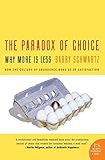
Barry Schwartz (born 1946) is an American psychologist and professor emeritus at Swarthmore College whose research focuses on decision-making, social institutions, and the relationship between freedom and welfare. The Paradox of Choice (2004) emerged from a decade of research into how expanding consumer choice affects psychological wellbeing, and his 2005 TED Talk on the same subject — “The Paradox of Choice: Why More Is Less” — became one of the most widely watched psychology talks in TED’s history.
Where to Start: The Paradox of Choice (2004)
The essential Schwartz — and one of the most useful counter-intuitive arguments in popular psychology. The central claim runs against the deepest assumptions of liberal economics and consumer culture: more choice is not always better, and beyond a certain point, expanding options makes people less satisfied, more anxious, and less likely to be happy with what they choose.
The argument builds from several distinct psychological mechanisms. First, opportunity cost: every option you choose means all other options are foregone. The more attractive those other options, the more your actual choice is diminished by comparison — not in any objective sense, but in terms of how satisfied you feel with it. Second, rising expectations: more choice raises the bar for what counts as acceptable. If there are five restaurants in town, a good meal is satisfying. If there are five hundred, anything short of excellent feels like a failure to find the best option. Third, self-blame: when choice is limited, bad outcomes are attributed to bad luck. When choice is unlimited, bad outcomes are your fault — you should have chosen better. The freedom that consumer capitalism celebrates produces not liberation but self-recrimination.
Schwartz’s most practically useful contribution is the maximiser/satisficer distinction. Maximisers must find the best possible option: they research exhaustively, compare obsessively, and are never quite sure they haven’t missed something better. Satisficers look for options that meet their criteria and stop once they find one. The research finding that surprises most readers: satisficers are consistently happier with their choices than maximisers, even when the maximiser objectively chose a better option. The psychological cost of the search and the doubt it leaves outweigh the benefit of the superior outcome.
Schwartz is not arguing against all choice — he is arguing for understanding the psychological costs of choice overload so that we can structure our options deliberately. Learning to be “good enough” in domains that don’t matter much to you — satisficing rather than maximising — frees cognitive and emotional resources for the areas where careful choice genuinely improves your life.
Why The Paradox of Choice Is the Ideal First Book
For a reader new to Barry Schwartz, The Paradox of Choice is the ideal first book because it is his most influential and accessible work and the fullest expression of his distinctive and counterintuitive central argument. The Paradox of Choice presents Schwartz’s influential idea that, contrary to the assumption that more choice is always better, an overabundance of choices can actually make us less satisfied, more anxious, and even paralyzed, and that learning to manage and limit our choices can make us happier. As an entry point, it is ideal because it lays out this counterintuitive and clarifying argument directly and compellingly, drawing on psychology to challenge a deep assumption of modern life. It welcomes the newcomer with its surprising thesis, its psychological insight, and its practical relevance, illuminating a paradox of modern abundance. It is his best-known book and the one that best represents his thinking, so that the new reader encounters Schwartz’s central argument from the first. For the newcomer, then, The Paradox of Choice is the natural and ideal starting point, the influential book that challenges the assumption that more choice is always better.
What to Expect as a New Reader
As a new reader, you can expect The Paradox of Choice to be a counterintuitive, psychologically rich, and practically relevant exploration of choice and happiness. You can expect Schwartz’s central argument, that, contrary to the assumption that more choice is always better, an overabundance of choices can make us less satisfied, more anxious, and even paralyzed. You can expect psychological insight, for Schwartz draws on research in psychology to explain why too much choice can undermine our happiness, through regret, raised expectations, and the burden of decision. You can expect a counterintuitive and clarifying thesis that challenges a deep assumption of modern consumer life. You can expect practical relevance, for the book offers insight into how we might manage and limit our choices to be happier and less overwhelmed. You can expect an accessible and engaging style that makes the psychology approachable. Expect, in short, a counterintuitive, psychologically rich, and practically relevant exploration of choice and happiness, an illuminating introduction to Schwartz’s argument.
Going Deeper After Your First Book
Once The Paradox of Choice has introduced you to Schwartz’s thinking on choice and happiness, the reader who wishes to go deeper can explore his other work and the wider literature in psychology and behavioral economics to which his thinking contributes, reading further in the light of the insight that his book provides. Schwartz has written on related questions of work, meaning, and human nature, and his thinking connects to a broad conversation in psychology and behavioral economics about choice, happiness, and decision-making. Reading more deeply deepens your engagement with these questions, but The Paradox of Choice provides the influential, foundational argument. His central insight, that more choice is not always better and can undermine happiness, offers a powerful and applicable idea, and the reader who has grasped it possesses a useful lens. Building your reading journey from The Paradox of Choice is a matter of pursuing its insight through Schwartz’s further work and the wider literature on choice and happiness. The reader who begins with The Paradox of Choice will have an illuminating foundation for understanding the paradox of choice in modern life.
Reading Barry Schwartz
The Paradox of Choice is Schwartz’s most accessible and widely read work. His academic writings and his later book Practical Wisdom (2010, co-authored with Kenneth Sharpe) address related themes for readers wanting to go deeper. The Paradox of Choice stands alone.
For the full Barry Schwartz bibliography, reviews, and biography, visit the Barry Schwartz author page on Editors Reads.
Affiliate disclosure: Links to Amazon on this page are affiliate links. We earn a small commission at no extra cost to you.
Frequently Asked Questions
Where should I start with Barry Schwartz?
The Paradox of Choice (2004) is Schwartz's most widely read book — a psychologist's argument that the explosion of choice in modern consumer society, while apparently liberating, actually produces anxiety, paralysis, and dissatisfaction. The maximiser/satisficer distinction at its centre is immediately personally applicable and among the most useful concepts in popular psychology.
What is The Paradox of Choice about?
The Paradox of Choice argues against the assumption — embedded in liberal economics and politics — that more options are always better. Drawing on research in behavioural economics and psychology, Schwartz shows that expanding choice increases the opportunity cost of any decision (all the paths not taken), raises expectations so high that any actual outcome disappoints, and produces regret, self-blame, and comparison anxiety. His central distinction between maximisers (who must find the best possible option) and satisficers (who seek good enough) explains why some people are systematically more stressed and less satisfied by choice than others.
Has The Paradox of Choice been replicated?
The Paradox of Choice draws on a broad body of research including Iyengar and Lepper's famous jam study (too many jam options reduced purchasing) and Schwartz's own work. Some specific findings in the book — particularly around choice overload — have had mixed replication results, and the relationship between choice quantity and satisfaction is more context-dependent than the book implies. The core maximiser/satisficer distinction and the psychological mechanisms Schwartz describes (opportunity cost, rising expectations, regret) are well-supported. The book is best read as a framework for self-understanding rather than a settled empirical claim.
What should I read after The Paradox of Choice?
After The Paradox of Choice, Daniel Kahneman's Thinking, Fast and Slow covers the psychological research on decision-making, happiness, and the gap between experienced and remembered utility in considerably more depth. Dan Ariely's Predictably Irrational covers adjacent territory on irrational decision-making. For a direct counterpoint on the value of choice, Tyler Cowen and other economists argue that expanding choices is net positive — reading both sides clarifies the actual empirical debate.