Where to Start with Bill Perkins: A Reading Guide
Where to start with Bill Perkins — how to approach Die with Zero, his provocative argument for spending wealth on experiences rather than accumulating it. A complete reading guide.
By Lena Fischer
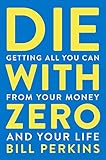
Bill Perkins is a hedge fund manager, energy trader, and professional poker player who observed, over years of watching wealthy people age and die, a recurring pattern: people who spent their lives accumulating wealth often died with far more than they ever spent, having deferred the experiences the wealth was theoretically meant to fund until those experiences were no longer possible. Die with Zero: Getting All You Can from Your Money and Your Life (2020) is his extended argument that this outcome represents a profound optimization failure.
Where to Start: Die with Zero (2020)
The essential Bill Perkins — and one of the more genuinely provocative challenges to conventional personal finance advice. Die with Zero opens with a question that most financial planning literature never asks: what is the money actually for? The standard answer — security, freedom, legacy, wealth — obscures a more precise question: when, specifically, do you plan to convert this accumulated capital into the experiences and relationships that make life worth living? And what if the answer is “later” long past the point when “later” becomes too late?
Perkins’s argument is not that saving is wrong but that optimizing for maximum wealth accumulation at death is the wrong target. Money unspent at the end of life represents life energy — time worked, experiences foregone — that was never converted into anything of value. Dying with more than you ever needed is not financial prudence; it is evidence that the optimization function was misconfigured.
The most practically useful concept in the book is experience windows — the periods in life when specific experiences are most valuable and most accessible. Hiking a difficult mountain is possible at thirty-five in a way it is not at seventy-five. Taking a beach holiday with young children has a value that cannot be replicated when the children are grown. Travelling extensively requires a physical energy that diminishes with age. Perkins argues that deferring these experiences until after retirement — until after the window has closed — is not caution but waste. The financially optimal strategy is to spend on experiences when their value is highest, not when you happen to have accumulated enough to feel comfortable.
The memory dividend is Perkins’s framing of why experiences are a better investment than many people assume. Experiences compound: the value of a meaningful holiday or adventure does not end when the event does but continues to pay returns in memory, story, and identity formation for decades. This reframes experience spending not as consumption but as investment in a different kind of asset.
Perkins extends the argument to inheritance timing: the conventional practice of leaving money to adult children after death delivers resources when the children are typically in their fifties or sixties — past the peak window for many of the experiences that money could fund. Giving money to children in their twenties and thirties, when it has maximum utility, is the better-optimized version of the same philanthropic instinct.
The book’s most significant limitation is its audience assumption. The framework makes excellent sense for someone who has genuinely more money than they are likely to need for security, healthcare, and contingencies. For readers without that security, the advice requires substantial modification — or honest acknowledgement that the book is not addressing your situation.
Why Die with Zero Is the Ideal First Book
For a reader new to Bill Perkins, Die with Zero is the ideal first book because it is his best-known work and the fullest expression of his distinctive, provocative philosophy of money and life, the idea of maximizing not wealth but life experiences. Die with Zero challenges the conventional focus on endless saving, arguing instead for spending and using your money to create meaningful experiences while you are able to enjoy them, and aiming, ideally, to die with zero. As an entry point it is ideal, for it is his defining book and a clear, thought-provoking statement of his philosophy. It welcomes the newcomer with its provocative central idea, its memorable concepts, and its accessible style, drawing the reader into a fresh way of thinking about money, time, and life. It is his most important work and the one that best represents his thinking, so the new reader encounters Perkins directly. For the newcomer drawn to rethinking money and life, then, Die with Zero is the natural and ideal starting point.
What to Expect as a New Reader
As a new reader, you can expect Die with Zero to be a provocative, thought-provoking, and accessible book about money and life. You can expect a central, contrarian idea, that the goal should be not to accumulate endless wealth but to maximize meaningful life experiences, ideally dying with zero. You can expect a challenge to conventional saving, for Perkins argues that many people oversave and underspend, missing the chance to enjoy their money while they can. You can expect memorable concepts, including the idea of time-buckets and the importance of timing experiences to the seasons of life. You can expect an emphasis on experiences, health, and time as the true currencies of a rich life. You can expect a thought-provoking, energetic, and accessible style. You can expect ideas to weigh against your own circumstances and values. Expect, in short, a provocative, thought-provoking, and accessible book about money and life, a fine introduction to Perkins’s philosophy.
Going Deeper After Your First Book
Once Die with Zero has introduced you to Perkins’s philosophy, the reader who wishes to go deeper can carry its ideas into the wider conversation about money, time, meaning, and the good life. Since Die with Zero is his central book, the natural next step is outward, into the broader literature that rethinks the relationship between money and a meaningful life, including writing on financial independence, intentional living, and the trade-offs between wealth, time, and experience. Perkins’s provocative reframing pairs especially well with, and provocatively against, the conventional save-and-accumulate wisdom, and the thoughtful reader weighs his ideas against their own values and circumstances. Reading more widely deepens your engagement with the questions his book raises. Building your reading journey from Die with Zero is a matter of carrying its ideas into the wider literature on money, time, and meaning. The reader who begins here will have encountered a provocative and memorable challenge to conventional thinking about money and life.
Reading Bill Perkins
Die with Zero is Perkins’s essential book. It stands alone and requires no prior reading.
For the full Bill Perkins bibliography, reviews, and biography, visit the Bill Perkins author page on Editors Reads.
Affiliate disclosure: Links to Amazon on this page are affiliate links. We earn a small commission at no extra cost to you.
Frequently Asked Questions
Where should I start with Bill Perkins?
Die with Zero: Getting All You Can from Your Money and Your Life (2020) is Perkins's essential book — a provocative challenge to conventional personal finance that argues maximizing wealth accumulation is the wrong goal. The aim should be to convert money into peak life experiences at the times when those experiences are most valuable. Best suited to financially secure readers who are over-saving relative to their likely remaining years.
What is Die with Zero about?
Die with Zero argues that dying with a large estate is evidence of a life optimization failure — that money unspent at death represents life energy that was never converted into experience. Perkins's framework centers on 'experience windows': the specific periods in life when particular experiences are most accessible and most valuable. His prescription is to spend deliberately at the right times rather than defer gratification until the window closes.
Is Die with Zero's advice suitable for everyone?
Die with Zero's advice is most applicable to financially secure readers who are over-saving relative to their expected spending needs. The framework assumes a level of financial stability that makes deliberate spending a choice rather than a risk, and it underweights the value of financial security and the unpredictable costs of late-life medical care. Perkins acknowledges this limitation but does not fully resolve it. Readers with genuine financial uncertainty should approach the book as a philosophical reframe rather than a literal plan.
What should I read after Die with Zero?
After Die with Zero, Oliver Burkeman's Four Thousand Weeks covers the finite nature of human time with philosophical depth — the existential context for Perkins's practical argument. Morgan Housel's The Psychology of Money covers the full psychology of wealth and spending with more nuance about the role of security and fear. For the research on what actually produces happiness, Robert Waldinger and Marc Schulz's The Good Life covers the longest-running study on adult happiness ever conducted.