Where to Start with Carol Dweck: A Reading Guide
Where to start with Carol Dweck — how to approach Mindset, her essential book on the psychology of success. A complete reading guide.
By Lena Fischer
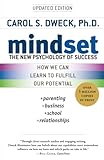
Carol Dweck (born 1946) is a professor of psychology at Stanford University whose research on motivation, achievement, and the development of talent has spanned four decades. Her 2006 book Mindset: The New Psychology of Success distils that research into a single, elegant framework — the distinction between fixed and growth mindsets — that has become one of the most widely applied concepts in education, coaching, management, and parenting around the world. Dweck is among the most cited psychologists in the academic literature; Mindset is among the most influential popular psychology books of the twenty-first century.
Where to Start: Mindset (2006)
The essential Dweck — and one of the genuinely useful books in a genre that often promises more than it delivers. The core finding, developed across decades of laboratory and field research, is deceptively simple: the belief people hold about whether their abilities are fixed or can be developed has a profound effect on what they achieve.
The fixed mindset treats intelligence, talent, and personality as static quantities you either have or don’t. The consequence is that every difficult task becomes a test of whether you have it — and therefore a potential proof that you don’t. People in a fixed mindset take the safe option, avoid challenges that might reveal limitations, interpret failure as evidence of fundamental inadequacy, and often plateau early. The most counterintuitive finding: when you praise a child for being smart, you install a fixed mindset. The child now has an identity to protect — and starts avoiding challenges that might threaten it.
The growth mindset treats intelligence and talent as starting points that can be developed through effort, effective strategies, and feedback. People in a growth mindset are interested in what they can learn from a challenge rather than whether they look competent. They find difficulty energising. They recover from failure faster. And they develop more, because development requires admitting you’re not already good enough.
Dweck extends the framework from children’s classrooms to elite athletes, corporate leaders, and couples. The Enron chapter is particularly striking: the company’s culture of “natural talent” — selecting and celebrating people deemed innately brilliant, treating mistakes as evidence of insufficient talent — is a textbook fixed-mindset organisation. The collapse follows directly from the logic.
The most practically important insight is also the most encouraging: mindsets are not fixed. They are learned beliefs, and they can be changed. The first step is noticing when the fixed-mindset voice is speaking — the one that says “I’m just not a numbers person” or “this is who I am.” The growth mindset begins with replacing that voice with curiosity.
Why Mindset Is the Ideal First Book
For a reader new to Carol Dweck, Mindset is the ideal and essential first book because it is her landmark work, one of the most influential books in popular psychology, and the fullest expression of her groundbreaking research. A psychologist, Dweck presents in Mindset her influential distinction between the fixed mindset, the belief that abilities are fixed traits, and the growth mindset, the belief that abilities can be developed through effort and learning, and shows how this distinction profoundly shapes achievement and fulfillment. As an entry point, it is the essential and natural place to begin, for it is Dweck’s landmark and defining work, the comprehensive account of her influential research. It welcomes the newcomer with its compelling distinction, its research-based insight, and its practical relevance, offering a transformative understanding of how beliefs about ability shape our lives. It is her most important book and the one that best represents her work, so that the new reader encounters Dweck’s central idea directly. For the newcomer, then, Mindset is the natural and ideal starting point.
What to Expect as a New Reader
As a new reader, you can expect Mindset to be an influential, research-based, and practically relevant exploration of how our beliefs about ability shape our lives. You can expect Dweck’s central distinction, between the fixed mindset, the belief that abilities are fixed traits, and the growth mindset, the belief that abilities can be developed through effort, learning, and persistence. You can expect research-based insight, for Dweck grounds her argument in extensive psychological research, while making it accessible and engaging. You can expect a demonstration of how mindset shapes achievement, for the book shows how a growth mindset fosters resilience, learning, and accomplishment, while a fixed mindset can limit them. You can expect practical relevance, for the book offers insight into cultivating a growth mindset in oneself, one’s children, and one’s work. You can expect an accessible and encouraging style. Expect, in short, an influential, research-based, and practically relevant exploration of how beliefs about ability shape our lives, the essential introduction to Dweck’s concept of mindset.
Going Deeper After Your First Book
Once Mindset has given you Dweck’s concept of the growth mindset, the reader who wishes to go deeper can explore the wider literature on achievement, learning, and the psychology of success to which her influential work contributes, applying the concept that her book provides. The themes of Mindset, the growth mindset, the role of effort and learning, and the psychology of achievement, connect to a broad conversation in psychology and education about how people learn, grow, and succeed, and the reader drawn to these questions can pursue them further. Reading more deeply deepens your engagement with the psychology of achievement and growth, but Mindset provides the foundational, influential concept. Her central insight, the distinction between the fixed and growth mindsets and its profound effects, offers a powerful and applicable idea, and the reader who has grasped it possesses a transformative lens. Building your reading journey from Mindset is a matter of applying its concept and pursuing its themes through the wider literature on achievement and learning. The reader who begins with Mindset will have a foundational understanding of how beliefs about ability shape achievement and fulfillment.
Reading Carol Dweck
Mindset is Dweck’s essential and most accessible work. Readers wanting to go deeper into the research can find her academic papers through Google Scholar; her 2012 paper “Mindsets and Human Nature” covers the academic debate and subsequent research developments. Angela Duckworth’s Grit and Anders Ericsson’s Peak are the natural companions.
For the full Carol Dweck bibliography, reviews, and biography, visit the Carol Dweck author page on Editors Reads.
Affiliate disclosure: Links to Amazon on this page are affiliate links. We earn a small commission at no extra cost to you.
Frequently Asked Questions
Where should I start with Carol Dweck?
Mindset: The New Psychology of Success (2006) is Dweck's only widely available book and the essential starting point — Stanford psychologist Carol Dweck's distillation of four decades of research into the growth vs. fixed mindset distinction. One of the most genuinely useful frameworks in applied psychology; has influenced education, coaching, and management around the world.
What is Mindset about?
Mindset argues that the belief people hold about their own intelligence and abilities — whether they see those qualities as fixed traits or as qualities that can be developed — profoundly affects every area of their performance. People with a fixed mindset avoid challenges to protect their sense of competence; people with a growth mindset seek challenges as opportunities to develop. The framework applies to children, athletes, business leaders, and relationships.
Is the growth mindset research reliable?
The core mindset distinction and its effects on motivation and resilience are among the most replicated findings in educational psychology. Some critics have noted that specific mindset intervention programmes have produced mixed replication results, and that the original effect sizes in some studies were larger than subsequent replications confirmed. The framework is robust; some applications are better supported than others. Dweck has engaged with this criticism directly in later writings.
What should I read after Mindset?
After Mindset, Angela Duckworth's Grit (2016) explores related territory — the role of perseverance and passion in long-term achievement, and why effort matters more than talent. Anders Ericsson's Peak covers the research on deliberate practice and how expertise is actually developed. For broader motivation science, Daniel Pink's Drive covers intrinsic vs. extrinsic motivation and connects well to Dweck's work.