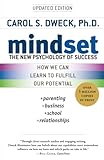
Editors Reads Verdict
One of the most genuinely useful frameworks in psychology. The growth vs. fixed mindset distinction is simple enough to remember and apply, but backed by decades of rigorous research with children, athletes, executives, and couples. Reading it changes how you interpret failure, effort, and the abilities of people around you.
What We Loved
- The growth/fixed mindset framework is immediately applicable — you'll catch yourself in both mindsets within hours
- Backed by decades of peer-reviewed research across classrooms, sports, and business
- Chapters on parenting and education are among the most practically useful in the genre
- Explains why talented people sometimes underperform and why effort matters more than raw ability
- Short enough to read in a weekend; dense enough to return to
Minor Drawbacks
- Repetitive in places — the core concept is introduced early and restated often
- Some critics argue the replication record for specific mindset interventions is mixed — the framework is robust, some applications less so
- The business chapter is thinner than the education and sport sections
Key Takeaways
- → Fixed mindset: intelligence and ability are fixed traits you either have or don't — failure means you're not good enough
- → Growth mindset: intelligence and ability can be developed through effort, strategy, and feedback
- → Praising effort rather than talent builds growth mindset; praising intelligence builds fixed mindset
- → The fixed mindset avoids challenges to protect its sense of self; the growth mindset seeks challenges to develop
- → Mindsets are learned and can be changed — but requires conscious effort and honest self-observation
| Author | Carol S. Dweck |
|---|---|
| Publisher | Ballantine Books |
| Pages | 320 |
| Published | February 28, 2006 |
| Language | English |
| Genre | Psychology, Self-Help, Education |
| Difficulty | Beginner |
| Best For | Parents, teachers, managers, athletes, and anyone who has ever told themselves they're not a 'maths person' or 'not creative'. Essential for anyone responsible for developing other people's potential. |
How Mindset Compares
Mindset at a glance against 3 similar books readers weigh alongside it.
| Book | Author | Rating | Best for |
|---|---|---|---|
| Mindset (this book) | Carol S. Dweck | ★ 4.6 | Parents, teachers, managers, athletes, and anyone who has ever told themselves |
| Atomic Habits | James Clear | ★ 4.8 | Anyone who wants to build better habits, break bad ones, or improve personal |
| Outliers | Malcolm Gladwell | ★ 4.5 | Anyone curious about the sociology of success, parents thinking about their |
| Thinking, Fast and Slow | Daniel Kahneman | ★ 4.6 | Investors, doctors, lawyers, managers, policymakers, and any curious person who |
The Idea That Changed Education
Carol Dweck is a psychology professor at Stanford whose research on motivation, achievement, and the development of talent has spanned four decades. Mindset distils that research into a single, elegant framework that has influenced how teachers teach, how coaches coach, and how parents parent around the world.
The core finding: the belief people hold about their own intelligence and abilities — whether they see them as fixed traits or as qualities that can be developed — has a profound effect on every aspect of their performance and wellbeing.
The Two Mindsets
The Fixed Mindset treats intelligence and talent as static quantities you’re born with. If you have it, you have it; if you don’t, you don’t. People in a fixed mindset are preoccupied with proving they have it — taking the safe option, avoiding challenges that might reveal limitations, interpreting failure as evidence of insufficient ability.
The trap: every challenge becomes a referendum on your worth. People stop taking risks. They avoid asking for help (which would signal weakness). They feel devastated by criticism. And they often plateau early — they stop developing because developing requires admitting you’re not already good.
The Growth Mindset treats intelligence and talent as starting points that can be developed through effort, good strategies, and feedback from others. People with a growth mindset are interested in what they can learn, not in looking smart. They find difficult challenges energising. They interpret failure as information — what didn’t work, what to try next.
The research finding that shocked Dweck: when you praise children for being smart, they develop a fixed mindset. When you praise them for effort and strategy, they develop a growth mindset. The wrong compliment, given with the best intentions, can make children avoid challenges to protect their “smart” identity.
Beyond Childhood
Dweck’s later chapters extend the framework beyond education. Athletes with a fixed mindset attribute success to natural talent and failure to lack of ability; athletes with a growth mindset attribute outcomes to preparation and execution — and recover from setbacks faster.
Business leaders with fixed mindsets surround themselves with agreeable subordinates (who won’t challenge their genius); those with growth mindsets build cultures that value honest feedback and learning from failure. Dweck profiles Enron’s talent-obsession culture as a textbook fixed-mindset organisation: the emphasis on selecting people with “innate talent” rather than developing people created a culture where admitting mistakes was lethal.
In relationships, fixed-mindset partners expect compatibility to be automatic — problems signal incompatibility. Growth-mindset partners expect relationships to require work and treat difficulties as challenges to solve together.
Applying It
The most important practical insight: mindsets are not fixed. They are learned beliefs, and they can be changed. Dweck’s research on mindset interventions shows that teaching children and adults the neuroscience of brain plasticity — that the brain grows through challenge, that the myelin sheath thickens with practice — produces measurable changes in mindset and performance.
The first step is noticing when you’re in a fixed mindset. The inner voice that says “I’m just not good at this” or “this is who I am” is the fixed mindset speaking. Acknowledging it, and responding with curiosity rather than defensiveness, is how growth begins.
Our rating: 4.6/5 — One of the most useful frameworks in psychology. The concept is simple; the implications are profound.
One Idea, Pursued Relentlessly
Mindset is built on a single distinction that Dweck spent decades researching: the difference between a fixed mindset, which treats ability as innate and unchangeable, and a growth mindset, which treats ability as something developed through effort and learning. From this one idea she draws out consequences for school, sport, business, relationships, and parenting — arguing that how we explain success and failure to ourselves shapes how much we are willing to risk, persist, and improve. The power of the book is in showing how pervasively this one belief operates, often invisibly, in the stories we tell about ourselves and others.
Why It Spread So Far
Few psychology concepts have travelled as far into schools and workplaces, and “growth mindset” has become part of common educational language. The appeal is obvious: the idea is hopeful, actionable, and intuitively true, suggesting that praise, framing, and self-talk can change outcomes. For parents and teachers in particular, Dweck’s emphasis on praising effort and strategy rather than fixed talent offered a concrete change with real evidence behind it.
Reading It With Nuance
The very popularity that spread the idea also flattened it, and the careful reader should know the caveats. Some replication studies have found the effects of mindset interventions smaller and more context-dependent than the popular version suggests, and Dweck herself has warned against a “false growth mindset” that reduces her work to slogans and empty praise. Read in full rather than in summary, the book is more careful than its reputation, and its central insight — that believing abilities can grow makes people more resilient learners — remains valuable, provided it is held with the nuance the research actually supports rather than as a magic formula.
Why the Nuance Matters
The gap between Dweck’s careful research and the slogan it became is itself instructive. “Growth mindset” entered schools and workplaces so quickly that it was often reduced to praising effort or telling people to try harder, which is not what the research shows and which Dweck has explicitly criticised. Read in full, the book is more careful than its reputation: it is about how our beliefs about ability shape the risks we take and the setbacks we survive, not about positive thinking. Held with that nuance — and with awareness that the effects are real but smaller and more context-dependent than the popular version implies — its central insight remains genuinely useful, especially for parents, teachers, and anyone trying to learn something hard.
Reading Guides
Frequently Asked Questions
What is "Mindset" about?
Stanford psychologist Carol Dweck's research on achievement and success reveals that one simple belief about your own intelligence and abilities has a profound effect on outcomes. People with a growth mindset — who believe abilities can be developed — consistently outperform those with a fixed mindset, regardless of starting talent.
Who should read "Mindset"?
Parents, teachers, managers, athletes, and anyone who has ever told themselves they're not a 'maths person' or 'not creative'. Essential for anyone responsible for developing other people's potential.
What are the key takeaways from "Mindset"?
Fixed mindset: intelligence and ability are fixed traits you either have or don't — failure means you're not good enough Growth mindset: intelligence and ability can be developed through effort, strategy, and feedback Praising effort rather than talent builds growth mindset; praising intelligence builds fixed mindset The fixed mindset avoids challenges to protect its sense of self; the growth mindset seeks challenges to develop Mindsets are learned and can be changed — but requires conscious effort and honest self-observation
Is "Mindset" worth reading?
One of the most genuinely useful frameworks in psychology. The growth vs. fixed mindset distinction is simple enough to remember and apply, but backed by decades of rigorous research with children, athletes, executives, and couples. Reading it changes how you interpret failure, effort, and the abilities of people around you.
Ready to Read Mindset?
Check the current price on Amazon.
Check Price on Amazon (paid link)Prices and availability are subject to change. See Amazon for current price.
Review last updated: