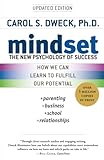
Carol Dweck is an American psychologist whose research on mindset and motivation has reshaped how educators and leaders think about intelligence and potential.
Carol Dweck is a professor of psychology at Stanford University and one of the most influential researchers in the field of motivation and learning. Her central concept — the distinction between a fixed mindset, in which people believe their abilities are innate and unchangeable, and a growth mindset, in which they see abilities as developable through effort — has become one of the most widely cited frameworks in education, business, and sport psychology. Her 2006 book Mindset: The New Psychology of Success presents this research in accessible terms, drawing on decades of studies with children and adults to argue that how people think about their own intelligence determines how they respond to challenge and failure.
Mindset is effective precisely because Dweck grounds her argument in concrete research rather than anecdote alone. She demonstrates convincingly that praising children for effort rather than innate ability produces measurably better outcomes — a finding that has influenced teaching practice worldwide. The book’s examples range across domains, from athletics to business to relationships, which makes the framework feel genuinely broad in application.
The honest caveat is that subsequent attempts to replicate some of the growth-mindset intervention studies have produced mixed results, and critics have noted that the real-world effects of mindset training programmes are more modest than popular accounts suggest. Dweck herself has acknowledged the nuance. Readers would do well to treat Mindset as a compelling and research-informed framework rather than a prescription with guaranteed outcomes. Its core insight — that beliefs about ability shape behaviour — remains well-supported and worth taking seriously.
Reading Guides