Best Books About Success: Essential Reading List
The best books about success — from Outliers and Grit to Shoe Dog and Zero to One. Non-fiction that actually changes how you think about achievement, skill, and building something.
By Marcus Webb
Books about success vary enormously in what they’re actually claiming — from the purely motivational (believe in yourself) to the genuinely research-based (here is what the evidence shows about what produces achievement). The books below are weighted toward the latter: works that make specific, falsifiable claims about what success requires and support those claims with evidence or honest personal experience.
The Research on Success
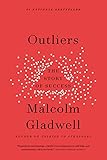
Outliers — Malcolm Gladwell (2008)
The most widely read book about what actually produces extraordinary success. Gladwell examines the circumstances, opportunities, and accumulated advantages that — in addition to individual effort — produce outlier achievers: the specific timing that put Bill Gates near a computer terminal for thousands of hours in the early 1970s, the cultural legacy that made Korean Airlines pilots more prone to certain kinds of crashes, the birth-month advantages that accumulate in youth sports. The book’s central argument — that success is not just about individual talent and effort but about the context in which talent and effort are exercised — has genuinely shifted how many readers think about their own circumstances and potential.
Grit — Angela Duckworth (2016)
The most important recent academic book on the psychology of success. Duckworth, a professor at the University of Pennsylvania, argues that the best predictor of achievement is not talent but what she calls grit — the combination of passion (long-term commitment to a goal) and perseverance (the disposition to keep working toward that goal when it becomes difficult). Her research spans West Point cadets, National Spelling Bee competitors, and Chicago public school students. The practical implications — that grit can be developed, that it predicts success better than IQ or talent — have made this one of the most influential psychology books of the last decade.
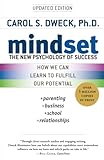
Mindset — Carol Dweck (2006)
The most practically influential book on learning and achievement. Dweck’s research distinguishes between two belief systems: the fixed mindset (the belief that abilities are innate and cannot be changed) and the growth mindset (the belief that abilities can be developed through effort and learning). People with fixed mindsets avoid challenges that might expose their limitations; people with growth mindsets embrace challenges as opportunities to develop. The book has influenced education, sports coaching, business training, and parenting in ways that few academic psychology books achieve.
Business and Entrepreneurship
Shoe Dog — Phil Knight (2016)
The best business memoir of recent decades. Knight describes Nike’s founding and early years with unusual candour about the near-failures, the improvisations, the luck, and the human relationships that produced the company — including the near-miss bankruptcy, the lawsuit with Onitsuka Tiger, and the specific character of the early employees who built the company because they believed in what Knight was trying to do. Essential reading for anyone interested in what building a company actually requires.
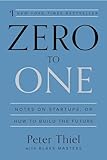
Zero to One — Peter Thiel with Blake Masters (2014)
Thiel’s argument for contrarian thinking in business — the distinction between ‘zero to one’ innovation (creating something genuinely new) and ‘one to n’ replication (copying what already exists). The most counterintuitive and most useful of the standard tech entrepreneur reading list, particularly the chapters on competition (which Thiel argues is overrated by both economists and entrepreneurs) and the relationship between secrets (things you believe that most people don’t) and competitive advantage.
Range and Generalist Success
Range — David Epstein (2019)
The corrective to the 10,000-hour rule. Epstein argues that in complex, unpredictable environments — most of the modern economy — generalists who have developed broad knowledge and experience across multiple domains outperform narrow specialists. Early specialisation is less effective than it appears; late development (the ‘Roger Federer path’ as opposed to the ‘Tiger Woods path’) may be more resilient in the long run. An important counterargument to the Gladwell/Ericsson emphasis on deliberate practice in a single domain.
The Principles Approach
Principles — Ray Dalio (2017)
Dalio, founder of Bridgewater Associates (the world’s largest hedge fund), describes the explicit principles he developed for decision-making, management, and personal life over four decades. The book is more useful as a model of systematic thinking about values and decisions than as a set of rules to adopt — Dalio’s actual principles are specific to his unusual situation — but his insistence on radical transparency and willingness to be wrong has influenced how many executives think about institutional culture.
Defining Success Before Pursuing It
The most important and most often neglected question in the entire literature of success is also the most basic: what does success actually mean? Before any book can usefully teach how to achieve success, it must confront what success is, and the wisest writing on the subject insists that this prior question of definition is the one that matters most, because to pursue success without having defined it is to risk devoting one’s life to the achievement of someone else’s goals or to the attainment of things that, once gained, prove hollow. The default definition of success that the culture supplies — wealth, status, power, recognition, the accumulation of external markers of achievement — is one that the best books on the subject treat with deep skepticism, recognizing that the single-minded pursuit of these conventional rewards frequently leads to lives that are outwardly successful but inwardly empty, and that many who achieve everything they were taught to want discover that it does not bring the fulfillment they expected. The deeper wisdom of the genre is that genuine success must be defined personally rather than accepted from the culture, rooted in one’s own values, and oriented toward a life that is meaningful and fulfilling rather than merely impressive by external standards. This means asking what one actually wants from life, what would constitute a life well lived by one’s own lights, and what kind of success would bring genuine satisfaction rather than the empty achievement of goals one never truly chose. The books that take this question seriously perform an invaluable service, redirecting the reader’s attention from the unexamined pursuit of conventional success toward the more important work of defining success for oneself. To clarify what success genuinely means before pursuing it is the first and most consequential step, and the literature that insists on this priority offers its readers the most valuable lesson of all.
The Habits and Disciplines of Achievement
Once the question of what success means has been seriously confronted, the literature of success turns to the practical matter of how it is actually achieved, and here the best books converge on a consistent and somewhat sobering truth: that success, in almost any field, is far less a matter of talent, luck, or dramatic breakthroughs than of consistent habits, sustained discipline, and the patient accumulation of effort over long periods of time. The popular imagination conceives of success in terms of innate genius, lucky breaks, and decisive moments of triumph, but the careful study of how achievement actually happens reveals a far less glamorous and far more encouraging reality: that the people who accomplish great things are usually distinguished not by extraordinary gifts but by their cultivation of the right habits and their capacity for sustained, disciplined effort over time. The daily disciplines, the consistent practices, the willingness to do the necessary work repeatedly over months and years, the persistence through difficulty and setback — these unglamorous factors, the best books argue, account for far more of success than the dramatic qualities the culture celebrates. This is both a sobering and an empowering recognition: sobering because it dispels the comforting fantasy that success comes from talent or luck beyond one’s control and reveals instead that it demands sustained effort and discipline, but empowering because it means that success is largely within reach of anyone willing to cultivate the right habits and do the necessary work, rather than being reserved for the exceptionally gifted or the merely lucky. The literature of habit and discipline, in showing that achievement is built from consistent daily practices rather than rare bursts of brilliance, offers a realistic and actionable understanding of how success is genuinely created, and locates the path to achievement not in qualities one cannot control but in habits and disciplines that anyone can develop.
Success, Failure, and the Whole of a Life
The wisest books about success refuse to treat success in isolation, insisting instead on understanding it within the larger context of a whole human life — its relationship to failure, its costs and trade-offs, and its proper place among the other things that make a life good — and this larger perspective is what separates genuine wisdom about success from mere techniques for achievement. A persistent theme in the best of this literature is the intimate relationship between success and failure, the recognition that failure is not the opposite of success but an integral part of the path toward it, that nearly every significant achievement is built upon a foundation of prior failures, and that the capacity to fail, learn, and persevere is among the most essential ingredients of eventual success. This reframing of failure, from a shameful outcome to be avoided into a necessary and valuable part of the journey, is one of the genre’s most important contributions, freeing the reader from the paralyzing fear of failure that prevents so many from pursuing their goals. Beyond its relationship to failure, the best books situate success within the whole of a life, attending to its costs and trade-offs and insisting that success in one domain, pursued single-mindedly, often comes at the expense of others that matter more — relationships, health, integrity, peace of mind, the simple enjoyment of being alive. They recognize that a life consumed by the pursuit of achievement, however successful by external measures, may be a poor life by the measures that ultimately count, and they counsel a more balanced and integrated understanding in which success is one good among many rather than the single goal to which all else is sacrificed. This holistic perspective, attending to failure, cost, and the place of success within a whole and balanced life, represents the mature wisdom toward which the best of the genre aspires, and it offers the reader not merely a means of achieving success but a wiser understanding of what success is worth and how it fits within a life genuinely well lived.
Reading Order
Start with research: Outliers → Mindset → Grit — the research-based understanding of what success requires.
For entrepreneurs: Shoe Dog → Zero to One → The Hard Thing About Hard Things.
Balanced approach: Outliers → Range → Grit → Mindset.
Frequently Asked Questions
What is the best book about success?
Outliers by Malcolm Gladwell is the most widely read book about the factors that determine success — specifically, the argument that extraordinary success is the product of opportunities, circumstances, and practice rather than innate talent alone. Grit by Angela Duckworth is the most important recent academic book on success — her research suggests that perseverance and passion (what she calls grit) predict achievement better than talent. Mindset by Carol Dweck is the most practically influential — the distinction between fixed and growth mindset has changed how millions of people think about their own ability to improve.
What is Outliers about?
Outliers by Malcolm Gladwell (2008) examines why some people are extraordinarily successful. Gladwell's argument: success is not simply the product of individual intelligence or talent — it is the product of circumstances, opportunities, and the specific advantages that accumulate. His most famous claim is the '10,000-hour rule' (drawn from Anders Ericsson's research) that extraordinary expertise in any field requires approximately 10,000 hours of deliberate practice. He also examines the role of birth dates (children born just after the age cutoff for youth sports tend to be the oldest in their cohort and receive more coaching), cultural legacy, and historical timing in determining success.
What is Shoe Dog about?
Shoe Dog by Phil Knight (2016) is the memoir of Nike's founder — the account of how a twenty-four-year-old with $50 and an idea began importing Japanese running shoes and built what became the world's largest athletic footwear company. Knight writes with unusual candour about the near-failures, the improvisation, the luck, and the specific human relationships (with his first employees, his Japanese suppliers, his family) that produced Nike. It is the best business memoir for readers who want to understand what building a company actually feels like from the inside.
What is the difference between Grit and Mindset?
Mindset by Carol Dweck is about the belief system that underlies learning — specifically, the difference between believing that abilities are fixed (fixed mindset) and believing that they can be developed through effort (growth mindset). It is primarily about the psychology of learning. Grit by Angela Duckworth is about the trait that sustains effort over long periods — the combination of passion and perseverance that Duckworth's research suggests predicts achievement better than talent alone. They are complementary: Mindset explains why some people respond to failure by trying harder; Grit measures how much someone persists when they do.