Where to Start with Chris Guillebeau: A Reading Guide
Where to start with Chris Guillebeau — how to approach The $100 Startup, his practical guide to building a profitable small business with minimal startup capital. A complete reading guide.
By Marcus Webb
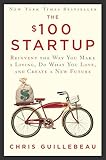
Chris Guillebeau (born 1979) is an American author, entrepreneur, and podcaster who documented his mission to visit every country on Earth and has written extensively about unconventional business, travel, and life design. The $100 Startup: Reinvent the Way You Make a Living, Do What You Love, and Create a New Future (2012) was published by Crown Business and became a major bestseller, drawing on Guillebeau’s research into 1,500 people who had built profitable small businesses on minimal startup capital.
Where to Start: The $100 Startup (2012)
The essential Chris Guillebeau — and one of the more practically useful books about small-scale entrepreneurship for people who are considering it seriously for the first time. The $100 Startup opens with a democratic premise: you don’t need venture capital, a business degree, a revolutionary idea, or a large team to build a business that gives you financial independence and work you care about. The barrier, Guillebeau argues, is lower than most people believe — and the case studies throughout the book are designed to prove it.
The book is built from research into 1,500 people who had built profitable businesses on startup capital of $1,000 or less, distilled into the most instructive 100 cases. What distinguishes it from most entrepreneurship literature is its unusual specificity: Guillebeau reports actual revenue figures, actual startup costs, actual timelines, and actual obstacles. The woman who built a profitable travel consultancy for $83. The graphic designer who turned a part-time side project into a six-figure business within eighteen months. The candlestick maker who charged premium prices by serving a niche market no one else was serving. The specificity is the book’s credibility.
The convergence framework is Guillebeau’s central analytical contribution: the idea that viable micro-businesses live at the intersection of three factors — passion (what you love doing), skills (what you’re actually good at), and market (what people will pay for). Passion alone is insufficient, and the book is admirably clear about this. “I love baking” is a hobby. “I bake custom wedding cakes for people who want something unusual” is a business premise. The conversion from passion to marketable value is the creative work that most aspiring entrepreneurs fail to complete.
The book’s most useful practical tool is the one-page business plan template: what will you sell, who will buy it, what is the price, how will customers find you, and why will they buy from you rather than from someone else? This stripped-down format forces a clarity that complex business plans — with their financial projections, market analysis sections, and operational appendices — consistently obscure. A business you cannot explain in five questions is a business you do not yet understand.
The recurring pattern across all the case studies is the same: the successful founders launched quickly and imperfectly, sold their first product before they felt ready, and refined based on real customer feedback rather than theoretical planning. The instinct to prepare exhaustively before starting is, Guillebeau argues, the primary obstacle most aspiring entrepreneurs face — and the evidence from his research is that it does not improve outcomes.
The book is most relevant for people building service businesses, consulting practices, or skill-based products at a small scale. It is less applicable to people pursuing venture-backed startups, platform businesses, or ambitions that require significant capital by design.
Why The $100 Startup Is the Ideal First Book
For a reader new to Chris Guillebeau, The $100 Startup is the ideal first book because it is among his most popular works and a fine expression of his distinctive approach, the practical, inspiring encouragement of small-scale entrepreneurship, freedom, and unconventional living. The $100 Startup shows how ordinary people have built small, profitable businesses with little money, drawing on many real examples to offer practical guidance for turning a passion or skill into income and freedom. As an entry point it is ideal, for it is one of his best-known books and a clear example of his accessible, encouraging approach to entrepreneurship and the freedom it can bring. It welcomes the newcomer with its inspiring examples, its practical guidance, and its encouraging style, drawing the reader into the world of small-scale entrepreneurship. It is among his major works and a fine representation of his approach, so the new reader encounters Guillebeau’s thinking directly. For the newcomer, then, The $100 Startup is an excellent starting point.
What to Expect as a New Reader
As a new reader, you can expect The $100 Startup to be a practical, inspiring, and accessible guide to small-scale entrepreneurship. You can expect a focus on micro-businesses, for the book shows how ordinary people have built small, profitable businesses with little money. You can expect real examples, for Guillebeau draws on many case studies of people who turned a passion or skill into income. You can expect practical guidance, for the book offers concrete advice on finding an idea, getting started, and earning money. You can expect an emphasis on freedom and unconventional living, for Guillebeau values autonomy and a life on one’s own terms. You can expect an encouraging, optimistic, and accessible style. You can expect inspiration as well as instruction. Expect, in short, a practical, inspiring, and accessible guide to small-scale entrepreneurship, a fine introduction to Guillebeau’s approach.
Going Deeper After Your First Book
Once The $100 Startup has introduced you to Guillebeau’s approach, the reader who wishes to go deeper can explore his other books, which continue his practical, inspiring encouragement of entrepreneurship, freedom, and unconventional living. His other works explore subjects such as finding work that brings both joy and money, the side-hustle as a path to income and security, and the pursuit of personal quests and a remarkable life, each marked by his accessible, encouraging style and real examples. Reading these after The $100 Startup deepens your engagement with Guillebeau’s distinctive approach, the practical encouragement of entrepreneurship, freedom, and living on one’s own terms. His characteristic optimism and practicality run through his work, and the reader inspired by The $100 Startup will find them across his books. Building your reading journey through Guillebeau is a matter of following his ideas from The $100 Startup into his other books. The reader who begins here and continues will find an inspiring and practical guide to entrepreneurship and freedom.
Reading Chris Guillebeau
The $100 Startup is Guillebeau’s essential business book. It stands alone and requires no prior reading.
For the full Chris Guillebeau bibliography, reviews, and biography, visit the Chris Guillebeau author page on Editors Reads.
Affiliate disclosure: Links to Amazon on this page are affiliate links. We earn a small commission at no extra cost to you.
Frequently Asked Questions
Where should I start with Chris Guillebeau?
The $100 Startup (2012) is Guillebeau's essential book — a practical, case-study-driven guide to building a profitable small business around your skills with minimal startup capital. Built from interviews with 1,500 people who had done exactly this, it is unusually specific about money: actual revenue figures, actual startup costs, actual timelines. Most useful for people considering leaving employment to build a freedom business.
What is The $100 Startup about?
The $100 Startup argues that you don't need venture capital, an MBA, or a revolutionary idea to build a business that gives you financial freedom and meaningful work. You need a skill people will pay for, enough customers to sustain you, and the willingness to start before you feel ready. The book's central framework identifies the sweet spot where passion, skills, and market overlap — and insists that passion alone, without market validation, is not sufficient.
Is The $100 Startup relevant today?
The $100 Startup was published in 2012 and some examples feel dated in the post-pandemic creator economy, where the landscape for freelancers, service providers, and digital product creators has changed significantly. The core principles — start small, test quickly, create value for others — remain sound. Readers building digital businesses may want to supplement it with more current resources on creator platforms and digital marketing, but the foundational thinking transfers.
What should I read after The $100 Startup?
After The $100 Startup, Michael Gerber's The E-Myth Revisited covers the system-building challenge that comes once a small business is running — how to build a business rather than just creating a job for yourself. Paul Jarvis's Company of One covers the case for staying small deliberately — the philosophical complement to Guillebeau's practical framework. Alex Hormozi's $100M Offers covers how to make what you offer so compelling that price resistance disappears.