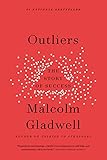
Editors Reads Verdict
Gladwell at his best. Outliers is endlessly quotable, relentlessly thought-provoking, and full of research presented with masterful storytelling flair. The 10,000-hours rule and the relative-age effect have changed how millions of people think about talent and success.
What We Loved
- Beautifully written — Gladwell's narrative journalism at its most accessible
- Every chapter contains an insight that reframes how you think about success
- The 10,000-hours concept is a powerful mental model for skill development
- Challenges the meritocracy myth in constructive, evidence-based ways
Minor Drawbacks
- The 10,000-hours rule has been significantly challenged by subsequent research
- Gladwell cherry-picks examples to fit his thesis — be a critical reader
- Some conclusions are more speculative than the confident presentation suggests
Key Takeaways
- → Extraordinary success is rarely the product of individual genius — context and luck matter enormously
- → The 10,000-hour rule: roughly 10,000 hours of deliberate practice correlates with world-class expertise
- → Relative age effect: the oldest children in any annual cohort have significant developmental advantages
- → Cultural legacy shapes behaviour in profound and long-lasting ways
- → Opportunity is unevenly distributed — who gets the chance to practise 10,000 hours matters as much as the practice itself
| Author | Malcolm Gladwell |
|---|---|
| Publisher | Little, Brown and Company |
| Pages | 309 |
| Published | November 18, 2008 |
| Language | English |
| Genre | Psychology, Sociology, Business |
| Difficulty | Beginner |
| Best For | Anyone curious about the sociology of success, parents thinking about their children's development, managers thinking about talent, and Gladwell's wide general readership. |
How Outliers Compares
Outliers at a glance against 3 similar books readers weigh alongside it.
| Book | Author | Rating | Best for |
|---|---|---|---|
| Outliers (this book) | Malcolm Gladwell | ★ 4.5 | Anyone curious about the sociology of success, parents thinking about their |
| Atomic Habits | James Clear | ★ 4.8 | Anyone who wants to build better habits, break bad ones, or improve personal |
| Deep Work | Cal Newport | ★ 4.7 | Knowledge workers, writers, programmers, academics, and anyone whose job |
| Thinking, Fast and Slow | Daniel Kahneman | ★ 4.6 | Investors, doctors, lawyers, managers, policymakers, and any curious person who |
Rethinking the Story of Success
Every culture tells stories about successful people that follow the same arc: extraordinary individual, overcomes adversity through talent and hard work, achieves greatness. Outliers argues that this story, while emotionally satisfying, is almost entirely wrong.
Malcolm Gladwell — New Yorker writer, master of narrative non-fiction — spent years examining the hidden factors behind extraordinary achievement. What he found was less flattering to the myth of the self-made genius and more interesting.
The 10,000-Hour Rule
The book’s most famous idea: across a wide range of fields — chess, classical music, programming, sports — world-class expertise correlates with approximately 10,000 hours of deliberate practice.
Gladwell draws on research by Anders Ericsson (though Ericsson later objected to how his work was characterised) to argue that greatness requires opportunity and time as much as raw talent. The Beatles played for thousands of hours in Hamburg clubs before they became the Beatles. Bill Gates had access to a time-sharing terminal in 1968 — essentially unheard-of for a teenager — that allowed him to accumulate programming hours his contemporaries couldn’t.
The lesson is double-edged: talent matters less than we think, but so does effort without opportunity. Who gets 10,000 hours?
The Relative Age Effect
One of the most genuinely surprising findings in the book: in sports with annual age-cutoff dates (most hockey, football, and football leagues use January 1), players born just after the cutoff date are dramatically over-represented at elite levels.
The reason: a child born in January and a child born in December are in the same “year group” despite being nearly 12 months apart in development. At ages 8-10, that developmental gap is enormous. The January-born child is selected for elite programmes, receives better coaching, plays more, develops faster — and the early advantage compounds for decades.
This “relative age effect” appears in education as well. Children born just before the school year cutoff date perform measurably better throughout their schooling.
The Matthew Effect
Gladwell introduces “the Matthew Effect” (from the Gospel of Matthew: “For unto everyone that hath shall be given…”) — the sociological observation that small initial advantages tend to compound into massive eventual differences.
Success creates opportunity which creates success. The hockey star receives better coaching, which makes them better, which attracts more coaching. The early reader gets more books, which makes them a better reader, which gets them into advanced classes.
This is not a counsel of despair — it’s an argument that opportunity matters as much as individual effort, and that societies which distribute opportunity more fairly will develop more genuine talent.
Cultural Legacy
The book’s final section examines how cultural background shapes professional success in ways that persist for generations. Gladwell’s analysis of Korean Air’s high accident rate (linked to culturally driven communication patterns in the cockpit) and Asian students’ mathematical aptitude (linked to the linguistic structure of Asian number systems and a culture built around agricultural patience) are among the book’s most controversial and fascinating chapters.
Our rating: 4.5/5 — Essential reading for anyone who wants to understand why some people and groups succeed at extraordinary rates. Read with critical scepticism, but read it.
Reading Guides
- 15 Books Like Outliers to Read Next
- 15 Books Like Born a Crime to Read Next
- 15 Books Like Grit to Read Next
- 15 Books Like Can
- 15 Books Like Mindset to Read Next
- 12 Best Psychology Books of All Time (Expert Ranked)
- 25 Best Books for Men (That Are Actually Worth Reading)
The 10,000-Hour Rule in Context
It is worth being precise about what the 10,000-hour rule says and does not say, because it has been both popularized and misrepresented more than almost any other idea in Gladwell’s work. The research by Anders Ericsson that Gladwell draws on was specifically about deliberate practice — structured, feedback-intensive practice aimed at improving specific weaknesses — rather than simply time spent in an activity. Ericsson later clarified, publicly and pointedly, that Gladwell’s popularisation had smoothed over distinctions he considered essential: not all practice is deliberate, not all fields have the same relationship between practice time and expertise, and the number 10,000 was a rough empirical pattern, not a law of nature.
Gladwell acknowledged these nuances in later discussions of the book, though the paperback did not incorporate them. For readers approaching Outliers fresh, the honest version of the 10,000-hour idea is: extraordinary expertise in most fields requires an extraordinary amount of deliberate practice, and the opportunity to accumulate that practice is not evenly distributed. The precise number matters less than those two linked observations.
The Beatles and Bill Gates
Gladwell’s two signature examples — the Beatles’ Hamburg apprenticeship and Bill Gates’s programming access — were chosen because they illustrate the convergence of talent and structural opportunity with unusual clarity. The Beatles were undeniably talented, but their talent was developed in a specific context: extended residencies in Hamburg nightclubs in the early 1960s, where they played for hours every night, before audiences who demanded entertainment, with no safety net. The hours they accumulated before returning to England were hours that no British band with a conventional performance schedule could have matched.
Bill Gates had access, in 1968, to a time-sharing terminal at his private school, provided through a parent’s connection to a technology company. Interactive computing for teenagers was essentially unheard of at the time. Gates was brilliant, but he was also the beneficiary of an access chain that had nothing to do with his individual merit.
Gladwell’s point is not that talent is irrelevant. It is that talent without opportunity does not produce exceptional outcomes, and that the distribution of opportunity has little to do with merit. This is a structural argument with uncomfortable implications for how societies justify their hierarchies — and it is what gives Outliers a moral charge that most pop-psychology books lack.
Frequently Asked Questions
What is "Outliers" about?
Malcolm Gladwell challenges the myth of the self-made success story, arguing that high achievers are the product of hidden advantages, extraordinary opportunities, and cultural legacies — not just individual talent and hard work.
Who should read "Outliers"?
Anyone curious about the sociology of success, parents thinking about their children's development, managers thinking about talent, and Gladwell's wide general readership.
What are the key takeaways from "Outliers"?
Extraordinary success is rarely the product of individual genius — context and luck matter enormously The 10,000-hour rule: roughly 10,000 hours of deliberate practice correlates with world-class expertise Relative age effect: the oldest children in any annual cohort have significant developmental advantages Cultural legacy shapes behaviour in profound and long-lasting ways Opportunity is unevenly distributed — who gets the chance to practise 10,000 hours matters as much as the practice itself
Is "Outliers" worth reading?
Gladwell at his best. Outliers is endlessly quotable, relentlessly thought-provoking, and full of research presented with masterful storytelling flair. The 10,000-hours rule and the relative-age effect have changed how millions of people think about talent and success.
Ready to Read Outliers?
Check the current price on Amazon.
Check Price on Amazon (paid link)Prices and availability are subject to change. See Amazon for current price.
Review last updated: