Malcolm Gladwell is a Canadian author and journalist whose bestselling pop-social-science books — including Outliers, The Tipping Point, and Blink — have made him one of the most influential nonfiction writers of his generation.
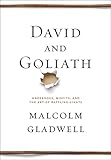
Malcolm Gladwell spent years as a journalist at The New Yorker developing the form he would make famous: the counterintuitive idea, the surprising case study, the expert whose work illuminates something unexpected about human behavior, all woven into a story that disguises how much it is persuading you. The Tipping Point (2000), Blink (2005), and Outliers (2008) established him as the defining voice of popular social science, and books like David and Goliath and The Bomber Mafia extended his range into history and military strategy.
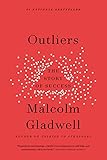
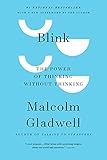
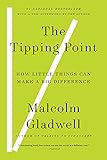
The books are genuinely seductive. Gladwell is widely regarded as one of the most gifted explainers of our time — he makes research feel alive, his anecdotes are carefully chosen for maximum illumination, and his central arguments (the tipping point of social contagion, the 10,000-hour rule in Outliers, the role of unconscious cognition in Blink) have become part of popular discourse. The Undoing Project, which profiles the collaboration of Daniel Kahneman and Amos Tversky, may be his most scholarly work and reads like a genuine intellectual biography.
The critical response to Gladwell has become more pointed over time. Researchers have challenged the 10,000-hour rule, the claims of Blink, and his selection and interpretation of evidence across multiple books. The charge is that he tells appealing stories that simplify — or misrepresent — the research they claim to be explaining. That charge has enough substance to require acknowledgment. Gladwell’s books are best read as brilliant journalism and thought-provocation rather than as summaries of settled science, and that framing does not diminish what they offer.
A Popularizer of Big Ideas
Malcolm Gladwell remains one of the most influential and widely read nonfiction authors of the twenty-first century, a writer who has made the findings of psychology and the social sciences accessible and entertaining to a mass audience. Through a series of bestselling books and as a longtime staff writer for The New Yorker, Gladwell has popularised the technique of building counterintuitive arguments around vivid anecdotes, memorable case studies, and catchy concepts. His gift for storytelling and for reframing the familiar in surprising ways has made him a household name and a defining figure in the world of popular intellectual nonfiction.
The Signature Method
Gladwell’s books share a recognisable and highly effective structure: he identifies a surprising idea, gives it a sticky name, and illustrates it through a sequence of engaging stories that range across history, business, sports, and science. The Tipping Point explored how ideas and behaviours spread like epidemics; Blink examined rapid, intuitive decision-making; Outliers argued that success depends heavily on circumstance, timing, and opportunity rather than talent alone. Each book distills complex research into an accessible, narrative-driven argument that readers find both illuminating and easy to remember.
Memorable Concepts
Part of Gladwell’s enormous influence lies in his talent for coining concepts that enter the cultural vocabulary. Ideas such as the “tipping point” and the “10,000-hour rule” for achieving mastery have become widely cited shorthand, discussed far beyond the books that introduced them. This ability to crystallise a complex argument into a single memorable phrase is central to his appeal and his reach, giving readers compelling frameworks for understanding the world even as it sometimes flattens the nuance of the underlying research.
Approach With a Critical Eye
For all his popularity, Gladwell’s method has drawn substantial and serious criticism, and readers should engage with his work thoughtfully rather than uncritically. Scholars and critics have argued that he oversimplifies complex research, cherry-picks supporting anecdotes, and draws sweeping conclusions that the underlying evidence does not fully support; the “10,000-hour rule,” in particular, has been disputed by the very researchers whose work inspired it. His arguments are best treated as provocative starting points for thinking rather than settled conclusions, valuable for the questions they raise more than for any claim to definitive proof.
The Power of Storytelling
What is undeniable is Gladwell’s mastery of narrative. He is a superb storyteller, and his books are genuinely pleasurable to read, full of fascinating characters and unexpected connections that make social science feel like a series of intriguing mysteries. This narrative skill is the engine of his success and the reason his ideas travel so widely, but it is also the source of the critiques against him, since a compelling story can persuade more than the evidence warrants. The pleasure and the peril of his work are two sides of the same gift.
In recent years Gladwell has extended his reach through podcasting, notably with his series Revisionist History, which applies his contrarian, story-driven approach to overlooked or misunderstood episodes from the past. This move into audio has broadened his audience further and demonstrated the adaptability of his method to new formats. His continued prominence across books and podcasts reflects the enduring public appetite for accessible, surprising takes on how the world works, delivered with his characteristic narrative flair.
Malcolm Gladwell’s Reputation Endures
Malcolm Gladwell has had an enormous influence on popular nonfiction, inspiring countless imitators and shaping how a generation thinks and talks about psychology, success, and social change. For newcomers, Outliers and The Tipping Point are the natural starting points, best read with both curiosity and healthy skepticism. For readers seeking engaging, thought-provoking, and conversation-starting nonfiction — provided they approach his conclusions critically rather than as the final word — Gladwell remains one of the most entertaining and influential idea-popularizers of his era.
Reading Guides