All Malcolm Gladwell Books Ranked: Which One Should You Read First? (2026)
Every Malcolm Gladwell book ranked from best to most divisive — including The Tipping Point, Blink, Outliers, Talking to Strangers, David and Goliath, What the Dog Saw, and Revisionist History.
By Marcus Webb
Malcolm Gladwell is one of the most influential non-fiction writers of the past three decades — and one of the most debated. His books have introduced millions of readers to social science research, psychological phenomena, and counterintuitive ideas about human behaviour. They have also attracted sustained criticism from academics who argue he oversimplifies, overreaches, and makes the research sound more conclusive than it is.
Both things are true, which is part of what makes him interesting. He is not a scientist and does not claim to be. He is a storyteller who uses science as raw material, and the result is books that are almost impossible to put down and almost impossible to read without arguing with.
Here is every Gladwell book ranked, with a guide to which one you should start with.
All Malcolm Gladwell Books at a Glance
| Rank | Book | Year | Best For | Our Rating |
|---|---|---|---|---|
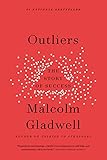
| 1 | Outliers | 2008 | Understanding success and achievement | ★★★★★ |
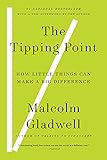
| 2 | The Tipping Point | 2000 | How ideas and trends spread | ★★★★★ |
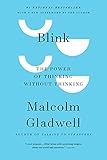
| 3 | Blink | 2005 | Intuition and snap judgments | ★★★★☆ |
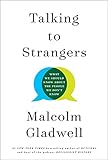
| 4 | Talking to Strangers | 2019 | Communication and misjudgment | ★★★★☆ |
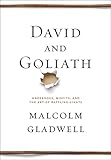
| 5 | David and Goliath | 2013 | Rethinking disadvantage | ★★★☆☆ |
| 6 | What the Dog Saw | 2009 | Essay collection; variety of ideas | ★★★☆☆ |
| 7 | The Bomber Mafia | 2021 | Military history and ethics | ★★★☆☆ |
| 8 | Revenge of the Tipping Point | 2024 | Existing Gladwell fans only | ★★★☆☆ |
Best starting point: Outliers — the most coherent argument, most memorable evidence, and most likely to change how you think.
#1 — Outliers: The Story of Success
Best for: Anyone thinking about achievement, talent, and why some people succeed.
Outliers is Gladwell’s most consequential book. Its central argument — that exceptional achievement is not primarily a product of individual genius or talent but of circumstances, timing, opportunity, and accumulated hours of practice — was genuinely disruptive when published in 2008 and remains relevant.
The specific evidence Gladwell marshals is memorable: the discovery that almost all elite Canadian hockey players are born in the first three months of the year (the cutoff date effect), Bill Gates’s unlikely access to computers in 1968, the Beatles’ Hamburg residency before their American breakthrough, and the 10,000-hour rule (drawn from Anders Ericsson’s research on deliberate practice).
The 10,000-hour rule has since been contested — Ericsson himself objected to how Gladwell simplified his findings — but the broader point about the role of circumstances and accumulated practice in extraordinary achievement is sound. Outliers changed how a generation thought about success and failure, which is the right measure of a book’s importance.
Criticism: Gladwell underweights the role of individual differences in talent and ability. The 10,000-hour rule as stated is an oversimplification. Some of the case studies have been challenged. All true; the book is still worth reading.
#2 — The Tipping Point: How Little Things Can Make a Big Difference
Best for: Anyone interested in how ideas, trends, and behaviours spread.
The Tipping Point launched Gladwell’s career and introduced the idea that social change operates like epidemics — it spreads slowly, then suddenly, when it crosses a threshold. The three factors he identifies — the Law of the Few (a small number of unusually connected or persuasive people drive most transmission), the Stickiness Factor (some messages are inherently more memorable), and the Power of Context (environment shapes behaviour more than character) — remain useful analytical tools.
The case studies are vivid: the resurgence of Hush Puppies shoes in 1994, the decline of crime in New York in the 1990s, the spread of suicide in Micronesia. Some of these have been challenged by later research — the broken windows theory underlying the New York crime narrative is particularly contested. But the framework for thinking about how things tip from niche to mainstream remains as relevant as ever in the age of social media.
In 2024, Gladwell published Revenge of the Tipping Point, revisiting and updating the original framework with new case studies and some reconsideration of earlier conclusions — a rare act of intellectual self-examination for a popular author.
#3 — Blink: The Power of Thinking Without Thinking
Best for: Understanding intuition, snap judgments, and when to trust (or distrust) your gut.
Blink makes a case for the reliability of rapid cognition — the “thin-slicing” of complex situations that happens in the first two seconds of an encounter. Gladwell opens with the story of Getty Museum curators who immediately felt something was wrong with a statue that turned out to be a forgery, despite being unable to articulate why.
The most compelling sections concern the systematic failure of deliberate analysis: marriage researcher John Gottman’s ability to predict divorce from four minutes of conversation, the problem with blind orchestra auditions, the tendency of people to associate height with leadership competence. The book is less coherent than Outliers — it argues both for and against trusting gut reactions without a fully satisfying account of when to do which — but the individual stories are among the best in the Gladwell canon.
#4 — Talking to Strangers: What We Should Know About the People We Don’t Know
Best for: Understanding the systematic mistakes we make when encountering people we don’t know.
Talking to Strangers is Gladwell’s most serious and, in places, most sobering book. It grew out of his interest in the Sandra Bland case — a Black woman who was stopped for a traffic violation in Texas and died in custody three days later. His argument is that the police officer who stopped her was not a racist outlier but someone whose training and cognitive patterns were systematically calibrated in ways that made the encounter more dangerous.
The supporting material is wide-ranging: how CIA analysts failed to identify Soviet spies inside their own agency, how judges get bail decisions wrong, how we misread deception, why we default to believing people are who they say they are. The central concept — “default to truth” — is the most interesting idea in any Gladwell book: we assume honesty not because we’re naive but because social life is impossible without this assumption, and the people who abandon it early pay a high social cost.
It is a harder book than his others and asks more of the reader. It is also, arguably, more important.
#5 — David and Goliath: Underdogs, Misfits, and the Art of Battling Giants
Best for: Rethinking disadvantage and unconventional strategy.
David and Goliath argues that apparent disadvantages — smaller size, lack of resources, difficult childhoods — often produce the unconventional thinking and desperate creativity that leads to success. His analysis of David’s victory over Goliath is its most memorable section: Goliath, he argues, was almost certainly suffering from a condition that impaired his vision; David, as a slinger rather than a swordsman, was fighting at a completely different range with a completely different weapon. The “giant” had an invisible weakness; the “underdog” had a misunderstood advantage.
The book extends this into discussions of class sizes in education, the “inverted U” curve that makes advantages become disadvantages at extremes, and the counterintuitive outcomes produced by enforcing laws too harshly or too leniently. It is perhaps the most criticised of his books — several reviewers argued the central thesis is unfalsifiable and that he cherry-picks supporting cases. The individual sections on dyslexia and the advantages of difficult childhoods are more defensible.
#6 — What the Dog Saw and Other Adventures
Best for: Readers who want more of Gladwell’s New Yorker essays in one place.
What the Dog Saw is a collection of essays drawn from Gladwell’s New Yorker writing, without the unified thesis of his full-length books. The range is extraordinary: the psychology of ketchup and why there are dozens of varieties of mustard but only one acceptable type of ketchup, the career of hair-dye inventor Shirley Polykoff, the problem with profiling as a predictive tool, the failure of mammography as a screening method, and much more.
Without the book-length argument to sustain, some essays feel slight. Others — including the long title essay about Cesar Millan, the dog trainer, and what his relationship with animals reveals about communication — are among the best things Gladwell has written. This is a good book to read after you’ve read his strongest long-form works.
#7 — The Bomber Mafia: A Dream, a Temptation, and the Longest Night of the Second World War
Best for: Military history readers and those interested in technology and ethics.
The Bomber Mafia is Gladwell’s most focused historical narrative. It follows a group of air force theorists who believed that precision bombing — hitting only military targets with pinpoint accuracy — could end wars without mass civilian casualties. Their theory collided with reality over Japan in 1945, when Curtis LeMay’s campaign of firebombing killed hundreds of thousands of civilians in a single night.
Gladwell frames the story as a collision between a beautiful idea (precision bombing) and the brutal demands of war. It’s a short book — almost a long essay — and more disciplined in scope than his others. If you are interested in World War II or in the ethics of military technology, it stands on its own. If you are new to Gladwell, start somewhere else.
#8 — Revenge of the Tipping Point
Best for: Existing Gladwell fans who have read the original Tipping Point.
This 2024 book revisits the original Tipping Point framework with new case studies — including the opioid crisis, the rise of Miami as a financial centre, and the spread of overprescription. It is more willing than the original to acknowledge the dark sides of tipping point dynamics: the same mechanisms that spread good ideas also spread epidemics, misinformation, and addiction.
It is best understood as a companion to the original rather than a standalone work. Read The Tipping Point first.
Where to Start
If you’ve never read Gladwell: Start with Outliers. It’s his most coherent argument, most memorable evidence, and the one most likely to change how you think about something.
If you’ve read one and want to go deeper: Blink if you want something lighter and faster; Talking to Strangers if you want something more serious and challenging.
If you’re a committed Gladwell reader: Work through the rest in any order. The essay collection (What the Dog Saw) is best saved for last.
Frequently Asked Questions
Is Malcolm Gladwell accurate?
Gladwell’s critics — and there are many — argue that he oversimplifies research, overstates conclusions, and cherry-picks examples. His strongest defenders argue he is a journalist, not a scientist, and should be judged by journalistic rather than scientific standards. The fairest answer: his books are best read as catalysts for thinking rather than definitive accounts of the evidence.
What is Malcolm Gladwell’s most popular book?
The Tipping Point is his best-selling book globally. Outliers tends to receive the highest ratings from readers.
Does Malcolm Gladwell have a podcast?
Yes. Revisionist History is Gladwell’s podcast, which re-examines overlooked or misunderstood events from the past. It extends his books’ approach into audio form and is worth listening to alongside his books. The podcast has released multiple seasons since 2016 and covers topics including sports, education, food, crime, and American history.
What is Malcolm Gladwell’s most recent book?
Revenge of the Tipping Point (2024) is Gladwell’s most recent book. It revisits the framework from his 2000 debut, examining how tipping point dynamics explain the opioid crisis, the rise of Miami, and other contemporary phenomena. Unlike most sequels or follow-ups, it is willing to look at the darker implications of the same mechanisms that spread good ideas — they also spread addiction, misinformation, and social contagion.
What is the 10,000-hour rule and is it accurate?
The 10,000-hour rule is Gladwell’s most famous idea, introduced in Outliers (2008). It holds that achieving expertise in any complex domain requires approximately 10,000 hours of deliberate practice. Gladwell drew the figure from Anders Ericsson’s research on elite musicians. Ericsson subsequently objected that Gladwell had oversimplified his findings: the 10,000-hour figure was an average across a specific group, not a universal threshold, and “deliberate practice” (a specific kind of structured training with expert feedback) is what matters — not just hours accumulated. The core insight remains useful: sustained, structured practice matters more than innate talent in most domains.
How has Gladwell responded to his critics?
Gladwell has engaged with his critics more directly than most popular non-fiction writers. In Revisionist History and in his newsletter, he has revisited several cases — including the broken windows theory from The Tipping Point — and acknowledged where subsequent evidence has complicated his original conclusions. He maintains that his role is to surface ideas and make them accessible, not to provide the final scientific word. His critics generally accept this framing but argue that his books’ confident tone obscures the contingency of the evidence they rest on.
For readers interested in the psychology and social science that Gladwell draws on, see our Best Psychology Books guide — which covers Kahneman, Thaler, and others he references.
For the full Malcolm Gladwell bibliography, reviews, and biography, visit the Malcolm Gladwell author page on Editors Reads.
Affiliate disclosure: Links to Amazon on this page are affiliate links. We earn a small commission at no extra cost to you. This does not influence our editorial recommendations.
Frequently Asked Questions
What is the best Malcolm Gladwell book?
The Tipping Point is Gladwell's most influential book and introduced the ideas that defined his career. Outliers is considered his most personally revealing and emotionally resonant. Blink is his most accessible. Most readers who start with one go on to read all of them.
What Malcolm Gladwell book should I start with?
Start with The Tipping Point if you want to understand the idea that made Gladwell famous. Start with Outliers if you are interested in success and what actually explains high achievement. Blink is the shortest and most purely idea-driven. David and Goliath is a good starting point if you are interested in how we misread advantage and disadvantage.
Should I read Malcolm Gladwell books in publication order?
Malcolm Gladwell's books are all standalone and can be read in any order. Each book is built around a central concept developed through multiple case studies and stories. Reading them in publication order (Tipping Point, Blink, Outliers, What the Dog Saw, David and Goliath, Talking to Strangers) shows his evolution as a writer but is not necessary.
Are Malcolm Gladwell's books accurate?
Gladwell's books have attracted criticism from academics for oversimplifying research and occasionally misrepresenting studies, particularly Blink and Outliers. His strength is narrative — making ideas accessible and compelling through storytelling. Readers get the most from his work by treating it as a starting point for further exploration rather than as definitive statements of fact.