Where to Start with Malcolm Gladwell: A Reading Guide
Where to start with Malcolm Gladwell — whether to begin with The Tipping Point, Outliers, or Blink. A complete reading guide to the master of narrative non-fiction.
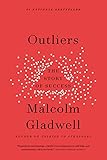
Malcolm Gladwell (born 1963) is the Canadian-British journalist and author who — with The Tipping Point (2000) — helped define the genre of narrative non-fiction that applies academic social science research to popular questions about human behaviour. His books translate research from psychology, sociology, and behavioural economics into accessible, story-driven arguments, typically built around a central counter-intuitive proposition illustrated through compelling case studies. He has sold more than forty million copies worldwide and is among the most influential popular non-fiction writers in the world. He is also the host of the Revisionist History podcast and a staff writer at The New Yorker.
Where to Start: Outliers (2008)
The most accessible and most argued Gladwell — and the book that introduced the 10,000-hour rule to popular consciousness. The central argument: success is not primarily a function of individual talent but of opportunity, timing, and cultural context. Gladwell illustrates this through the birthdate patterns in youth sports (players born just after the eligibility cut-off date are older, physically more developed, and get more coaching and opportunity — and this compounds over years), the family backgrounds of the most successful Silicon Valley pioneers (most born in a tight birth-year window that positioned them perfectly for the personal computer revolution), and the cultural patterns that make Korean Air’s accident record worse than Scandinavian airlines.
The book is Gladwell at his most persuasive and his most systematically argued. The 10,000-hour rule — that mastery of any complex skill requires approximately 10,000 hours of deliberate practice — has been contested by psychologists since publication; Gladwell’s interpretation of Anders Ericsson’s research is looser than the original research. The book nonetheless makes a compelling case that we systematically misattribute success.
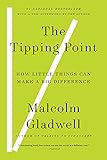
The Tipping Point (2000)
Gladwell’s debut — and the book that introduced ‘tipping point’ as a concept for how ideas and behaviours spread. The social epidemic model — that ideas spread like viruses, with threshold moments beyond which transmission becomes exponential — is illustrated through case studies including the resurgence of Hush Puppies shoes in the mid-1990s and the drop in New York crime. Some of the specific claims (particularly the broken windows theory of crime, which the book endorses) have been subsequently challenged by criminologists.
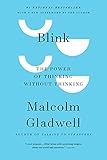
Blink (2005)
Gladwell’s study of rapid cognition — when thin-slicing works and when it fails. The argument about unconscious expertise producing reliable rapid judgements is illustrated through art forgeries, speed-dating, and military simulations; the counter-argument about when intuition fails through police profiling and implicit racial bias. More nuanced than its popular reputation suggests.
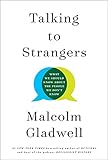
Talking to Strangers (2019)
Gladwell’s most disciplined and most explicitly argument-driven book — a study of why encounters with strangers fail. The Sandra Bland case provides the frame; Gladwell argues that the default-to-truth assumption, the mismatch between internal states and external expression, and the context-blindness of most inter-personal reading all contribute to systematic misreading of strangers, with catastrophic consequences. His best book since Outliers.
Why Outliers Is the Ideal First Book
For a reader new to Malcolm Gladwell, Outliers is the ideal first book because it is among his most popular and influential works and a fine expression of his distinctive gift, the turning of social science into compelling, counterintuitive narrative. Outliers explores the question of what makes high achievers different, arguing that success is shaped less by individual talent than by hidden advantages, opportunities, timing, and cultural legacies, illustrated with memorable stories and the famous discussion of practice. As an entry point it is ideal, for it captures his signature strengths, the engaging storytelling, the counterintuitive arguments, and the accessible use of research. It welcomes the newcomer with its surprising claims, its vivid examples, and its readable style, drawing the reader into his distinctive way of thinking. Readers will encounter arguments that specialists sometimes contest, and are wise to engage thoughtfully and critically. It is among his best-known books and a fine representation of his gifts, so the new reader encounters Gladwell at his most characteristic. For the newcomer, then, Outliers is an excellent starting point.
What to Expect as a New Reader
As a new reader, you can expect Outliers to be an engaging, counterintuitive, and story-rich work of popular social science. You can expect a central question, what makes high achievers different, and a provocative answer, that success owes more to hidden advantages, opportunity, timing, and cultural legacy than to talent alone. You can expect compelling storytelling, for Gladwell builds his arguments around memorable cases and narratives. You can expect counterintuitive claims, for Gladwell delights in surprising, against-the-grain conclusions, including the much-discussed idea about the role of extensive practice. You can expect an accessible, readable style. You can expect arguments that are stimulating but sometimes contested by specialists, so you are wise to read thoughtfully and weigh the claims critically. Expect, in short, an engaging, counterintuitive, and story-rich work of popular social science, a fine introduction to Gladwell’s gifts.
Going Deeper After Your First Book
Once Outliers has introduced you to Gladwell’s approach, the reader who wishes to go deeper can explore his other books, which apply the same engaging, counterintuitive, story-driven approach to a range of subjects, while continuing to read critically. His other popular works explore how little things can make a big difference, the workings of rapid intuition, the advantages of underdogs, the difficulty of understanding strangers, and more, each marked by his storytelling and his counterintuitive arguments. Reading these after Outliers deepens your appreciation of Gladwell’s distinctive gift, the turning of social science into compelling narrative. His characteristic approach runs through his work, and the reader who has enjoyed Outliers will find it across his books. Building your reading journey through Gladwell is a matter of following his storytelling from Outliers into his other books. The reader who begins here and continues will find one of the most popular and influential, if sometimes debated, writers of popular social science.
Reading Malcolm Gladwell
Gladwell’s books are best understood as journalistic provocations rather than academic arguments — they are designed to make readers look at familiar subjects differently, not to provide definitive accounts of complex phenomena. Some of his specific empirical claims have been contested by the researchers he draws on; the broader arguments are usually more defensible than the particular details. Begin with Outliers for his most carefully constructed central argument; read The Tipping Point for his most historically influential work.
Frequently Asked Questions
Where should I start with Malcolm Gladwell?
Outliers (2008) is the most widely recommended starting point — Gladwell's argument that extraordinary success is less the product of individual genius and more the result of timing, circumstance, and accumulation of opportunity. The 10,000-hour rule (mastery requires approximately 10,000 hours of practice), the birthday cut-off effect in youth hockey, the influence of the year of birth on Silicon Valley success — Gladwell assembles case studies into an argument about the hidden architecture of achievement. The Tipping Point is the best alternative for readers interested in social dynamics and how ideas and behaviours spread.
What is The Tipping Point about?
The Tipping Point (2000) is Gladwell's debut and the book that established the concept of the tipping point in popular discourse: the moment when an idea, product, or social behaviour reaches a threshold and spreads rapidly. Gladwell argues that epidemics of all kinds — diseases, fashion trends, crime waves, book sales — follow predictable patterns driven by three factors: the contagiousness of the message, the stickiness of the message, and the context in which the message spreads. Three types of people are central to tip a message: Connectors (people with extensive social networks), Mavens (information specialists), and Salesmen (persuaders). Influential and widely cited; some of its specific empirical claims have been subsequently contested.
What is Blink about?
Blink (2005) argues that thin-slicing — making rapid judgements from limited information — is often as reliable as or more reliable than deliberate analysis. Gladwell draws on research in psychology and decision-making to argue that certain kinds of expertise operate through rapid, unconscious pattern recognition that is faster and sometimes more accurate than conscious deliberation. The book also examines when thin-slicing fails — particularly in conditions of bias and stress — making it a more nuanced argument than its reputation suggests. It is Gladwell's most contested book: critics argue he overstates the reliability of intuition.
Is Talking to Strangers one of Gladwell's better books?
Talking to Strangers (2019) is Gladwell's most serious and most explicitly argument-driven book — a study of why encounters between strangers go catastrophically wrong, using Sandra Bland's death after a traffic stop as its frame and drawing on cases including Neville Chamberlain's misreading of Hitler, the Jerry Sandusky case, and Amanda Knox's wrongful conviction. Gladwell argues that humans are systematically bad at reading strangers, particularly those from different social groups, because we default to assuming truthfulness and transparency — that people's emotional states are legible on their faces. A more disciplined and more uncomfortable book than his earlier work.