Where to Start with Adam Grant: A Reading Guide
Where to start with Adam Grant — whether to begin with Give and Take, Think Again, or Originals. A complete reading guide to the organizational psychologist and author.
By Lena Fischer

Adam Grant (born 1981) is the American organisational psychologist, Wharton professor, and bestselling author who — beginning with Give and Take (2013) — established himself as the foremost popular writer on the psychology of work, creativity, and interpersonal dynamics in professional environments. His books translate academic research in organisational behaviour and psychology into accessible arguments for general readers, and he has been recognised as one of the world’s most influential management thinkers. He also hosts the WorkLife with Adam Grant podcast and writes frequently for the New York Times.
Where to Start: Think Again (2021)
The most immediately useful Grant — and his most clearly argued book. The central premise: the ability to reconsider your existing beliefs is more important than the ability to think of new ones, and most people’s psychological orientation makes reconsideration feel like a threat rather than a skill. Grant identifies three modes that prevent rethinking: the preacher (who defends sacred beliefs), the prosecutor (who attacks others’ beliefs), and the politician (who calculates what beliefs are advantageous). The alternative is the scientist mode: treating your beliefs as hypotheses, designing your experience to test them, updating them when evidence contradicts them.
Grant illustrates this through case studies from aviation safety (why crews that challenge captains have better safety records), medicine (why diagnostic errors cluster around confident doctors), and business (why BlackBerry’s leadership couldn’t update their model of the smartphone market). The interpersonal section — on how to change other people’s minds through motivational interviewing rather than argument — is one of the most practically applicable passages in contemporary business literature. The collective section, on building cultures and communities that support rethinking, is less developed but genuinely useful.
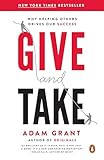
Give and Take (2013)
Grant’s debut major work — and his most cited in the business literature. The argument: most people operate as either givers (contributing more than they receive), takers (receiving more than they contribute), or matchers (maintaining even exchanges). The unexpected finding: givers are simultaneously the most and least successful people in organisations, depending on whether they protect themselves from exploitation. The best-performing givers are not selfless; they are other-focused in ways that are also personally sustainable. One of the most practically applicable frameworks in Grant’s work.
Originals (2016)
Grant’s study of creativity in professional contexts — challenging assumptions about what creative and entrepreneurial success actually requires. Counter-intuitive findings throughout: most successful originals maintain the ‘day job’ that protects them from catastrophic failure; procrastination is often associated with creative quality rather than inversely related to it; the best idea pitches acknowledge the pitch’s weaknesses, because doing so establishes credibility. Particularly useful for creative professionals who feel their approach is somehow wrong.
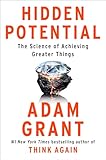
Hidden Potential (2023)
Grant’s most optimistic book — an argument that potential is not fixed, that skills can be developed significantly more than most people believe, and that the obstacles to learning that feel like failures are often the conditions that enable development. More focused on educational and individual development contexts than his earlier work.
Why Think Again Is the Ideal First Book
For a reader new to Adam Grant, Think Again is the ideal first book because it is among his most popular works and a fine expression of his distinctive gift, the translation of social-science research into engaging, practical insight about how we work, think, and live. Think Again explores the value of rethinking, the underrated skill of questioning our own beliefs, updating our views in light of evidence, and staying open to changing our minds. As an entry point it is ideal, for it captures Grant’s signature strengths, the grounding in research, the memorable stories, and the actionable takeaways, around a theme of wide relevance. It welcomes the newcomer with its compelling argument, its vivid examples, and its accessible, encouraging style, drawing the reader into his way of thinking about thinking. It is among his best-known books and a fine representation of his gifts, so the new reader encounters Grant at his most characteristic. For the newcomer, then, Think Again is an excellent starting point.
What to Expect as a New Reader
As a new reader, you can expect Think Again to be an engaging, research-based, and practical book about the skill of rethinking. You can expect a central argument, that the ability to question our own beliefs and update our views is undervalued and crucial in a fast-changing world. You can expect grounding in research, for Grant, an organizational psychologist, draws on studies and evidence to support his claims. You can expect memorable stories and examples, for he illustrates his ideas with vivid cases drawn from business, science, and everyday life. You can expect practical takeaways, tools and habits for thinking more flexibly and staying open to changing your mind. You can expect an accessible, encouraging, and conversational style that makes the ideas easy to absorb. Expect, in short, an engaging, research-based, and practical book about the value of rethinking, a fine introduction to Grant’s work.
Going Deeper After Your First Book
Once Think Again has introduced you to Grant’s approach, the reader who wishes to go deeper can explore his other books, which apply the same research-based, practical lens to further questions about success, creativity, and work. Give and Take examines how our styles of interaction, giving, taking, or matching, shape our success, while Originals explores how nonconformists champion new ideas and drive change, and his later work continues to mine social science for practical insight. Reading these after Think Again deepens your appreciation of Grant’s distinctive gifts, the grounding in research, the memorable storytelling, and the actionable takeaways. His characteristic strengths run through his work, and the reader who has enjoyed Think Again will find them across his books. Building your reading journey through Grant is a matter of following his research-based insight from Think Again into Give and Take, Originals, and his later work. The reader who begins here and continues will find one of the most engaging popular writers on psychology, work, and success.
Reading Adam Grant
Grant’s books are united by a consistent approach: start with an academic research finding that challenges conventional wisdom, extend it through case studies and interviews, and extract practical implications. Begin with Think Again for the most immediately useful argument; read Give and Take for the most widely applied framework.
Frequently Asked Questions
Where should I start with Adam Grant?
Think Again (2021) is the most widely recommended starting point — Grant's argument that the ability to rethink and unlearn what you already believe is the most valuable cognitive skill in rapidly changing environments. He draws on psychology research and vivid case studies to show how confident knowledge can become a liability, and how the best thinkers maintain the attitude of scientists (who design experiments to disprove their own hypotheses) rather than politicians (who defend their positions regardless of evidence). Give and Take is the best alternative for readers primarily interested in workplace dynamics and the relationship between generosity and success.
What is Give and Take about?
Give and Take (2013) is Grant's first major popular book — a study of how different styles of interpersonal orientation (givers, matchers, and takers) affect outcomes in professional and personal life. Grant's counter-intuitive finding: givers (people who give more than they receive) are both the worst-performing and the best-performing people in organisations, depending on whether they manage their giving sustainably. Successful givers do not give indiscriminately; they give in ways that are both genuinely helpful and personally sustainable. One of the most practically applicable of Grant's books.
What is Originals about?
Originals (2016) is Grant's study of creativity and non-conformity in professional contexts — how original thinkers develop their ideas, overcome their own doubt and procrastination, and persuade others. Grant challenges several assumptions about creative and entrepreneurial success: that original thinkers are risk-tolerant (most have 'day jobs' that protect them from catastrophic failure), that the first mover advantage is real (late entrants often do better), and that passion is required for success (most successful originals have complicated relationships with their own work). His most practically useful book for creative professionals.
What is Think Again about?
Think Again (2021) argues that the ability to reconsider your beliefs, update your knowledge, and rethink your assumptions is more important than the ability to generate new ideas. Grant draws on research showing how people in the 'preacher, prosecutor, or politician' mode (defending their positions) do worse than those in the 'scientist' mode (treating their beliefs as hypotheses to test). The book covers individual rethinking (updating your own beliefs), interpersonal rethinking (changing others' minds through motivational interviewing rather than argument), and collective rethinking (building organisations and communities that normalise intellectual humility).