Where to Start with Daniel H. Pink: A Reading Guide
Where to start with Daniel H. Pink — whether to begin with Drive, A Whole New Mind, or To Sell Is Human. A complete reading guide to the business and psychology writer.
By Lena Fischer
Daniel H. Pink (born 1964) is the American author and former chief speechwriter to Vice President Al Gore whose popular business psychology books — beginning with A Whole New Mind (2005) and reaching their widest readership with Drive (2009) — have made him one of the most influential writers on motivation, creativity, and the future of work. His books translate academic research in behavioural science into accessible arguments about how organisations should be managed and how individuals should work. Drive has been particularly influential in management education and is among the most cited popular business books of the past two decades. Pink writes accessible, research-grounded books that challenge conventional management orthodoxy with evidence from psychology and behavioural economics.
Where to Start: Drive (2009)
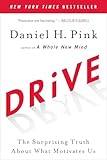
The essential Pink — and one of the most influential popular psychology books written for business audiences in the past twenty years. The central argument: the traditional model of motivation (reward the behaviour you want, punish the behaviour you don’t) works well for simple, mechanical tasks but is counterproductive for creative, conceptual, and autonomous work — which is precisely the work that the modern economy increasingly requires.
Pink draws on research by Edward Deci, Richard Ryan, Harry Harlow, and others to build an alternative framework: Motivation 3.0, driven by three elements. Autonomy — the desire to direct our own lives. Mastery — the desire to improve at things that matter. Purpose — the desire to do what we do in service of something larger than ourselves. Each element is supported by research and translated into practical recommendations for both individuals and organisations.
The book is structured efficiently: the argument is stated, evidence provided, counterarguments addressed, and practical applications offered for each element. It is not a long book; the research density is appropriate for the general audience it’s written for. Drive is most useful for managers and leaders who want to understand why money and status are imperfect motivators for knowledge workers, and for individuals who want to understand their own motivation.
A Whole New Mind (2005)
Pink’s earlier book — an argument that right-brain skills (creativity, empathy, design, story, synthesis) are becoming more economically valuable as left-brain work is automated or outsourced to lower-cost economies. The six senses Pink identifies — Design, Story, Symphony, Empathy, Play, and Meaning — are both an analytical framework and a practical curriculum. The book is somewhat dated (it predates the smartphone and the current AI disruption) but the underlying argument about the value of creativity and synthesis remains relevant.
To Sell Is Human (2012)
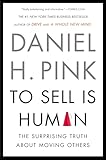
Pink’s argument that everyone is now in sales — moving others to adopt their ideas, change their behaviour, or take action. The three new ABCs of selling (Attunement, Buoyancy, Clarity) replace the old model (Always Be Closing). More practically structured than Drive; particularly useful for professionals in education, healthcare, persuasion, or management.
When (2018)
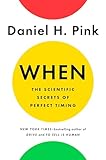
Pink’s account of the science of timing — chronobiology, daily performance rhythms, and the specific research on how timing affects outcomes in medicine, law, and economics. His most practically applicable book; the daily peak-trough-recovery pattern is immediately usable.
Why Drive Is the Ideal First Book
For a reader new to Daniel H. Pink, Drive is the ideal first book because it is among his most popular and influential works and a fine expression of his distinctive gift, the translation of social-science research into engaging, practical insight about work and human behavior. Drive explores the science of motivation, arguing that the traditional carrot-and-stick approach is often counterproductive and that people are more deeply motivated by autonomy, mastery, and purpose. As an entry point it is ideal, for it captures his signature strengths, the grounding in research, the clear argument, and the practical application, around a subject of wide relevance. It welcomes the newcomer with its compelling argument, its research, and its accessible style, drawing the reader into a fresh understanding of motivation. It is among his best-known books and a fine representation of his gifts, so the new reader encounters Pink at his most characteristic. For the newcomer, then, Drive is an excellent starting point.
What to Expect as a New Reader
As a new reader, you can expect Drive to be an engaging, research-based, and practical book about motivation. You can expect a central argument, that the traditional carrot-and-stick approach to motivation is often counterproductive, especially for creative and complex work. You can expect a focus on intrinsic motivation, for Pink argues that people are more deeply motivated by autonomy, mastery, and purpose. You can expect grounding in research, for Pink draws on studies in psychology and behavioral science to support his claims. You can expect practical application, for the book explores what its findings mean for how we work, manage, and live. You can expect a clear, engaging, and accessible style. You can expect ideas with wide relevance to work, education, and life. Expect, in short, an engaging, research-based, and practical book about motivation, a fine introduction to Pink’s gifts.
Going Deeper After Your First Book
Once Drive has introduced you to Pink’s approach, the reader who wishes to go deeper can explore his other books, which apply the same research-based, practical approach to further questions about work, behavior, and living well. His other popular works examine the art and science of timing, the surprising power of selling and persuasion in everyday life, the value of looking back and the emotion of regret, and the rise of right-brained, creative aptitudes, each marked by his engaging synthesis of research. Reading these after Drive deepens your appreciation of Pink’s distinctive gift, the translation of social science into practical insight. His characteristic strengths run through his work, and the reader who has enjoyed Drive will find them across his books. Building your reading journey through Pink is a matter of following his work from Drive into his other books. The reader who begins here and continues will find one of the most engaging popular writers on work, motivation, and human behavior.
Reading Daniel H. Pink
Begin with Drive — it is Pink’s most fully developed argument and the most widely read. A Whole New Mind provides the broader context of why the skills he discusses matter for the future; To Sell Is Human applies the framework to influence and persuasion; When addresses the often-overlooked dimension of timing. All his books are standalone and can be read in any order.
Frequently Asked Questions
Where should I start with Daniel H. Pink?
Drive: The Surprising Truth About What Motivates Us (2009) is the most widely recommended starting point — Pink's argument, based on decades of research in behavioural science, that the traditional carrot-and-stick model of motivation (external reward and punishment) is outdated and counterproductive for the kind of creative, conceptual work that dominates the modern economy. His alternative: motivation 3.0 is driven by autonomy, mastery, and purpose. Drive became a New York Times bestseller and is widely read in business schools and management education. A Whole New Mind is the alternative for readers interested in creativity and the future of work.
What is A Whole New Mind about?
A Whole New Mind: Why Right-Brainers Will Rule the Future (2005) is Pink's earlier book arguing that the skills associated with the right hemisphere of the brain — creativity, empathy, synthesis, storytelling, and play — are becoming more economically valuable as left-brain work (analysis, programming, sequential reasoning) is increasingly automated or outsourced. The book profiles six 'right-brain directed senses' (design, story, symphony, empathy, play, meaning) and argues that cultivating them is the key to professional survival in the conceptual age. More dated than Drive (written before the smartphone era) but still widely read.
What is To Sell Is Human about?
To Sell Is Human: The Surprising Truth About Moving Others (2012) argues that everyone is now in sales — not necessarily selling products, but moving others to act, change their minds, or adopt new ideas. Pink draws on behavioural research to identify the new skills that effective influence requires in the information age: attunement, buoyancy, and clarity. The book is less research-dense than Drive and more practically structured; its most useful for readers who work in persuasion, education, or management.
What is When: The Scientific Secrets of Perfect Timing about?
When: The Scientific Secrets of Perfect Timing (2018) examines the science of timing — how the time of day, the time of year, and the timing of decisions affect cognitive performance, emotional state, and outcomes. Pink covers chronobiology (the science of biological rhythms), the pattern of daily performance (most people peak in the morning, have a trough in the afternoon, and recover in the late afternoon), and the specific research on how timing affects medical procedures, judicial decisions, and economic behaviour. His most practically applicable book.