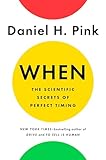
Editors Reads Verdict
Pink's most science-forward book reveals that timing is not a soft skill or a matter of intuition but a predictable phenomenon with measurable patterns. The daily energy curve, the power of breaks, and the psychology of beginnings and endings are all treated with rigor and practical specificity.
What We Loved
- The three-part daily energy cycle (peak, trough, recovery) is immediately usable
- The research on breaks — including the lunch break data — is striking and actionable
- The chapters on beginnings, midpoints, and endings are psychologically rich
- Pink integrates findings across biology, economics, and psychology with unusual care
Minor Drawbacks
- The prescriptions can feel more rigid than the underlying data supports
- Some findings cited may be vulnerable to the replication challenges of social psychology
- Individual chronotype variation means the general advice doesn't fit everyone equally
Key Takeaways
- → Most people follow a daily pattern of peak (morning), trough (early afternoon), and recovery (late afternoon) that should govern task scheduling
- → The trough is the worst time for analytic work and the best time for administrative tasks that don't require sharp judgment
- → Breaks — especially social, outdoor, and fully detached ones — are not productivity luxuries but neurological necessities
- → Beginnings and endings carry disproportionate psychological weight; fresh starts can trigger genuine behavioral change
- → The 'uh-oh' effect at the midpoint of a project often produces a burst of energy that prevents stagnation
| Author | Daniel H. Pink |
|---|---|
| Publisher | Riverhead Books |
| Pages | 272 |
| Published | January 9, 2018 |
| Language | English |
| Genre | Psychology, Self-Help, Science |
| Difficulty | Beginner |
| Best For | Anyone interested in optimizing their daily schedule, managers designing work environments, and readers curious about the science of circadian rhythms and decision-making. |
How When: The Scientific Secrets of Perfect Timing Compares
When: The Scientific Secrets of Perfect Timing at a glance against 3 similar books readers weigh alongside it.
| Book | Author | Rating | Best for |
|---|---|---|---|
| When: The Scientific Secrets of Perfect Timing (this book) | Daniel H. Pink | ★ 4.2 | Anyone interested in optimizing their daily schedule, managers designing work |
| A Whole New Mind | Daniel H. Pink | ★ 4.2 | Business professionals, educators, career-changers, and anyone wondering how to |
| Drive | Daniel H. Pink | ★ 4.3 | Managers, HR professionals, educators, and anyone who wants to understand what |
| To Sell Is Human | Daniel H. Pink | ★ 4.2 | Sales professionals, managers, teachers, entrepreneurs, and anyone whose work |
Timing Is a Science, Not an Art
Most people treat the question of when to do things as secondary to the question of what to do and how to do it. Daniel Pink argues this is a mistake. When we schedule analytically demanding work, make medical decisions, negotiate contracts, and even begin new projects turns out to be predictable and consequential in ways we consistently underestimate.
When synthesizes research from chronobiology, cognitive psychology, economics, and organizational behavior to show that timing is not an intuitive gift but a set of learnable patterns. The book is organized around three temporal structures: the daily schedule (when during the day to do what), transitions and turning points (how beginnings, midpoints, and endings shape performance), and synchronization (how coordinating with others affects outcomes).
The Daily Energy Curve
The book’s most immediately practical contribution is the three-stage daily pattern that most people follow: a peak in the morning when attention and analytic ability are highest, a trough in the early afternoon when performance on complex cognitive tasks drops significantly, and a recovery in the late afternoon when mood stabilizes and insight — counterintuitively — actually improves.
Pink draws on studies of everything from hospital medication errors (dramatically higher in the afternoon trough) to court decisions (more lenient earlier in the day) to stock market trading patterns to show that this curve has measurable consequences in the real world.
The prescription is straightforward: schedule analytic, high-stakes work during your peak; handle administrative tasks and routine correspondence during the trough; save creative, insight-requiring work for the recovery.
The Power of Breaks
One of the book’s most striking empirical threads concerns breaks. A study of Israeli judicial decisions showed that parole rates dropped steadily through each session and then reset after a food break. Another found that nurses who took more breaks made fewer medication errors. The research is consistent: breaks are not laziness. They are neurological maintenance.
Pink distinguishes between effective and ineffective breaks. Moving beats sitting. Nature beats city. Social beats solitary. Full detachment beats checking email.
Beginnings, Midpoints, and Endings
The second section addresses the psychology of temporal landmarks. “Fresh start” effects — the documented tendency to begin new behaviors at the start of years, months, weeks, and even birthdays — can be deliberately harnessed. Midpoints either trigger “uh-oh” urgency or dangerous complacency. Endings shape how experiences are remembered, often more than the bulk of the experience itself.
Our rating: 4.2/5 — An evidence-based guide to timing that will change how you schedule your day and think about the moments that shape your performance.
The Neglected Question
Most people, Pink observes, treat when to do something as an afterthought to what and how. When (2018) argues this is a serious mistake. The timing of analytically demanding work, medical decisions, negotiations, and even the launch of new projects turns out to be predictable and consequential in ways we routinely underestimate. Pink’s method is synthetic: he gathers findings from chronobiology, cognitive psychology, economics, and organisational behaviour and organises them around three temporal structures — the shape of the day, the power of beginnings, midpoints, and endings, and the effects of synchronising with others. The result is his most science-forward book, treating timing not as an intuitive knack but as a set of learnable patterns.
The Daily Curve
The book’s most immediately usable contribution is the three-stage daily pattern most people follow: a morning peak, when attention and analytic ability are highest; an early-afternoon trough, when performance on complex cognitive tasks measurably drops; and a late-afternoon recovery, when mood stabilises and insight, counterintuitively, often improves. Pink marshals striking real-world evidence — hospital medication errors that spike during the afternoon trough, court decisions that grow harsher as sessions wear on, patterns in stock-market behaviour — to show the curve has genuine consequences. The prescription is straightforward: schedule analytic, high-stakes work for your peak; route administrative and routine tasks into the trough; and reserve creative, insight-dependent work for the recovery. The chief caveat, which Pink acknowledges, is chronotype: night owls run the cycle on a shifted clock, so the general advice does not fit everyone equally.
Breaks as Necessity
One of the book’s most compelling empirical threads concerns breaks, which Pink reframes from indulgence to neurological necessity. A study of Israeli parole boards found approval rates declining steadily through each session and then resetting sharply after a food break; another found that nurses who took more breaks made fewer medication errors. Pink also distinguishes good breaks from poor ones: moving beats sitting, outdoors beats indoors, social beats solitary, and full detachment beats half-checking email. The cumulative message is that the modern instinct to power through is self-defeating, and that strategic rest is a performance input rather than a performance cost.
Landmarks in Time
The second major section turns to the psychology of temporal landmarks. “Fresh start” effects — our documented tendency to begin new behaviours at the openings of years, months, weeks, and even after birthdays — can be deliberately exploited to trigger genuine change. Midpoints can cut two ways, producing either an energising “uh-oh” urgency that rescues a flagging project or a dangerous complacency that lets it drift. Endings exert disproportionate influence over how whole experiences are remembered, often outweighing the bulk of what came before.
How Much to Trust It
When is unusually careful for a popular book in integrating findings across disciplines, but it shares the vulnerabilities of its sources. Several of the studies Pink cites come from areas of social psychology that have faced replication challenges, and his prescriptions can sound more rigid than the underlying data strictly supports — the daily curve is a robust tendency, not an iron law, and individual variation is large. Read with that caution in mind, the book remains genuinely valuable. Its central insight — that timing is a systematic, partly controllable variable rather than a matter of luck or instinct — is well supported, and the practical advice on scheduling, breaks, and beginnings is the kind that can change how a reader structures an ordinary day.
Frequently Asked Questions
What is "When: The Scientific Secrets of Perfect Timing" about?
Daniel Pink synthesizes research from biology, economics, and psychology to explain when to make decisions, take breaks, and start projects for optimal performance.
Who should read "When: The Scientific Secrets of Perfect Timing"?
Anyone interested in optimizing their daily schedule, managers designing work environments, and readers curious about the science of circadian rhythms and decision-making.
What are the key takeaways from "When: The Scientific Secrets of Perfect Timing"?
Most people follow a daily pattern of peak (morning), trough (early afternoon), and recovery (late afternoon) that should govern task scheduling The trough is the worst time for analytic work and the best time for administrative tasks that don't require sharp judgment Breaks — especially social, outdoor, and fully detached ones — are not productivity luxuries but neurological necessities Beginnings and endings carry disproportionate psychological weight; fresh starts can trigger genuine behavioral change The 'uh-oh' effect at the midpoint of a project often produces a burst of energy that prevents stagnation
Is "When: The Scientific Secrets of Perfect Timing" worth reading?
Pink's most science-forward book reveals that timing is not a soft skill or a matter of intuition but a predictable phenomenon with measurable patterns. The daily energy curve, the power of breaks, and the psychology of beginnings and endings are all treated with rigor and practical specificity.
Ready to Read When: The Scientific Secrets of Perfect Timing?
Check the current price on Amazon.
Check Price on Amazon (paid link)Prices and availability are subject to change. See Amazon for current price.
Review last updated: