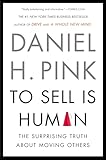
Editors Reads Verdict
Pink reframes sales as the fundamentally human activity of moving people, showing that the internet age has shifted power from sellers to buyers in ways that make the old high-pressure tactics obsolete and make attunement, buoyancy, and clarity the essential new skills.
What We Loved
- The 'non-sales selling' framework genuinely expands the concept in useful ways
- ABC (Attunement, Buoyancy, Clarity) replaces the tired 'Always Be Closing' with something more useful
- Research-backed and practically structured, with exercises at each chapter's end
- The analysis of how information symmetry has changed the buyer-seller relationship is sharp
Minor Drawbacks
- The broadening of 'sales' to mean almost any persuasion risks diluting the concept
- Some readers expecting pure sales technique find the psychological framing too abstract
- The final chapters are less tightly argued than the opening
Key Takeaways
- → One in nine Americans works in traditional sales, but the other eight spend significant time in 'non-sales selling' — persuading, influencing, and moving others
- → The internet has eliminated information asymmetry, making manipulative sales tactics ineffective and counterproductive
- → Attunement — perspective-taking and social coordination — is the first essential quality of effective sellers
- → Buoyancy — staying afloat in an ocean of rejection — requires explanatory style: seeing setbacks as temporary and specific rather than permanent and pervasive
- → Clarity — helping people see their problems in new ways — is more valuable than simply providing solutions
| Author | Daniel H. Pink |
|---|---|
| Publisher | Riverhead Books |
| Pages | 260 |
| Published | December 31, 2012 |
| Language | English |
| Genre | Business, Psychology, Self-Help |
| Difficulty | Beginner |
| Best For | Sales professionals, managers, teachers, entrepreneurs, and anyone whose work involves persuading or influencing others. |
How To Sell Is Human Compares
To Sell Is Human at a glance against 3 similar books readers weigh alongside it.
| Book | Author | Rating | Best for |
|---|---|---|---|
| To Sell Is Human (this book) | Daniel H. Pink | ★ 4.2 | Sales professionals, managers, teachers, entrepreneurs, and anyone whose work |
| A Whole New Mind | Daniel H. Pink | ★ 4.2 | Business professionals, educators, career-changers, and anyone wondering how to |
| Drive | Daniel H. Pink | ★ 4.3 | Managers, HR professionals, educators, and anyone who wants to understand what |
| When: The Scientific Secrets of Perfect Timing | Daniel H. Pink | ★ 4.2 | Anyone interested in optimizing their daily schedule, managers designing work |
Everyone Is in Sales
The premise of To Sell Is Human is that the traditional conception of selling — pushy reps cold-calling customers, car dealers using psychological tricks, insurance agents working objections — describes only a fraction of what persuasion looks like in modern professional life. Teachers sell students on learning. Doctors sell patients on treatment plans. Entrepreneurs sell investors and partners on their visions. Employees sell managers on ideas.
Pink’s analysis of time-use data suggests that Americans spend roughly 40% of their working hours in some form of non-sales selling — moving people to act without exchanging money. Understanding how to do that well has therefore become universally important, not just relevant to those with “Sales” in their job title.
The Information Revolution in Selling
The traditional asymmetry of the sales relationship — the seller knew things the buyer didn’t — has been eroded by the internet. Buyers now arrive at showrooms knowing more about invoice prices than salespeople want them to. Patients arrive at doctor’s appointments with printed research. This shift has made the manipulation and pressure tactics of the old model not just ethically problematic but strategically ineffective.
Pink argues the new model requires moving from “buyer beware” to “seller beware” — because information imbalance now runs as often against the seller as against the buyer.
ABC: The New Framework
Pink replaces the old “Always Be Closing” model with a three-part framework:
Attunement — the ability to take another’s perspective, reduce one’s own ego, and coordinate socially. Pink’s research suggests this is the most underrated quality in effective persuasion, and that it requires reducing power — not increasing it — to read people well.
Buoyancy — the quality that allows you to stay resilient in the face of rejection. Pink draws on Martin Seligman’s work on explanatory style, showing that how you interpret setbacks determines whether they accumulate into learned helplessness or get processed and released.
Clarity — the capacity to help people identify problems they didn’t know they had, not just solve ones they’ve articulated. In an age of information abundance, curation and reframing are more valuable than access.
Serve, Not Sell
The final section of the book recasts sales around the concept of service: if your goal is genuinely to help people move toward what they want or need, most of the ethical discomfort around persuasion dissolves. The best salespeople are problem solvers who make what they offer visible to people who couldn’t see it before.
Our rating: 4.2/5 — A smart reframing of persuasion for the information age, packed with research and immediately practical frameworks.
Redefining the Activity
The provocation at the heart of To Sell Is Human (2012) is that the traditional image of selling — pushy reps cold-calling, car dealers running psychological games, agents grinding through objections — describes only a sliver of what persuasion actually looks like in modern working life. Teachers move students toward learning; doctors move patients toward treatment plans; entrepreneurs move investors toward their visions; employees move managers toward their ideas. Pink’s analysis of time-use data leads to his headline finding: Americans spend roughly forty percent of their working hours in some form of “non-sales selling” — moving other people to act without any money changing hands. If that figure is even roughly right, then knowing how to persuade well has become a universal professional competence rather than the narrow specialism of those with “Sales” in their job title.
The End of Information Asymmetry
Pink’s sharpest structural argument concerns how the internet has reshaped the seller-buyer relationship. The old model rested on asymmetry: the seller knew things the buyer did not, and many classic sales tactics were ways of exploiting that gap. That asymmetry has largely collapsed. Buyers arrive at the showroom already knowing the invoice price; patients arrive at appointments with printouts of their own research. The result is that manipulation and high pressure are no longer merely ethically dubious — they are strategically ineffective, because the informational advantage they depended on has evaporated. Pink frames the shift as a move from “buyer beware” to “seller beware,” since the imbalance now runs as often against the seller as for them.
ABC, Reframed
In place of the old “Always Be Closing” mantra, Pink offers a new ABC built on research. Attunement is the capacity to take another’s perspective and coordinate socially; counterintuitively, Pink’s evidence suggests it requires reducing one’s own power rather than asserting it, since the powerful read others less accurately. Buoyancy is resilience in an ocean of rejection, and Pink grounds it in Martin Seligman’s work on explanatory style — the difference between seeing setbacks as temporary and specific versus permanent and pervasive determines whether rejection accumulates into helplessness or gets processed and released. Clarity is the ability to help people identify problems they had not articulated, which in an age of information abundance matters more than simply supplying answers: curation and reframing become more valuable than mere access to solutions.
Service and Its Limits
The book closes by recasting selling as service: if the genuine aim is to help people move toward what they actually want or need, most of the ethical discomfort surrounding persuasion dissolves, and the best sellers become problem-solvers who make visible what their customers could not previously see. It is an attractive reframing, and largely persuasive. The honest reservations are two. First, by broadening “sales” to encompass nearly any act of persuasion, Pink risks diluting the concept until it explains everything and therefore nothing in particular. Second, readers who came hoping for concrete sales technique sometimes find the psychological framing too abstract, and the final chapters are less tightly argued than the strong opening. Still, the end-of-chapter exercises keep the ideas practical, and the core achievement stands: Pink has reframed persuasion for an age in which the old tactics no longer work, and given a wide readership a more humane and more effective way to think about moving others.
Frequently Asked Questions
What is "To Sell Is Human" about?
Daniel Pink argues that we are all in sales now — persuading, convincing, and moving others is a universal human activity, not just a profession — and explains the new science behind doing it well.
Who should read "To Sell Is Human"?
Sales professionals, managers, teachers, entrepreneurs, and anyone whose work involves persuading or influencing others.
What are the key takeaways from "To Sell Is Human"?
One in nine Americans works in traditional sales, but the other eight spend significant time in 'non-sales selling' — persuading, influencing, and moving others The internet has eliminated information asymmetry, making manipulative sales tactics ineffective and counterproductive Attunement — perspective-taking and social coordination — is the first essential quality of effective sellers Buoyancy — staying afloat in an ocean of rejection — requires explanatory style: seeing setbacks as temporary and specific rather than permanent and pervasive Clarity — helping people see their problems in new ways — is more valuable than simply providing solutions
Is "To Sell Is Human" worth reading?
Pink reframes sales as the fundamentally human activity of moving people, showing that the internet age has shifted power from sellers to buyers in ways that make the old high-pressure tactics obsolete and make attunement, buoyancy, and clarity the essential new skills.
Ready to Read To Sell Is Human?
Check the current price on Amazon.
Check Price on Amazon (paid link)Prices and availability are subject to change. See Amazon for current price.
Review last updated: