Where to Start with Brené Brown: A Reading Guide
Where to start with Brené Brown — whether to begin with Daring Greatly, The Gifts of Imperfection, or Atlas of the Heart. A complete reading guide to vulnerability research.
By Lena Fischer

Brené Brown (born 1965) is the American research professor, author, and speaker who — through her qualitative research on shame, vulnerability, and human connection at the University of Houston — became one of the most widely watched TED speakers in history and one of the most commercially successful non-fiction authors of the twenty-first century. Her 2010 TEDxHouston talk, ‘The Power of Vulnerability’, has been viewed over sixty million times; her books on shame resilience and wholehearted living have sold over fifteen million copies. She is the foremost popular writer on vulnerability and courage in contemporary non-fiction.
Where to Start: Daring Greatly (2012)
The essential Brown — and the book that extended her TED talk audience into a global publishing phenomenon. The argument, stated simply: vulnerability is not weakness. It is the willingness to show up and be seen, to engage fully when you cannot control the outcome, to be present in situations where exposure to rejection or failure is real. The people who do this — who allow themselves to be vulnerable — are the people who experience genuine connection, creativity, and courage. The people who don’t — who armour against vulnerability through perfectionism, numbing, and control — lose access to the very things they are trying to protect.
Brown draws on qualitative research with hundreds of subjects over more than a decade, conducted through interviews, focus groups, and case studies. Her methodology is explicitly discussed; she is a social worker by training and uses the tools of qualitative research rather than quantitative study. The resulting framework — shame resilience, vulnerability, wholehearted living — is not the product of laboratory experiment but of listening to people at length about what matters to them and what gets in the way.
The title comes from Theodore Roosevelt’s 1910 speech ‘Citizenship in a Republic’: ‘It is not the critic who counts…the credit belongs to the man who is actually in the arena.’ Brown applies this to the willingness to be seen in our own lives.
The Gifts of Imperfection (2010)
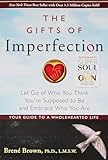
Brown’s most personally written book — and often the first recommended to readers who want something shorter and more directly comforting. Structured as ten guideposts for wholehearted living, it applies Brown’s research framework to concrete practices: letting go of perfectionism, cultivating gratitude, developing creativity, practising play and rest. Less intellectually substantial than Daring Greatly but more immediately usable as a daily practice guide. Many readers find it the more emotionally resonant of the two books.
Dare to Lead (2018)
Brown’s workplace application — extending the vulnerability framework into leadership and organisational culture. The most practically oriented of her books: each chapter includes specific definitions, frameworks, and exercises designed for managers and executives. The argument — that the most effective leaders are those willing to have difficult conversations, acknowledge uncertainty, and model the courage they want from their teams — is applied to real workplace situations. Best read after Daring Greatly.
Atlas of the Heart (2021)
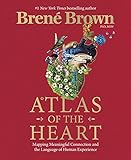
Brown’s most conceptually rich book — a mapping of eighty-seven distinct emotions and experiences, each precisely defined and distinguished from adjacent emotional states. A reference book as much as a narrative: Brown argues that emotional vocabulary is emotional intelligence, and that most people have a very limited vocabulary for their inner lives. More demanding in structure than her earlier work; best read after the others.
Why Daring Greatly Is the Ideal First Book
For a reader new to Brené Brown, Daring Greatly is the ideal first book because it is among her most popular and influential works and a fine expression of her distinctive gift, the translation of her research on vulnerability, courage, and shame into accessible, transformative insight. Daring Greatly argues that vulnerability, far from being weakness, is the source of courage, connection, and meaning, drawing on Brown’s research to make the case for embracing it. As an entry point it is ideal, for it is one of her best-known books and a clear, powerful statement of the ideas for which she is known. It welcomes the newcomer with its compelling central argument, its research-grounded insight, and its warm, accessible style, drawing the reader into her distinctive perspective. It is among her major works and a fine representation of her gifts, so the new reader encounters Brown at her most characteristic. For the newcomer, then, Daring Greatly is an excellent starting point.
What to Expect as a New Reader
As a new reader, you can expect Daring Greatly to be an accessible, research-grounded, and transformative book about vulnerability and courage. You can expect a central argument, that vulnerability, far from being weakness, is the source of courage, connection, creativity, and meaning. You can expect grounding in research, for Brown, a researcher, draws on years of study of vulnerability, shame, and human connection. You can expect engagement with shame, for Brown explores how shame undermines us and how vulnerability and resilience counter it. You can expect application to many areas of life, from relationships and parenting to work and leadership. You can expect a warm, personal, and accessible style, blending research with story. You can expect an encouraging, often moving read. Expect, in short, an accessible, research-grounded, and transformative book about vulnerability and courage, a fine introduction to Brown’s gifts.
Going Deeper After Your First Book
Once Daring Greatly has introduced you to Brown’s ideas, the reader who wishes to go deeper can explore her other books, which continue her research-grounded exploration of vulnerability, courage, shame, belonging, and wholehearted living. Her other works examine subjects such as embracing imperfection, the courage to stand alone and to belong, the practice of rising after failure, leadership grounded in vulnerability, and the language of human emotion and connection, each marked by her blend of research, story, and accessible insight. Reading these after Daring Greatly deepens your appreciation of Brown’s distinctive gift, the translation of research on vulnerability and courage into transformative insight. Her characteristic strengths run through her work, and the reader who has connected with Daring Greatly will find them across her books. Building your reading journey through Brown is a matter of following her research from Daring Greatly into her other books. The reader who begins here and continues will find one of the most influential contemporary voices on vulnerability, courage, and connection.
Reading Brené Brown
Begin with Daring Greatly for the most fully developed and most influential version of Brown’s central argument about vulnerability and wholehearted living. Read The Gifts of Imperfection if you want something shorter and more personal. Brown’s books reinforce each other across a shared framework; reading several together provides a comprehensive account of her research and its practical implications.
Frequently Asked Questions
Where should I start with Brené Brown?
Daring Greatly (2012) is the essential starting point — Brown's most influential book and the clearest statement of her central argument: that vulnerability is not weakness but the birthplace of courage, creativity, and connection. Drawing on her qualitative research on shame and shame resilience, Brown makes the case that wholehearted living requires the willingness to be seen when you cannot control the outcome. The title comes from Theodore Roosevelt's 'Man in the Arena' speech. The Gifts of Imperfection is a gentler alternative for readers who want her most personal and most accessible book.
What is Daring Greatly about?
Daring Greatly (2012) argues that vulnerability — the willingness to engage fully with uncertainty, risk, and emotional exposure — is not a weakness to be managed but the foundation of meaningful connection, creativity, and purpose. Brown draws on years of qualitative research on shame and shame resilience to show how the armour we develop to protect ourselves from vulnerability (perfectionism, numbing, people-pleasing, foreboding joy) costs us the very connection and creativity we are trying to protect. The book applies this framework to individuals, families, schools, and organisations. Her most broadly applicable book.
What is the difference between Daring Greatly and The Gifts of Imperfection?
The Gifts of Imperfection (2010) is Brown's more personal and more directly prescriptive book — a series of 'guideposts for wholehearted living' based on her research. It is shorter and more immediately actionable than Daring Greatly, focused on concrete practices (letting go of perfectionism, cultivating self-compassion, practising gratitude) rather than the broader argument about vulnerability and culture. Many readers find it the more immediately comforting book; Daring Greatly is the more intellectually substantial one. The Gifts of Imperfection is often recommended as the first Brown book for readers who want something shorter and warmer.
What is Dare to Lead about?
Dare to Lead (2018) is Brown's application of her vulnerability research to leadership and organisational culture. The argument: the most effective leaders are those who are willing to be vulnerable — to acknowledge uncertainty, to have difficult conversations, to give feedback in ways that require emotional courage. The book is more practically oriented than her earlier work, with frameworks and exercises specifically designed for workplace and leadership contexts. It is the most directly applicable of her books for managers and executives; it is best read after Daring Greatly.