Authors Like Malcolm Gladwell: 6 Big-Idea Writers
If Malcolm Gladwell's counterintuitive ideas, great stories, and pop-science insight are your catnip, these six writers deliver the same lightbulb moments — with where to start.
Malcolm Gladwell built a genre out of a simple trick: take a piece of social-science research, find the surprising idea hiding inside it, and tell it through stories so vivid you forget you’re learning. The 10,000-hour rule, the tipping point, thin-slicing — whether or not every claim holds up, the pleasure is the lightbulb moment. So the writers who satisfy Gladwell fans share it: the counterintuitive insight, the real research underneath, and the storyteller’s instinct to make ideas feel like revelations.
If you’ve read your way through Malcolm Gladwell, here are six writers who deliver, each with a place to start.
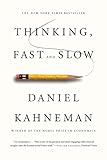
Daniel Kahneman — the science behind the stories
Daniel Kahneman’s Thinking, Fast and Slow is the foundational text behind much of what Gladwell popularises. The Nobel laureate lays out System 1 and System 2 thinking, cognitive biases, and how badly our intuition can mislead us. It’s deeper and more demanding than Gladwell, and it’s the essential read for anyone who wants the real rigour beneath the ideas.
Start with: Thinking, Fast and Slow.
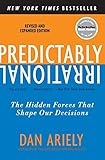
Dan Ariely — the entertaining experiments
Dan Ariely’s Predictably Irrational is Gladwell-adjacent at its most fun — a tour of the irrational ways we make decisions, built on clever experiments and told with wit. Accessible, surprising, and packed with “wait, that’s why?” moments, it’s an ideal next read for the reader who loved Blink.
Start with: Predictably Irrational.
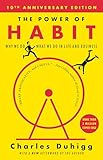
Charles Duhigg — the practical big idea
Charles Duhigg’s The Power of Habit takes the Gladwell formula and makes it actionable, explaining how habits work in individuals, companies, and societies through compelling case studies. It has Gladwell’s narrative drive plus a takeaway you can actually use.
Start with: The Power of Habit.
Michael Lewis — the master storyteller
If what you love most is Gladwell’s storytelling, Michael Lewis is the best in the business. Moneyball turns baseball statistics into a gripping narrative about challenging conventional wisdom — exactly the Gladwellian thrill of watching a counterintuitive idea beat the experts. Few writers make ideas this propulsive.
Start with: Moneyball.
Adam Grant — the research-backed rethink
Adam Grant’s Think Again shares Gladwell’s knack for reframing how you see everyday behaviour, here making the case for the underrated skill of changing your mind. It’s accessible, evidence-based, and full of the kind of reframings that stick with you, very much in the Gladwell tradition.
Start with: Think Again.
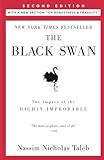
Nassim Nicholas Taleb — the contrarian’s contrarian
For Gladwell’s ideas with sharper teeth, Nassim Nicholas Taleb’s The Black Swan examines how rare, unpredictable events shape the world far more than we admit. Taleb is pricklier and more combative than Gladwell — he’d argue with him, in fact — but the appetite for counterintuitive, world-reframing ideas is the same.
Start with: The Black Swan.
How to choose your next one
Match the writer to what you love most. The real science? Daniel Kahneman. The fun experiments? Dan Ariely. The practical takeaway? Charles Duhigg. The storytelling? Michael Lewis. The research-backed rethink? Adam Grant. The sharp contrarian? Nassim Nicholas Taleb.
For more, browse our psychology and business collections, and start with whichever writer’s brand of big idea sounds most like your next lightbulb moment.
Frequently Asked Questions
Who writes books like Malcolm Gladwell?
Daniel Kahneman, Dan Ariely, and Charles Duhigg are the closest matches — all turn behavioural research into accessible, counterintuitive insight. For Gladwell's gift of telling it through gripping real-world stories, Michael Lewis is the standout.
What should I read after Outliers and The Tipping Point?
Thinking, Fast and Slow by Daniel Kahneman is the deepest dive into the science Gladwell popularises. For lighter, story-driven reads in the same vein, Dan Ariely's Predictably Irrational and Charles Duhigg's The Power of Habit are perfect next steps.
What makes a book similar to Malcolm Gladwell?
Three ingredients: a counterintuitive central idea, real research (usually from psychology, economics, or sociology) made accessible, and vivid storytelling that turns data into a page-turner. The writers here each deliver at least two.