
Bestseller
Moneyball
by Michael Lewis
4.5
The story of how Oakland A's general manager Billy Beane used statistical analysis to build a competitive baseball team on a fraction of the payroll of richer clubs.
Check Price on Amazon (paid link)American · b. 1960
Michael Lewis is an American financial journalist and author whose Moneyball, The Big Short, and Flash Boys transformed public understanding of finance, baseball, and Wall Street culture.
Michael Lewis is the most consistently readable narrative non-fiction writer working in American financial and business journalism. A Princeton and London School of Economics graduate who worked at Salomon Brothers before quitting to write Liar’s Poker (1989) — a memoir of his time on the trading floor that became an accidental classic of Wall Street writing — Lewis has spent three decades turning the abstruse machinery of finance, sport, and politics into page-turning narrative. His gift for finding a human story at the centre of a systemic phenomenon is exceptional.
Moneyball (2003) is, on its surface, about the Oakland Athletics and the use of statistical analysis in baseball personnel decisions. It is actually about the conflict between expert intuition and systematic evidence, and about what happens when an outsider challenges a closed professional culture’s assumptions. The Big Short (2010) uses a handful of investors who correctly predicted the 2008 financial crisis to explain the mortgage-backed securities market and its catastrophic failure — a feat of explanatory journalism that made something genuinely complex accessible without simplifying it into dishonesty. Flash Boys (2014) investigates high-frequency trading and the question of whether the stock market is rigged, with characteristic pace and outrage.
Lewis’s books have their critics. Some economists and finance professionals argue that his narratives oversimplify, that his villains are too clearly villains and his heroes too clearly heroes, and that his populist framing sometimes sacrifices accuracy for drama. These are fair charges, particularly against Liar’s Poker and Flash Boys. But the best of Lewis — Moneyball and The Big Short especially — represent narrative non-fiction at its highest level: books that change how you see a domain and are a genuine pleasure to read.
Michael Lewis stands as one of the most successful and influential nonfiction writers of his generation, a storyteller who has mastered the art of turning complex subjects — finance, economics, sports, statistics, government — into gripping, character-driven narratives accessible to a vast general readership. With a gift for finding the human drama within technical worlds and for explaining difficult ideas through vivid personalities and compelling stories, Lewis has produced a string of bestsellers that have shaped public understanding of subjects most readers would otherwise find impenetrable. His work demonstrates that nonfiction can be as propulsive and entertaining as the finest fiction.
Lewis’s career began with Liar’s Poker, his insider account of the excesses of Wall Street bond trading in the 1980s, drawn from his own brief experience in the industry. The book was a sensation, establishing both his subject matter — the hidden workings of money and markets — and his irreverent, illuminating voice. From this beginning he developed into the foremost popular chronicler of finance and its discontents, repeatedly returning to expose the follies, blind spots, and human dramas of the economic systems that shape modern life.
Lewis’s gift for clarifying the obscure reached its height with The Big Short, his account of the 2008 financial crisis told through the handful of outsiders who foresaw the collapse and bet against the housing market. By rendering the arcane world of mortgage-backed securities and credit default swaps through unforgettable characters, Lewis made one of the most complex financial catastrophes in history not only comprehensible but riveting. The book, like many of his works, was adapted into a major film, extending its influence on how the public understands the crisis.
In Moneyball, Lewis told the story of how the Oakland Athletics used statistical analysis to compete against richer baseball teams, and in doing so he captured a much larger phenomenon: the revolution of data-driven thinking that would transform sports, business, and decision-making across society. The book became enormously influential, popularising ideas about analytics and challenging conventional wisdom about expertise and intuition. It exemplifies Lewis’s talent for using a specific, vivid story to illuminate a sweeping shift in how the world works.
What unites Lewis’s diverse subjects is his fascination with people — outsiders, contrarians, visionaries, and misfits who see what others miss. He builds his narratives around compelling individuals, and his deeper concern is often with how human psychology, incentives, and institutions interact, a theme he explored explicitly in The Undoing Project, about the psychologists Daniel Kahneman and Amos Tversky. This focus on character and on the quirks of human judgment gives his books their warmth and their narrative drive, transforming abstract systems into human stories.
Beyond entertainment, Lewis’s work frequently carries a critical and even moral dimension, exposing dysfunction, injustice, and risk within powerful institutions. His books on finance reveal systemic recklessness and misaligned incentives, and his later work, including The Fifth Risk, turned to the workings and vulnerabilities of government itself. While his approach is narrative rather than polemical, his reporting consistently illuminates how complex systems fail and who bears the consequences, lending his storytelling a substance and seriousness beyond its considerable surface pleasures.
Michael Lewis has done more than almost any writer to make the hidden machinery of finance, sports, and institutions intelligible and engaging to ordinary readers, and his influence on popular nonfiction and on public understanding of these subjects is profound. For newcomers, Moneyball and The Big Short are the ideal starting points, with Liar’s Poker offering the origin of his distinctive voice. For readers seeking nonfiction that informs and entertains in equal measure — clear, character-rich, and consistently revelatory — Michael Lewis is among the most reliable and rewarding writers at work today.
by Michael Lewis
The story of how Oakland A's general manager Billy Beane used statistical analysis to build a competitive baseball team on a fraction of the payroll of richer clubs.
Check Price on Amazon (paid link)
by Michael Lewis
The story of the small group of outsiders who bet against the American mortgage market and won as the 2008 financial crisis unfolded.
Check Price on Amazon (paid link)
by Michael Lewis
The story of Michael Oher — a homeless Black teenager taken in by a wealthy white family in Memphis who goes on to become an NFL first-round pick — intertwined with an economic history of how American football came to value the left tackle, the position that protects a quarterback's blind side, above almost any other.
Check Price on Amazon (paid link)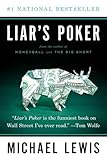
by Michael Lewis
Michael Lewis's memoir of his years as a bond salesman at Salomon Brothers in the 1980s, capturing the greed and absurdity of Wall Street's most explosive decade.
Check Price on Amazon (paid link)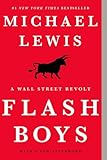
by Michael Lewis
An investigation into high-frequency trading and how a small group of Wall Street outsiders fought to expose a rigged stock market.
Check Price on Amazon (paid link)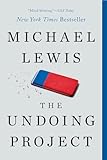
by Michael Lewis
The story of Daniel Kahneman and Amos Tversky, the Israeli psychologists whose collaboration upended our understanding of human judgment and decision-making.
Check Price on Amazon (paid link)
by Michael Lewis
An investigation into the U.S. federal government's most consequential departments and what happens when the incoming administration fails to prepare for managing them.
Check Price on Amazon (paid link)
by Michael Lewis
Lewis spent a year embedded with Sam Bankman-Fried and FTX before the cryptocurrency exchange's catastrophic collapse. The result is a portrait of the man at the centre of one of the largest financial frauds in history — a portrait that refuses easy categorisation of SBF as either visionary or villain.
Check Price on Amazon (paid link)guide
Michael Lewis's complete bibliography in order — from Liar's Poker and Moneyball to The Big Short and The Undoing Project. Best starting points for new readers.
guide
Where to start with Michael Lewis — whether to begin with The Big Short, Moneyball, or Liar's Poker. A complete reading guide to the master of narrative non-fiction.
Disclosure: Amazon links on this page are affiliate links. If you purchase through them we earn a small commission at no extra cost to you.