Editors Reads Verdict
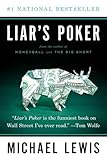
Published in 1989 and still essential reading, Liar's Poker is both a firsthand account of 1980s Wall Street excess and the book that arguably launched the financial memoir genre. Lewis's self-deprecating wit and eye for the telling detail make a sharp system critique feel like entertainment.
What We Loved
- Lewis's voice is fully formed here — funny, precise, and morally alert
- The Salomon Brothers trading floor is rendered with anthropological vividness
- The historical context of the mortgage bond revolution is expertly woven in
- The self-implication — Lewis took the money and loved the game — adds credibility
Minor Drawbacks
- Some anecdotes feel dated even though the systemic critique hasn't aged at all
- Female traders and employees are largely invisible in ways that reflect the era
- The ending lacks the dramatic resolution of Lewis's later work
Key Takeaways
- → The mortgage bond market transformed Wall Street's risk culture in ways nobody fully understood at the time
- → Institutional cultures can normalize exploitation and call it meritocracy
- → The best salespeople sell things they know buyers don't need
- → Lewis left with more money and fewer illusions — and wrote the better book for it
- → Wall Street has always attracted smart people whose intelligence is systematically misdirected
| Author | Michael Lewis |
|---|---|
| Publisher | W. W. Norton & Company |
| Pages | 249 |
| Published | October 17, 1989 |
| Language | English |
| Genre | Finance, Memoir, Business |
| Difficulty | Beginner |
| Best For | Anyone curious about Wall Street culture, the origins of mortgage-backed securities, or how a Princeton art history major ended up making a fortune selling bonds. |
How Liar's Poker Compares
Liar's Poker at a glance against 3 similar books readers weigh alongside it.
| Book | Author | Rating | Best for |
|---|---|---|---|
| Liar's Poker (this book) | Michael Lewis | ★ 4.4 | Anyone curious about Wall Street culture, the origins of mortgage-backed |
| Flash Boys | Michael Lewis | ★ 4.3 | Investors, technology professionals, and general readers interested in how |
| The Big Short | Michael Lewis | ★ 4.5 | Anyone seeking to understand the 2008 financial crisis through the lens of the |
| The Undoing Project | Michael Lewis | ★ 4.3 | Readers interested in psychology, behavioral economics, the history of ideas, |
The Book That Made Michael Lewis
Michael Lewis arrived at Salomon Brothers in 1985 with a Princeton art history degree and a dinner-party conversation with a Salomon partner’s wife that somehow turned into a job offer. What followed were three years on the most powerful trading floor in America during the most profitable decade Wall Street had ever seen. Liar’s Poker is his account of that education.
The title refers to the high-stakes bluffing game played with dollar-bill serial numbers that traders used to gamble between deals. When Salomon’s CEO John Gutfreund challenged the firm’s most legendary trader, John Meriwether, to a game for $1 million, the challenge captured everything Lewis would spend the book anatomizing: the machismo, the gambling instinct, and the staggering amounts of money at stake in every transaction.
Salomon Brothers as Institution
Lewis reconstructs Salomon’s training program, its trading floor hierarchy, and its internal culture with the eye of an anthropologist dropped into an alien civilization. The “Big Swinging Dicks” — senior traders whose confidence bordered on sociopathy — are drawn with a precision that makes them simultaneously monstrous and oddly compelling. Lewis never pretends he was immune to the appeal.
The book also functions as a history of the mortgage bond market. Lewis traces how Lewie Ranieri essentially invented the modern mortgage-backed security at Salomon, transforming sleepy savings-and-loan portfolios into tradeable instruments that would eventually, as Lewis would document twenty years later in The Big Short, help bring down the global financial system.
A System Critique with a Conscience
What distinguishes Liar’s Poker from mere Wall Street gossip is Lewis’s refusal to exempt himself. He took the signing bonus, loved the game, and bought into the mythology of meritocracy before concluding that the whole apparatus was built on sophisticated salesmanship rather than genuine value creation.
His account of selling bonds to German clients who didn’t understand what they were buying, of creating demand for instruments that served Salomon rather than customers, anticipates every subsequent finance scandal in miniature. The book was intended as a warning; Lewis has said repeatedly that he was astonished people used it as a how-to guide.
The Foundation of a Career
Read in sequence with The Big Short, Liar’s Poker is indispensable context. The instruments Lewis watched being invented in the 1980s are the same ones that blew up in 2008. The culture he describes at Salomon — risk-taking rewarded, accountability deferred, complexity deployed as cover — never really went away.
Our rating: 4.4/5 — The original Wall Street insider memoir, still unsurpassed for its combination of sharp observation, genuine humor, and structural critique.
Lewis at Salomon Brothers
Michael Lewis arrived at Salomon Brothers in 1985 with no financial background and, initially, no real comprehension of what bond salespeople actually did. His account of the training programme — a mandatory months-long course in which senior traders lectured inattentively, junior trainees jostled for favourable seating, and the hierarchy of the trading floor was established before anyone had made a single trade — is both funny and analytically precise. He is describing, in anthropological terms, how an institution creates the dispositions it needs: not by teaching finance but by establishing, through the training process itself, which attitudes and behaviors the firm values and which it will destroy.
Lewis was trained as a bond salesman and eventually placed on the London desk, which gave him a perspective on the firm’s operations that the New York traders, at the center of the action, did not have. The periphery, he found, was more honest about what the firm was doing. New York traders told themselves stories about value creation and market efficiency; the London desk was close enough to the clients to see more clearly that the product was being sold to people who often did not understand what they were buying.
Lewie Ranieri and the Mortgage Bond
The most important structural contribution of Liar’s Poker is its account of how Lewie Ranieri and the Salomon mortgage department invented the modern mortgage-backed security. Ranieri came up through the mail room, had no formal education in finance, and built, almost entirely through intuition and force of personality, the apparatus that transformed millions of individual home mortgages into tradeable financial instruments. This process — taking illiquid, idiosyncratic assets and converting them into standardized, liquid securities — was the foundation on which the entire mortgage bond market, and eventually the crisis of 2008, was built.
Lewis understands this history in a way that makes Liar’s Poker more than a memoir. It is the origin story of the instruments he would document blowing up twenty years later in The Big Short. Read in sequence, the two books form a complete narrative: here is how the machine was built, and here is how it destroyed the global financial system.
The Book Lewis Did Not Intend to Write
Lewis has said in interviews that he wrote Liar’s Poker as a warning — specifically, a warning that would discourage young people from choosing Wall Street careers. He was astonished to find that it had the opposite effect: it became required reading for ambitious finance undergraduates who identified with the young, smart, irreverent bond salesman rather than with his critique. This gap between authorial intention and reader response is itself a kind of Lewisian story: he wrote about how Salomon sold people things that weren’t good for them, and then watched people use the book as a guide to getting hired by places like Salomon.
The irony is not lost on Lewis, who has commented on it with characteristic wryness across subsequent decades.
Frequently Asked Questions
What is "Liar's Poker" about?
Michael Lewis's memoir of his years as a bond salesman at Salomon Brothers in the 1980s, capturing the greed and absurdity of Wall Street's most explosive decade.
Who should read "Liar's Poker"?
Anyone curious about Wall Street culture, the origins of mortgage-backed securities, or how a Princeton art history major ended up making a fortune selling bonds.
What are the key takeaways from "Liar's Poker"?
The mortgage bond market transformed Wall Street's risk culture in ways nobody fully understood at the time Institutional cultures can normalize exploitation and call it meritocracy The best salespeople sell things they know buyers don't need Lewis left with more money and fewer illusions — and wrote the better book for it Wall Street has always attracted smart people whose intelligence is systematically misdirected
Is "Liar's Poker" worth reading?
Published in 1989 and still essential reading, Liar's Poker is both a firsthand account of 1980s Wall Street excess and the book that arguably launched the financial memoir genre. Lewis's self-deprecating wit and eye for the telling detail make a sharp system critique feel like entertainment.
Ready to Read Liar's Poker?
Check the current price on Amazon.
Check Price on Amazon (paid link)Prices and availability are subject to change. See Amazon for current price.
Review last updated: