Best Books About Capitalism and Corporate Power
The best books about capitalism and corporate power — from The Big Short and Bad Blood to Capital in the Twenty-First Century and The Shock Doctrine.
By Marcus Webb

The relationship between capitalism and power — who benefits from the current economic arrangement, who is harmed, and how the system reproduces itself — is one of the most important subjects available to nonfiction writers. The books listed here approach it from different directions: narrative accounts of specific frauds and crises, theoretical analyses of structural inequality, and investigative journalism about corporations that caused harm while generating profit.
These books share a commitment to making the invisible visible — to explaining how financial instruments work, how corporate cultures produce fraud, and how economic structures shape individual lives in ways that are rarely acknowledged.
The Essential List
The Big Short — Michael Lewis (2010)
The best single account of the 2008 financial crisis. Lewis follows the investors who saw the housing market collapse coming — who understood that mortgage-backed securities were built on fraudulent loan origination — and explains the crisis through their personalities rather than through abstraction. The result is a book that makes CDOs and credit default swaps legible to a general reader without sacrificing accuracy. Essential reading for anyone who wants to understand what happened and who profited from it.
Bad Blood — John Carreyrou (2018)
The definitive account of the Theranos fraud. Carreyrou’s investigation of Elizabeth Holmes and Ramesh ‘Sunny’ Balwani — who built a $9 billion blood-testing company on technology that didn’t work, deceived patients about their test results, and silenced employees who raised concerns — is both a corporate scandal and an analysis of Silicon Valley’s culture. The book asks how a fraud of this scale was possible and sustained for so long; the answer is uncomfortable for investors, journalists, and the tech industry.
Capital in the Twenty-First Century — Thomas Piketty (2013)
The most important economics book of the past decade. Piketty’s data-driven argument that returns on capital systematically exceed economic growth — and that inequality therefore tends to increase without political intervention — is the most rigorous case for structural economic change published in the twenty-first century. The middle section (the historical analysis) is the most important; the opening theory and the policy proposals at the end are more debatable.
The Shock Doctrine — Naomi Klein (2007)
Klein’s account of ‘disaster capitalism’ — the use of political and economic crises to implement free-market reforms that would be impossible under normal democratic conditions — traces the history of Friedmanite economics from Pinochet’s Chile through Reagan’s America, Thatcher’s Britain, and post-Soviet Russia. The book is polemic as much as analysis; Klein’s argument is that the disasters are not the occasion for the reforms but sometimes their precondition. One of the most influential left-wing political books of the past two decades.
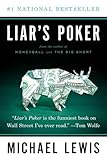
Liar’s Poker — Michael Lewis (1989)
Lewis’s first book and the foundational text of Wall Street memoir. His account of his years as a bond salesman at Salomon Brothers in the 1980s — the culture of the trading floor, the logic of mortgage-backed securities, the specific character of financial excess — established the template for a genre and introduced the general reader to what investment banks actually do. Read before The Big Short for full context on how the culture evolved between the 1980s and 2008.
Flash Boys — Michael Lewis (2014)
Lewis’s investigation of high-frequency trading — the use of algorithmic trading systems and private fibre-optic cables to profit from the millisecond advantages of faster information — is both a thriller (Brad Katsuyama’s attempt to understand and then defeat the HFT firms) and an analysis of how financial markets have been restructured around the interests of the fastest rather than the fairest. The book sparked a national conversation about market manipulation.
The Age of Surveillance Capitalism — Shoshana Zuboff (2019)
The most important recent analysis of how tech companies extract value from human behaviour. Zuboff’s argument — that Google, Facebook, and others have developed a new economic logic in which human experience is the raw material, harvested for prediction products sold to advertisers — is the most rigorous framework available for understanding the business model of the attention economy. Dense but essential.
When Genius Failed — Roger Lowenstein (2000)
Lowenstein’s account of Long-Term Capital Management — the hedge fund founded by Nobel Prize-winning economists that nearly collapsed the global financial system in 1998 — is the essential case study of financial hubris. The story of how models built on rational assumptions fail when human irrationality takes hold is the template for understanding every subsequent financial crisis.
Understanding the System That Shapes Everything
Capitalism is the dominant economic system of the modern world, the framework within which most of human economic life is now organized, and its influence extends far beyond the strictly economic into nearly every dimension of contemporary existence — and the books on this list perform the essential function of helping the reader understand this all-encompassing system that shapes their life in countless ways, often invisibly. Capitalism is not merely an economic arrangement but a pervasive force that structures work and consumption, shapes social relations and cultural values, influences politics and power, and conditions the very texture of daily life in the modern world, and yet its workings and its consequences often go unexamined, accepted as simply the natural order of things rather than understood as a particular and consequential system. The literature on capitalism and corporate power cuts through this acceptance, illuminating the nature, the workings, and the consequences of the economic system that dominates the modern world, and equipping the reader to understand the pervasive force that shapes their life. This understanding is valuable precisely because capitalism’s influence is so pervasive and yet so often unexamined, for a system that shapes nearly every dimension of life deserves to be understood rather than passively accepted, and the consequences of that system, both its remarkable productivity and its troubling costs and inequalities, demand examination and reckoning. The books on this list provide this understanding, analyzing the nature and dynamics of capitalism, examining its consequences for individuals and societies, and illuminating the pervasive influence of the economic system and the corporate power that operates within it. To understand capitalism is to understand the system that shapes the modern world and one’s own life within it, and the literature that provides this understanding performs an essential function, transforming the passive acceptance of an unexamined system into the informed understanding of a force whose workings and consequences profoundly shape human existence.
The Corporation as a Center of Power
A central concern of the literature on capitalism and corporate power, and one of its most important contributions, is the examination of the corporation as a center of power — the recognition that the great corporations of the modern world wield enormous power, rivaling and sometimes exceeding that of governments, and that understanding this corporate power is essential to understanding how the modern world is actually governed and shaped. The corporation has become one of the dominant institutions of the modern world, and the largest corporations command resources, influence, and power on a scale that rivals that of nation-states, shaping economies, influencing governments, controlling the conditions of work and consumption for billions, and exercising a power that extends across the globe and into nearly every dimension of life. Yet this corporate power often operates with less scrutiny and accountability than the power of governments, exercised by institutions that are formally private and answerable primarily to their shareholders rather than to the public whose lives they shape. The literature on corporate power examines this enormous and often unaccountable power, analyzing how corporations have come to wield such influence, how they exercise their power, and what the consequences of concentrated corporate power are for democracy, for workers, for consumers, and for society at large. This examination is of the greatest importance, for the power of the great corporations is among the dominant forces shaping the modern world, and yet it often escapes the scrutiny applied to governmental power, operating through institutions whose workings and influence are insufficiently understood and inadequately held to account. By illuminating the corporation as a center of power, the literature performs an essential function, revealing how much of the modern world is actually governed and shaped by corporate power rather than by democratic decision, and equipping the reader to understand and to scrutinize a form of power that profoundly shapes their life and yet too often escapes examination. The recognition of the corporation as a center of power is among the most important contributions of this literature, illuminating a dominant and insufficiently understood force in the modern world.
Critics, Defenders, and the Search for Alternatives
The literature on capitalism and corporate power encompasses a wide range of perspectives — from sharp critics who expose the system’s injustices and failures to thoughtful defenders who emphasize its productivity and freedom, and including those who search for alternatives or reforms — and engaging with this full range of perspectives is essential to a genuine and balanced understanding of one of the most consequential and contested subjects of the modern age. Capitalism is among the most debated of all subjects, provoking passionate criticism and equally passionate defense, and the literature reflects this contestation, encompassing perspectives that range from fundamental critique to vigorous defense, with many positions in between. The critics expose the system’s troubling consequences: its inequalities and injustices, its tendency to concentrate wealth and power, its human and environmental costs, and its failures to serve the broad welfare. The defenders emphasize the system’s achievements: its remarkable productivity and innovation, its role in lifting billions from poverty, its connection to individual freedom and choice, and its superiority to the alternatives that have been tried. And many thinkers occupy more complex positions, acknowledging both the achievements and the failures of capitalism and searching for reforms or alternatives that might preserve its benefits while mitigating its costs. Engaging with this full range of perspectives is essential to a genuine understanding of capitalism, for the subject is too complex and consequential to be grasped from any single viewpoint, and the thoughtful reader must consider both the critiques and the defenses, weighing the system’s genuine achievements against its genuine failures and considering the possibilities and limits of reform and alternative. The literature on capitalism, in encompassing this range of perspectives, offers the reader the materials for a balanced and informed understanding of one of the most contested subjects of the age, and the wise reader engages with the full debate, considering critics and defenders alike, and forming their own considered judgment about the achievements, the failures, and the possible futures of the economic system that dominates the modern world.
Why These Books
Corporate power operates through opacity — through financial instruments that are deliberately difficult to understand, through regulatory frameworks that favour incumbents, and through a culture that treats accountability as optional. The books listed here are acts of translation: they make the invisible visible, explain the logic of institutions that harm while profiting, and ask who benefits from arrangements that are presented as natural or inevitable. That is the most important work that nonfiction can do.
Frequently Asked Questions
What is the best book about capitalism to start with?
The Big Short (2010) by Michael Lewis is the most readable starting point — the story of the small group of investors who bet against the US housing market before the 2008 financial crisis, told with Lewis's characteristic narrative momentum and gift for explaining complex financial instruments through vivid character. Bad Blood (2018) by John Carreyrou is equally accessible — the rise and fall of Theranos and Elizabeth Holmes, and the culture of Silicon Valley that made her fraud possible.
What is The Big Short about?
The Big Short (2010) by Michael Lewis follows the investors who predicted the 2008 financial crisis — Michael Burry, Steve Eisman, Greg Lippmann, and others — as they investigate the US housing market and conclude that it is built on fraudulent mortgage-backed securities. Lewis explains the financial instruments that caused the crisis (collateralised debt obligations, credit default swaps) through the personalities of the people who understood them; the result is one of the most accessible accounts of the crisis available. The film adaptation with Ryan Gosling and Christian Bale uses different pedagogical techniques to similar effect.
What is Bad Blood about?
Bad Blood (2018) by John Carreyrou is the account of Theranos and Elizabeth Holmes — a Silicon Valley blood-testing company that claimed to be able to run hundreds of tests from a single drop of blood, raised nearly a billion dollars in investment, and was exposed as a fraud when none of its technology worked. Carreyrou, the Wall Street Journal reporter who broke the story, traces the culture of Silicon Valley that made Holmes's fraud possible: the premium placed on visionary self-presentation over demonstrated results, the investor incentives that reward bold claims, and the silence of employees who knew something was wrong.
What is Capital in the Twenty-First Century about?
Capital in the Twenty-First Century (2013) by Thomas Piketty is the most influential economics book of the past decade. Piketty's central argument — that returns on capital (r) consistently exceed economic growth (g), meaning that wealth inequality tends to increase without political intervention — is supported by two centuries of data from across the developed world. The book argues that the mid-twentieth-century decline in inequality was an anomaly produced by two world wars and the Great Depression, and that without deliberate redistribution, the trend toward increasing inequality will continue. Dense but rewarding; the data alone is worth the effort.