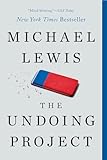
Editors Reads Verdict
Lewis chronicles the extraordinary intellectual partnership between Kahneman and Tversky, whose joint work on cognitive biases and heuristics is among the most influential in twentieth-century social science. The book is as much a love story as an intellectual history, and is more emotionally resonant than Kahneman's own Thinking, Fast and Slow.
What We Loved
- The Kahneman-Tversky friendship is portrayed with remarkable emotional depth
- Explains prospect theory and cognitive biases through memorable concrete examples
- The Israeli military and academic context adds rich historical texture
- Lewis traces the intellectual lineage of behavioral economics with genuine care
Minor Drawbacks
- Readers who have already read Thinking, Fast and Slow will find some cognitive bias coverage repetitive
- The later chapters, covering the friendship's strain, are less tightly plotted
- Some academic readers find the simplifications of the research frustrating
Key Takeaways
- → Human beings systematically deviate from rational choice in ways that are predictable and mappable
- → Losses loom larger than equivalent gains — prospect theory overturned classical utility theory
- → The availability heuristic makes vivid recent events feel more probable than they are
- → Great intellectual partnerships can be the most productive and painful relationships in a person's life
- → The framing of a choice systematically changes the choice made, regardless of underlying substance
| Author | Michael Lewis |
|---|---|
| Publisher | W. W. Norton & Company |
| Pages | 362 |
| Published | December 6, 2016 |
| Language | English |
| Genre | Psychology, Non-Fiction, Biography |
| Difficulty | Beginner |
| Best For | Readers interested in psychology, behavioral economics, the history of ideas, or the personal dynamics behind major intellectual breakthroughs. |
How The Undoing Project Compares
The Undoing Project at a glance against 3 similar books readers weigh alongside it.
| Book | Author | Rating | Best for |
|---|---|---|---|
| The Undoing Project (this book) | Michael Lewis | ★ 4.3 | Readers interested in psychology, behavioral economics, the history of ideas, |
| Flash Boys | Michael Lewis | ★ 4.3 | Investors, technology professionals, and general readers interested in how |
| Moneyball | Michael Lewis | ★ 4.5 | Business readers, sports analytics enthusiasts, baseball fans, and anyone |
| The Big Short | Michael Lewis | ★ 4.5 | Anyone seeking to understand the 2008 financial crisis through the lens of the |
A Friendship That Changed How We Think About Thinking
Daniel Kahneman and Amos Tversky met at Hebrew University in Jerusalem in 1969 and began a collaboration that would, over the next decade, produce some of the most cited papers in social science history. The Undoing Project is Lewis’s account of that partnership — how it started, how it worked, and how it eventually became something both men struggled to contain.
The book began, Lewis explains in the prologue, as a response to criticism that Moneyball had missed what was most interesting about the A’s success: the work of Kahneman and Tversky had shown decades earlier that expert judgment was systematically biased in the ways Oakland’s scouts demonstrated. Lewis decided to tell the story of the people whose research explained his earlier book.
Kahneman and Tversky
The two men were temperamentally opposite. Kahneman was self-doubting, prone to depression, and meticulous about uncertainty. Tversky was supremely confident, charismatic, and fast. Together they were unusually productive — their collaboration created a kind of intellectual environment where each man was better than either was alone.
Lewis traces their major joint discoveries: the representativeness heuristic, the availability heuristic, anchoring, and above all prospect theory — the observation that people value losses and gains asymmetrically, with losses typically weighted roughly twice as heavily as equivalent gains. This single insight demolished the classical economic assumption that rational actors respond symmetrically to equivalent outcomes.
The Human Cost of a Great Partnership
What makes The Undoing Project distinctive among accounts of their work is Lewis’s attention to the friendship’s texture and eventual strain. As their work became famous and prizes accumulated, questions arose about credit and precedence. Tversky, more extroverted and quotable, received more of the public recognition. Kahneman, who had often pushed Tversky toward the questions, felt the imbalance acutely.
The final chapters, set during Tversky’s fatal illness, are genuinely moving. Lewis handles the professional jealousy, the love, and the grief with a restraint that makes them more affecting.
Why Read This Over Thinking, Fast and Slow
Kahneman’s own book is a comprehensive account of the research program. The Undoing Project is a different kind of document — a story about how ideas come into being, what the people behind them were actually like, and what it costs to do genuinely original work. For many readers, Lewis’s version is the more human and therefore more durable account.
Our rating: 4.3/5 — A brilliant account of one of the great intellectual collaborations in modern science, with emotional depth that makes the ideas genuinely unforgettable.
The Friendship That Changed Our Understanding of the Mind
The Undoing Project is Michael Lewis’s engaging account of the remarkable collaboration and friendship between the psychologists Daniel Kahneman and Amos Tversky, whose work transformed our understanding of how the human mind makes decisions. Lewis tells the story of these two very different men, their intense intellectual partnership, and the groundbreaking research they conducted together, which revealed the systematic errors and biases that shape human judgment. By focusing on the human relationship behind the science, Lewis brings to life one of the most important intellectual collaborations of the twentieth century.
The Science of Judgment
The book illuminates the revolutionary research of Kahneman and Tversky, which demonstrated that human judgment and decision-making are subject to predictable biases and errors, departing systematically from the rational ideal assumed by traditional economics. Their work on heuristics, biases, and the quirks of human reasoning laid the foundations for behavioral economics and reshaped fields from psychology to medicine to public policy. Lewis explains these ideas accessibly, conveying their significance and their surprising implications for how we understand the mind and its limitations.
A Story of Friendship and Collaboration
What distinguishes the book is its focus on the deeply human story of the relationship between the two men. Lewis explores their contrasting personalities, the extraordinary creative chemistry of their partnership, the joys and eventual strains of their collaboration, and the profound bond and its complications between them. This attention to the human dimension, the friendship, the personalities, the emotional realities behind the science, gives the book its narrative warmth and power, transforming an account of intellectual history into a moving human story.
Lewis’s Narrative Gift
As in his other acclaimed books, Lewis brings his considerable narrative gifts to bear, finding the compelling human drama within a complex intellectual subject and rendering it with clarity, momentum, and emotional engagement. He has a talent for making difficult ideas accessible and for building his nonfiction around vivid, fascinating characters, and The Undoing Project exemplifies these strengths. His storytelling makes the science and the relationship equally compelling, drawing readers into both the ideas and the lives of the men who developed them.
A Rewarding Exploration
The Undoing Project offers a rewarding exploration of one of the most important developments in the modern understanding of the human mind, made accessible and engaging through Lewis’s storytelling and his focus on the people involved. It serves as an excellent introduction to the ideas of behavioral economics and the psychology of judgment, complementing Kahneman’s own influential work, while telling a genuinely moving story of friendship and collaboration. For readers interested in psychology, decision-making, or simply a well-told story of two remarkable minds, the book is an illuminating and absorbing read. By telling the human story behind a scientific revolution, Lewis makes the origins of behavioral economics not only comprehensible but genuinely moving, and the book stands among his most rewarding work.
Frequently Asked Questions
What is "The Undoing Project" about?
The story of Daniel Kahneman and Amos Tversky, the Israeli psychologists whose collaboration upended our understanding of human judgment and decision-making.
Who should read "The Undoing Project"?
Readers interested in psychology, behavioral economics, the history of ideas, or the personal dynamics behind major intellectual breakthroughs.
What are the key takeaways from "The Undoing Project"?
Human beings systematically deviate from rational choice in ways that are predictable and mappable Losses loom larger than equivalent gains — prospect theory overturned classical utility theory The availability heuristic makes vivid recent events feel more probable than they are Great intellectual partnerships can be the most productive and painful relationships in a person's life The framing of a choice systematically changes the choice made, regardless of underlying substance
Is "The Undoing Project" worth reading?
Lewis chronicles the extraordinary intellectual partnership between Kahneman and Tversky, whose joint work on cognitive biases and heuristics is among the most influential in twentieth-century social science. The book is as much a love story as an intellectual history, and is more emotionally resonant than Kahneman's own Thinking, Fast and Slow.
Ready to Read The Undoing Project?
Check the current price on Amazon.
Check Price on Amazon (paid link)Prices and availability are subject to change. See Amazon for current price.
Review last updated: