Michael Lewis Books in Order: Complete Bibliography & Best Starting Points
Michael Lewis's complete bibliography in order — from Liar's Poker and Moneyball to The Big Short and The Undoing Project. Best starting points for new readers.
By Marcus Webb

Michael Lewis (b. 1960) is the most widely read narrative nonfiction writer working in finance and economics — his books have sold tens of millions of copies worldwide, and several (The Big Short, Moneyball, The Blind Side) have been adapted into major films. His core technique is consistent across all his work: finding a moment when a particular person understood something important about a complex system before everyone else, and making that understanding legible to a general reader through the particulars of that person’s story.
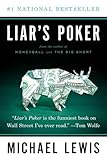
He worked as a bond salesman at Salomon Brothers before becoming a writer; Liar’s Poker (1989), his account of that experience, is the foundational text of the Wall Street memoir genre.
Where to Start
The Big Short (2010)
The best starting point — the story of the investors who predicted the 2008 financial crisis, told with Lewis’s signature narrative momentum. The book explains CDOs and credit default swaps not through abstraction but through the specific people who understood them; the result is both a gripping narrative and the most accessible account of the crisis available.
Moneyball (2003)
The best starting point for readers without a finance background — the Oakland A’s use of statistical analysis to compete against richer teams. Lewis’s argument (that markets consistently fail to value things correctly, and that the person who understands the mispricing can profit from it) is present here in its purest form, applied to a system (professional baseball) that is easier to understand than financial markets.
Liar’s Poker (1989)
Lewis’s debut and the foundational text of the Wall Street memoir. His account of his years as a bond salesman at Salomon Brothers in the 1980s established the genre and introduced the general reader to what investment banks actually do. Read before The Big Short for full context on how the culture evolved between the 1980s and 2008.
Complete Bibliography
| Title | Year | Note |
|---|---|---|
| Liar’s Poker | 1989 | Debut; Salomon Brothers; 1980s Wall Street |
| The New New Thing | 1999 | Silicon Valley; Jim Clark |
| Moneyball | 2003 | Baseball; statistics; Billy Beane |
| Coach | 2005 | High school football coach; memoir |
| The Blind Side | 2006 | American football; adoption |
| Panic | 2009 | Financial crises anthology |
| The Big Short | 2010 | 2008 crisis; best starting point |
| Boomerang | 2011 | European financial crisis |
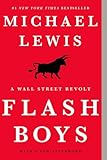
| Flash Boys | 2014 | High-frequency trading |
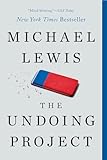
| The Undoing Project | 2016 | Kahneman and Tversky |
| The Fifth Risk | 2018 | Trump transition; government |
| Going Infinite | 2023 | Sam Bankman-Fried; FTX |
A Master of Narrative Nonfiction
Michael Lewis is one of the foremost practitioners of narrative nonfiction, a writer who transforms complex and seemingly dry subjects, from finance to sports to decision-making, into compelling, character-driven stories of remarkable readability and insight. Lewis’s achievement is to make complex subjects not only comprehensible but genuinely gripping, transforming the seemingly dry and technical material of finance, economics, sports, and other fields into compelling narratives driven by vivid characters and dramatic stories. His great gift is storytelling, the ability to find the human drama and the compelling narrative within complex and technical subjects, and to render them as gripping, character-driven stories that engage and enlighten a wide readership. This mastery of narrative nonfiction is central to Lewis’s achievement, for he transforms complex and seemingly inaccessible subjects into compelling stories of remarkable readability, making the technical comprehensible and the dry genuinely gripping. His books on finance, sports, and other subjects demonstrate his ability to find the human drama within complex material and to render it as compelling narrative, and they have made him one of the most successful and influential practitioners of narrative nonfiction. For readers, Lewis offers the master’s art of narrative nonfiction, complex subjects transformed into compelling, character-driven stories of remarkable readability and insight. A master of narrative nonfiction, Lewis transforms complex and seemingly dry subjects, from finance to sports to decision-making, into compelling, character-driven stories of remarkable readability and insight, finding the human drama within complex material.
The Outsider and the Contrarian
A recurring and characteristic focus of Michael Lewis’s work is the outsider and the contrarian, the figure who sees what others miss, who challenges conventional wisdom, and who perceives the truth that the established order overlooks or denies. Lewis is drawn again and again to outsiders and contrarians, to the individuals who see what the established order misses, who challenge conventional wisdom and entrenched assumptions, and who perceive truths that others overlook or deny. His books frequently center on such figures, the contrarians who saw the financial crisis coming when others did not, the innovators who challenged the conventional wisdom of their fields, the outsiders who perceived what the established order missed, and through these figures Lewis explores how conventional wisdom can be wrong and how the outsider’s perspective can reveal the truth. This focus on the outsider and the contrarian is central to Lewis’s work, for he is fascinated by those who see what others miss and challenge the established order, and his books celebrate the insight and courage of the contrarian who perceives the truth that conventional wisdom denies. Through these figures, Lewis explores the failures of conventional wisdom, the blindness of the established order, and the value of the outsider’s perspective. For readers, Lewis offers a fascination with the outsider and the contrarian, the figures who see what others miss and challenge conventional wisdom to reveal the truth. The outsider and the contrarian are a recurring focus of Lewis’s work, the figures who see what others miss, who challenge conventional wisdom, and who perceive the truth that the established order overlooks or denies, through whom he explores the failures of conventional wisdom.
Making the Complex Human
The distinctive achievement of Michael Lewis’s work is to make complex systems and subjects human, to illuminate the workings of finance, markets, and other complex domains through the stories of the people who inhabit them, revealing the human reality behind the abstractions. Lewis’s great gift is to render complex systems and subjects in human terms, to illuminate the workings of finance, economics, sports, and other complex domains not through abstract explanation but through the stories of the people who inhabit and shape them. He understands that the way to make a complex subject comprehensible and compelling is to tell it through character and story, to reveal the human reality behind the abstractions, and his books illuminate complex systems through the vivid characters and dramatic stories of the people involved. This making of the complex human is central to Lewis’s achievement, for he transforms abstract and technical subjects into compelling human stories, illuminating the workings of complex systems through the people who inhabit them and revealing the human drama behind the abstractions. His ability to find and tell the human stories within complex subjects makes his books both comprehensible and gripping, illuminating the human reality behind finance, markets, and other complex domains. For readers, Lewis offers the art of making the complex human, illuminating complex systems and subjects through the stories of the people who inhabit them. Making the complex human is the distinctive achievement of Lewis’s work, his illumination of the workings of finance, markets, and other complex domains through the stories of the people who inhabit them, revealing the human reality behind the abstractions.
Reading Order Recommendations
New to Lewis: The Big Short → Moneyball → Liar’s Poker.
Finance focus: Liar’s Poker → The Big Short → Flash Boys → Going Infinite.
Ideas focus: Moneyball → The Undoing Project → The Big Short.
Frequently Asked Questions
What is the best Michael Lewis book to start with?
The Big Short (2010) is the best starting point — the story of the small group of investors who bet against the US housing market before the 2008 financial crisis, told with Lewis's characteristic narrative momentum and gift for explaining complex financial instruments through vivid character. Moneyball (2003) is the more accessible starting point for readers without a finance background — the Oakland A's baseball team's use of statistical analysis to compete against teams with much larger payrolls. Both demonstrate Lewis's core technique: explaining complex systems through the personalities of the people who understood them.
What is The Big Short about?
The Big Short (2010) follows the investors who predicted the 2008 financial crisis — Michael Burry, Steve Eisman, Greg Lippmann, and others — as they investigate the US housing market and conclude that it is built on fraudulent mortgage-backed securities. Lewis explains collateralised debt obligations and credit default swaps through the characters who understood them; the result is the most readable account of the crisis available. The book also demonstrates Lewis's consistent thesis: that financial markets are not efficient, and that fortunes are made by the few people who understand the particular inefficiency of the moment.
What is Moneyball about?
Moneyball (2003) follows Billy Beane, the general manager of the Oakland Athletics, and his use of sabermetrics — the statistical analysis of baseball — to identify undervalued players and compete against teams with payrolls three times larger. The book is simultaneously a sports narrative, an argument about how markets fail to value things correctly, and a portrait of the resistance of established institutions to analytical thinking. It transformed how baseball teams evaluate players and has been applied to sports and organisations far beyond baseball.
What is The Undoing Project about?
The Undoing Project (2016) is Lewis's account of the collaboration between psychologists Daniel Kahneman and Amos Tversky, whose research on cognitive biases and heuristics revolutionised economics and produced the field of behavioural economics. Lewis tells the story through the friendship — intense, creative, and eventually fraught — between the two men, using their personal relationship to illuminate the ideas they produced together. The book is the best narrative account of the most important social science research of the twentieth century.