Where to Start with Angela Duckworth: A Reading Guide
Where to start with Angela Duckworth — how to approach Grit, her essential book on perseverance and passion as the foundation of achievement. A complete reading guide.
By Lena Fischer

Angela Duckworth (born 1970) is the American psychologist and professor at the University of Pennsylvania who won a MacArthur Fellowship in 2013 for her research on grit — the combination of passion and perseverance for long-term goals — and subsequently wrote Grit: The Power of Passion and Perseverance (2016), which became one of the most widely discussed popular psychology books of its decade. Duckworth left a demanding consulting career to become a schoolteacher and later a psychologist; her research was motivated by the observation that talent alone does not predict who succeeds.
Where to Start: Grit (2016)
The essential Duckworth — and her only major book. The argument begins with a puzzle: why do some talented people fail to achieve, while people with seemingly ordinary ability end up excelling? Duckworth spent years researching this question in demanding domains — West Point’s beast barracks, the national spelling bee, sales floors, the teaching profession — and found that the most consistent predictor of achievement was not talent but a combination of passion and perseverance she called grit.
The book is organised around the two components of grit. Passion — in Duckworth’s definition — is not the fleeting excitement of novelty but a sustained interest in a long-term goal: the willingness to return to the same set of problems, in the same domain, year after year, because the work continues to matter. Perseverance is the ability to continue in the face of setbacks, plateaus, and the temptation to try something new and easier.
Duckworth examines how these qualities develop: through deliberate practice (hard, focused, feedback-rich work at the edge of current ability), through finding a ‘top-level goal’ that gives purpose to the daily grind, and through the cultivation of a growth mindset — the belief that effort changes ability. She addresses whether grit can be taught to children (cautiously optimistic) and what parents and teachers can do to develop it.
The book is accessible, research-grounded, and practically engaging. For readers interested in the psychology of achievement, it is one of the most influential recent contributions to the field.
Why Grit Is the Ideal First Book
For a reader new to Angela Duckworth, Grit is the ideal and essential first book because it is her singular major work and the full expression of her influential research into the quality she calls grit, the combination of passion and perseverance that, she argues, drives achievement. A psychologist whose research made her famous, Duckworth presents in Grit her central finding, that long-term success depends less on talent than on grit, the sustained passion and perseverance toward long-term goals. As an entry point, it is the natural and essential place to begin, for it is her defining book, the full and authoritative account of the research and ideas for which she is known. It welcomes the newcomer with its compelling argument, its engaging blend of research and story, and its encouraging message, that the quality most associated with achievement is one that can be cultivated. It is her singular major work and the fullest expression of her ideas, so that the new reader encounters Duckworth’s central research directly. For the newcomer, then, Grit is the natural and ideal starting point, the definitive account of her influential research into passion and perseverance.
What to Expect as a New Reader
As a new reader, you can expect Grit to be an engaging and authoritative account of Duckworth’s influential research, combining psychological science with vivid storytelling to argue that passion and perseverance, more than talent, drive achievement. You can expect her central finding, that long-term success depends heavily on grit, the sustained passion and perseverance toward long-term goals, and you can expect this finding to be supported by her research and illustrated with engaging examples drawn from high achievers in many fields. You can expect a blend of genuine science and accessible storytelling, for Duckworth presents her research in an engaging, readable form. You can expect an encouraging message, for the book argues that grit, the quality most associated with achievement, is not fixed but can be cultivated and grown. You can expect practical implications for developing grit in oneself and in others. Expect, in short, an engaging and authoritative account of the research into passion and perseverance, combining science with storytelling, an accessible and encouraging introduction to Duckworth’s influential work.
Going Deeper After Your First Book
Once Grit has given you Duckworth’s account of passion and perseverance, the reader who wishes to go deeper can explore the wider literature on achievement, character, and the psychology of success to which her work contributes, reading related research and ideas in the light of the understanding that Grit provides. The themes of Grit, the role of perseverance and passion in achievement, the cultivation of character strengths, and the science of success, connect to a broader conversation in psychology about what drives achievement and how the qualities that lead to it can be developed. Reading more deeply deepens your engagement with these questions, but Grit provides the authoritative foundation, the direct account of Duckworth’s influential research. Her central insight, that passion and perseverance can be cultivated and matter more than talent, connects to the broadest questions of achievement and character. Building your reading journey from Grit is a matter of pursuing its insights into achievement and character through the wider literature. The reader who begins with Grit will have an authoritative foundation for understanding the role of passion and perseverance in success and how they can be developed.
Reading Angela Duckworth
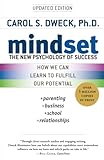
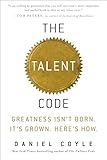
Grit is Duckworth’s only major book; it is the full account of her research and thinking. After reading it, consider Carol Dweck’s Mindset for the growth mindset research that Duckworth builds on, or Daniel Coyle’s The Talent Code for the neuroscience of deliberate practice.
For the full Angela Duckworth bibliography, reviews, and biography, visit the Angela Duckworth author page on Editors Reads.
Affiliate disclosure: Links to Amazon on this page are affiliate links. We earn a small commission at no extra cost to you.
Frequently Asked Questions
Where should I start with Angela Duckworth?
Grit: The Power of Passion and Perseverance (2016) is Duckworth's only major book — the research-grounded argument that achievement is more determined by perseverance and passion (which she calls 'grit') than by innate talent. Based on Duckworth's psychological research at the University of Pennsylvania and her experience as a MacArthur Fellow; one of the most discussed popular psychology books of its decade.
What is Grit about?
Grit presents Duckworth's research finding that talent is a poor predictor of achievement — that what actually predicts who succeeds in demanding domains (military academies, spelling bees, sales competitions) is a combination of passion for a long-term goal and perseverance in the face of obstacles. The book defines grit as the combination of these two elements, examines how grit can be developed (through deliberate practice, finding a 'top-level goal' that gives meaning to effort, and the cultivation of a growth mindset), and addresses whether grit can be taught to children.
Is Grit's argument scientifically well-supported?
Grit received substantial academic praise and some significant criticism after publication. The core finding — that perseverance and passion predict achievement better than talent alone — is supported by Duckworth's research. Critics pointed out that the Grit Scale (her measure of the trait) overlaps substantially with conscientiousness (a long-established personality dimension), and that the research on whether grit can be taught in school settings has produced mixed results. The book's message is directionally accurate and practically useful; the scientific scaffolding is more contested than the popular reception suggested.
What should I read after Grit?
Readers interested in the psychology of achievement and skill development often go on to Carol Dweck's Mindset (the growth mindset research that Grit builds on), Daniel Coyle's The Talent Code (the neuroscience of deliberate practice), or Malcolm Gladwell's Outliers (a more narrative exploration of the conditions for extraordinary achievement). Duckworth's work is particularly enriched by reading Dweck first or alongside.