Where to Start with Daniel Coyle: A Reading Guide
Where to start with Daniel Coyle — whether to begin with The Talent Code or The Culture Code. A complete reading guide to the sports writer and author.
By Lena Fischer
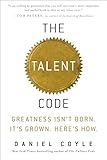
Daniel Coyle is the American journalist, author, and former contributing editor at Outside magazine whose books on talent development and organisational culture have influenced coaches, educators, managers, and athletes worldwide. The Talent Code (2009) emerged from Coyle’s investigation into why certain small, unlikely places produce disproportionate numbers of world-class performers; The Culture Code (2018) applied the same investigative method to the question of what makes teams and organisations extraordinary.
Where to Start: The Talent Code (2009)
The essential Coyle — and one of the most practically influential books on skill development of the past two decades. The book begins with a question: why do certain small locations — a particular tennis club in Moscow, a soccer field in Brazil, a music school in upstate New York — produce an astonishing number of world-class performers? What do these places have in common?
Coyle’s answer is built around three components. Deep practice: not just repetition but targeted, mistake-embracing repetition that operates at the edge of current ability, where errors occur and are immediately corrected. Ignition: a motivational trigger — often a role model or a defining moment — that creates the intense desire necessary for years of dedicated practice. Master coaching: instruction that identifies and targets the specific errors preventing improvement, rather than simply praising effort.
The scientific foundation is myelin — the fatty substance that wraps around neural circuits and increases their speed and accuracy with each repetition. Deep practice builds myelin; myelin is what skill actually is at the neurological level. This model explains why talent hotbeds work: they create conditions for intense, mistake-focused practice sustained over years.
For coaches, teachers, parents, musicians, athletes, or anyone trying to understand how genuine skill is developed, The Talent Code is one of the most useful books available.
The Culture Code (2018)
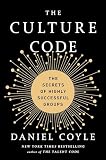
The follow-up — applying the same investigative method to team culture. Safety, vulnerability, and shared purpose as the foundations of exceptional group performance. Essential reading for managers and team leaders; can be read independently.
Why The Talent Code Is the Ideal First Book
For a reader new to Daniel Coyle, The Talent Code is the ideal first book because it is his breakthrough work and the fullest expression of his central subject, the science of how skill and talent are actually developed. The Talent Code presents Coyle’s influential investigation into how exceptional skill is grown, drawing on neuroscience and visits to talent hotbeds around the world to argue that greatness is built through deep practice rather than innate gift. As an entry point, it is ideal because it lays out this compelling argument clearly and engagingly, combining genuine science with vivid storytelling to explain how skill is developed and how anyone can grow it. It welcomes the newcomer with its engaging narrative, its surprising insights, and its practical implications, making the science of skill development accessible and useful. It is his best-known book and the one that best represents his approach, the combination of narrative nonfiction with genuine insight into performance and skill, so that the new reader encounters Coyle at his most characteristic. For the newcomer, then, The Talent Code is the natural and ideal starting point, the breakthrough book that explains the science of how skill is grown.
What to Expect as a New Reader
As a new reader, you can expect The Talent Code to be an engaging and surprising work of narrative nonfiction, combining neuroscience with vivid storytelling to explain how skill and talent are actually developed. You can expect Coyle’s central argument, that exceptional skill is grown through deep practice rather than born as innate gift, and you can expect this argument to be supported by genuine science, including the role of focused, error-correcting practice in building the neural foundations of skill. You can expect vivid storytelling, for Coyle visits talent hotbeds around the world, places that produce remarkable concentrations of skill, and draws engaging lessons from what he finds there. You can expect practical implications, for the book’s insights into deep practice apply to anyone seeking to develop a skill. You can expect an accessible and engaging style that makes the science approachable. Expect, in short, an engaging and surprising exploration of how skill is grown, combining science with storytelling, a fascinating and practical introduction to Coyle’s investigation of talent and performance.
Going Deeper After Your First Book
Once The Talent Code has introduced you to Coyle’s investigation of skill, the reader who wishes to go deeper can explore his other work, which applies the same combination of science and storytelling to related questions of performance, particularly the workings of great teams and cultures. His subsequent work turns from individual skill to group performance, investigating what makes great teams and cultures work and drawing engaging lessons from successful organizations, in the same accessible, narrative-driven style. Reading these after The Talent Code deepens your engagement with Coyle’s distinctive approach, the combination of genuine science with vivid storytelling to illuminate the questions of skill, performance, and success. His characteristic method runs through his work, and the reader who has enjoyed The Talent Code will find the same engaging insight in his other books. Building your reading journey through Coyle’s work is a matter of following his investigation of performance from individual skill to group culture. The reader who begins with The Talent Code and continues through his work will find a consistently engaging and insightful guide to how skill, talent, and great performance are developed.
Reading Daniel Coyle
Begin with The Talent Code for individual skill development, or The Culture Code if your primary interest is team and organisational dynamics. Both are standalone and can be read in either order.
For the full Daniel Coyle bibliography, reviews, and biography, visit the Daniel Coyle author page on Editors Reads.
Affiliate disclosure: Links to Amazon on this page are affiliate links. We earn a small commission at no extra cost to you.
Frequently Asked Questions
Where should I start with Daniel Coyle?
The Talent Code (2009) is the recommended starting point — Coyle's investigation into how extraordinary skill is developed, visiting talent hotbeds around the world and finding a common mechanism: deep practice, ignition (motivational fuel), and master coaching. Grounded in neuroscience research on myelin; practically influential on coaches, educators, and anyone interested in skill development. The Culture Code is the natural follow-on for readers interested in how teams rather than individuals excel.
What is The Talent Code about?
The Talent Code argues that talent is not innate but developed — specifically through 'deep practice,' a form of targeted, mistake-focused repetition that builds myelin (the neural insulation that speeds and strengthens skill circuits). Coyle visits talent hotbeds — a Russian tennis club, a Brazilian soccer training ground, a music school in upstate New York, a college baseball powerhouse — and identifies the common elements: intensive, mistake-embracing practice; a powerful motivational trigger; and coaching that precisely targets errors. The neuroscience of myelin is the book's backbone.
What is The Culture Code about?
The Culture Code (2018) is Coyle's investigation into what makes groups work — studying highly effective teams from the Navy SEALs to Pixar to the San Antonio Spurs to identify the underlying dynamics of exceptional culture. Three forces emerge: safety (the sense that it's safe to speak and be vulnerable), vulnerability (leaders who model openness to failure), and purpose (a shared story about why the work matters). Less focused on individual skill than The Talent Code; more useful for managers and team leaders.
Is The Talent Code's myelin theory still supported by science?
The myelin hypothesis — that deliberate practice builds myelin sheaths around neural circuits, making skill transmission faster and more reliable — is supported by neuroscience research and remains the leading scientific explanation for how skills are encoded neurologically. The book's translation of this science into practical implications for practice and coaching is directionally accurate. Some critics have noted that the popular science treatment simplifies the underlying neuroscience; the practical recommendations hold regardless.