Editors Reads Verdict
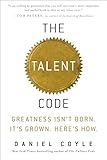
The Talent Code dismantles the myth of natural genius by showing how myelin — the brain's neural insulation — grows through focused, effortful practice, making talent something anyone can deliberately cultivate.
What We Loved
- Compelling neuroscience of myelin explained accessibly for general readers
- Vivid case studies from music academies, sports hotbeds, and top schools
- Practical framework of deep practice, ignition, and master coaching
Minor Drawbacks
- Some critics note the myelin science has been partially revised since publication
- Anecdotes occasionally outpace rigorous empirical evidence
Key Takeaways
- → Deep practice — struggling at the edge of your ability — builds myelin and accelerates skill
- → Ignition is the motivational spark that sustains long-term effortful practice
- → Master coaches provide precise, targeted feedback that accelerates development
| Author | Daniel Coyle |
|---|---|
| Published | January 1, 2009 |
| Language | English |
| Genre | Psychology, Self-Help, Science |
| Difficulty | Beginner |
| Best For | Parents, coaches, teachers, and anyone who wants to understand how exceptional skill is built rather than born. |
How The Talent Code Compares
The Talent Code at a glance against 3 similar books readers weigh alongside it.
| Book | Author | Rating | Best for |
|---|---|---|---|
| The Talent Code (this book) | Daniel Coyle | ★ 4.5 | Parents, coaches, teachers, and anyone who wants to understand how exceptional |
| 12 Rules for Life | Jordan B. Peterson | ★ 4.5 | Anyone seeking a philosophically grounded framework for living responsibly and |
| A Brief History of Time | Stephen Hawking | ★ 4.5 | General readers curious about the universe, cosmology, and the nature of space |
| A New Earth | Eckhart Tolle | ★ 4.5 | Readers who found The Power of Now resonant and want a deeper treatment of its |
The Myelin Theory of Talent
Daniel Coyle traveled to some of the world’s most unlikely talent hotbeds — a crumbling baseball academy in the Dominican Republic, a tiny tennis club in Russia producing world champions, a music school in Dallas — and came back with a unified theory of skill. The answer, he argues, lies not in DNA but in myelin, the neural insulation that wraps around nerve fibers and makes signals travel faster and more accurately. Every time you practice a skill deeply and effortfully, you add another layer of myelin. The more myelin, the more automatic and precise the skill becomes.
Deep Practice
The book’s central concept is deep practice — a specific kind of effortful, mistake-rich engagement that sits at the outer edge of your current ability. Coyle distinguishes this sharply from mindless repetition. Deep practice means slowing down, isolating errors, and fixing them deliberately. The Brazilian soccer culture of futsal, played on a small indoor court with a heavy ball that demands constant improvisation, turns out to be a perfect deep-practice machine — and it explains why Brazil produces so many elite players per capita.
Ignition and Master Coaching
Equally important are what Coyle calls ignition and master coaching. Ignition is the motivational flash — often a role model moment or a compelling identity cue — that makes a person willing to endure years of deep practice. Master coaches, meanwhile, are not the loudest voices in the room; they are precise diagnosticians who deliver the exact cue a student needs at exactly the right moment, often in a single quiet sentence. Coyle profiles coaches like Meadowmount music instructor Skye Carman, whose ability to identify the one micro-error holding a student back is almost uncanny.
Inside the Talent Hotbeds
The most engaging feature of The Talent Code is its reporting. Coyle does not theorize from an armchair; he travels to the strange, often shabby places that produce wildly disproportionate numbers of world-class performers and tries to figure out what they share. There is the Spartak tennis club in Moscow, operating out of a single run-down indoor court, that produced more top-twenty women players than the entire United States; the Meadowmount music school, where students learn pieces so slowly that an outsider cannot recognize the melody; a baseball-mad island in the Dominican Republic; a writers’ “hotbed” in the form of the Brontë siblings’ childhood scribblings. In each, Coyle finds the same three ingredients at work — intense, error-focused practice; a powerful spark of motivation, often lit by a local hero who proved success was possible; and quietly brilliant coaching. By grounding his argument in these vivid, specific places rather than in abstraction, Coyle makes his thesis feel discovered rather than asserted, and the journalism is genuinely fun to read. The recurring lesson is that talent clusters not because of genetics in the water but because of cultures that, by accident or design, maximize deep practice.
Part of a Bigger Conversation
The Talent Code belongs to a wave of books published in the late 2000s that collectively dismantled the romance of innate genius — alongside Geoff Colvin’s Talent Is Overrated, Matthew Syed’s Bounce, and Malcolm Gladwell’s Outliers, all of which drew on the psychologist Anders Ericsson’s foundational research into “deliberate practice” (the same research behind the famous, and oft-oversimplified, “10,000-hour rule”). Coyle’s distinctive contribution is the biological mechanism: where others described what expert practice looks like, he reached for an explanation of why it works at the level of the brain, locating the answer in myelin. That move makes the argument vivid and memorable — the idea that you are physically “wiring” a skill with every focused, struggling repetition is genuinely motivating — and it is the reason the book has remained a favorite of coaches, teachers, and parents for over a decade.
A Caveat on the Science
Intellectual honesty requires a note of caution. Since The Talent Code was published in 2009, neuroscience’s understanding of myelin has grown more complex, and Coyle’s clean, central metaphor — practice adds myelin, myelin equals skill — is now understood to be a simplification of a far more tangled biological reality. Myelination is real and important, but it is one strand in a web of neural changes underlying skill, not the single master switch the book sometimes implies. Coyle is a journalist rather than a scientist, and at times his vivid anecdotes from the talent hotbeds outrun the rigor of the evidence. None of this overturns his practical conclusions — which rest on the solid foundation of deliberate-practice research — but readers should hold the specific myelin mechanism more loosely than the book’s confident framing suggests.
Verdict
The Talent Code is not a self-help book with a simple checklist, but it does leave readers with a clear and empowering message: greatness is built through the right kind of effort, sustained by the right kind of motivation, and guided by the right kind of mentorship. Coyle, who went on to write the bestselling team-dynamics book The Culture Code, writes with a journalist’s gift for the telling story, and the trio of deep practice, ignition, and master coaching is both memorable and genuinely actionable. Whether you are raising children, coaching athletes, or trying to master a new skill yourself, his framework — taken as an inspiring blueprint rather than settled neuroscience — offers a compelling case that talent is grown, not born.
Our rating: 4.5/5 — A vivid, motivating, and practically useful account of how skill is built — strongest as inspiration and framework, lighter on settled science.
Reading Guides
Frequently Asked Questions
What is "The Talent Code" about?
Daniel Coyle reveals how deep practice, ignition, and master coaching combine to unlock exceptional skill in any field.
Who should read "The Talent Code"?
Parents, coaches, teachers, and anyone who wants to understand how exceptional skill is built rather than born.
What are the key takeaways from "The Talent Code"?
Deep practice — struggling at the edge of your ability — builds myelin and accelerates skill Ignition is the motivational spark that sustains long-term effortful practice Master coaches provide precise, targeted feedback that accelerates development
Is "The Talent Code" worth reading?
The Talent Code dismantles the myth of natural genius by showing how myelin — the brain's neural insulation — grows through focused, effortful practice, making talent something anyone can deliberately cultivate.
Ready to Read The Talent Code?
Check the current price on Amazon.
Check Price on Amazon (paid link)Prices and availability are subject to change. See Amazon for current price.
Review last updated: