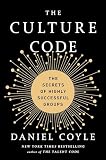
Editors Reads Verdict
A worthy successor to The Talent Code — Coyle applies his pattern-recognition skills to group dynamics and finds the same elegant simplicity: a few behaviours, repeatedly enacted, that account for most of the difference between great groups and mediocre ones.
What We Loved
- The case studies are superb — the Navy SEALs selection process, Pixar's candid review process, and the San Antonio Spurs' unusual team-building are all fascinating
- The three-skill framework (safety, vulnerability, purpose) is simple enough to apply but detailed enough to be genuinely useful
- Coyle is a pleasure to read — the research is heavy but the prose is light
Minor Drawbacks
- Like The Talent Code, some findings rely on research that has subsequently faced replication challenges
- The framework works best for organizations that have genuine control over their culture — less applicable to dysfunctional institutions
Key Takeaways
- → Psychological safety — the sense that it's safe to take risks and be vulnerable — is the foundation of high-performing group culture
- → Vulnerability loops (where one person admits uncertainty and another responds in kind) build trust faster than any formal team-building exercise
- → Purpose is not motivation — it's a shared story about why the work matters that gives individual actions collective meaning
| Author | Daniel Coyle |
|---|---|
| Publisher | Bantam Books |
| Pages | 296 |
| Published | January 30, 2018 |
| Language | English |
| Genre | Non-Fiction, Business, Psychology |
How The Culture Code Compares
The Culture Code at a glance against 3 similar books readers weigh alongside it.
| Book | Author | Rating | Best for |
|---|---|---|---|
| The Culture Code (this book) | Daniel Coyle | ★ 4.3 | Non-Fiction |
| Drive | Daniel H. Pink | ★ 4.3 | Managers, HR professionals, educators, and anyone who wants to understand what |
| The Five Dysfunctions of a Team | Patrick Lencioni | ★ 4.3 | Team leaders, managers, and executives dealing with dysfunctional group dynamics |
| The Talent Code | Daniel Coyle | ★ 4.5 | Parents, coaches, teachers, and anyone who wants to understand how exceptional |
The Culture Code Review
The Culture Code is Daniel Coyle’s follow-up to The Talent Code, applying the same method — careful observation of high-performing groups, pattern recognition, distillation — to the question of culture: why some groups consistently perform better than their talent level would predict, and what leaders can do to build that performance.
Coyle spent time with the Navy SEALs during selection, inside Pixar’s creative review process, and observing the San Antonio Spurs’ unconventional approach to building team cohesion, among many other high-performing groups. What he found was not the diversity of approaches he expected but a striking convergence: the best groups all exhibit three skills, practised consistently. They build safety — the sense that it’s psychologically secure to take risks, speak honestly, and make mistakes. They share vulnerability — they admit uncertainty and weakness, which paradoxically builds trust. And they establish purpose — a shared understanding of why the work matters that goes beyond individual incentives.
The safety finding connects directly to Google’s Project Aristotle, which studied high-performing teams at Google and found psychological safety as the single most important factor. But Coyle’s contribution is to show how safety is actually built: not through policy or stated values but through specific behaviours — “belonging cues” — that leaders demonstrate repeatedly and that team members come to mirror. The result is a framework that is simple enough to remember and specific enough to act on, delivered with the narrative energy that makes Coyle one of the most readable writers working in the business-psychology space.
Coyle’s Method and the Books Around It
Daniel Coyle is a journalist by training, and his strength is reportage rather than theory: he gets inside rooms most writers never see and watches how people actually behave. The Culture Code (2018) extends the approach of his earlier bestseller The Talent Code (2009), which argued that expertise is grown through “deep practice” and myelin rather than born, by turning the same observational lens from individual skill to collective performance. The result sits comfortably alongside the modern canon of organisational-behaviour writing — Patrick Lencioni’s The Five Dysfunctions of a Team, Daniel Pink’s Drive, Amy Edmondson’s academic work on psychological safety — but distinguishes itself through the vividness of its scenes. Coyle does not merely cite research; he shows you the Navy SEALs in a brutal selection exercise, Pixar’s “Braintrust” tearing a film apart without tearing its director apart, and Gregg Popovich quietly feeding his San Antonio Spurs in a way that builds belonging cues into the team’s daily life.
The book became a fixture on corporate reading lists and management-podcast recommendations, and its three-part framework — build safety, share vulnerability, establish purpose — is simple enough to remember and concrete enough to act on, which accounts for much of its durability.
What the Three Skills Actually Mean
Coyle’s central insight is that great group culture is not a matter of stated values, personality, or even talent, but of small behavioural signals repeated until they become the group’s instinctive grammar. Safety, the foundation, is transmitted through “belonging cues” — eye contact, turn-taking, physical proximity, the steady signal that we are connected and you are safe here — and Coyle ties this directly to Google’s Project Aristotle, whose famous study found psychological safety the single strongest predictor of team effectiveness. Vulnerability, counter-intuitively, builds trust rather than eroding it: when a leader admits “I screwed that up” and another member responds in kind, a “vulnerability loop” forms that bonds a group faster than any retreat or trust-fall exercise. Purpose, the third skill, is not motivation in the cheerleading sense but a shared, frequently repeated story about why the work matters, which lends individual actions collective meaning. Throughout, Coyle keeps the research light on the surface and the anecdotes doing the heavy lifting, which makes the book a genuine pleasure to read even as its underlying argument rests on a substantial body of social science.
Who Should Read It and How
The Culture Code is written for anyone who leads or belongs to a group and wants to make it function better — managers, founders, coaches, teachers, and committee chairs alike — and it is deliberately accessible to readers with no background in organisational psychology. It is best read not as a definitive scientific account but as a practical field guide: a closing section, “Tips,” distils each of the three skills into concrete actions a reader can try the next morning, and the book rewards an approach that treats it as a manual to apply rather than a theory to admire. Readers should hold its claims with a degree of healthy skepticism, since, like The Talent Code, some of the underlying studies have faced the replication pressures that have swept through social psychology in the past decade, and the framework works best in organisations that genuinely control their own culture rather than dysfunctional institutions where the rot runs deeper than belonging cues can reach. Used as a starting point and paired with Edmondson’s more rigorous academic work for those who want the evidence base, it is among the most usable books on team-building in print.
Limitations
Like The Talent Code, some findings rely on research that has subsequently faced replication challenges. The framework works best for organizations that have genuine control over their culture — less applicable to dysfunctional institutions. These are worth knowing before starting, though they are unlikely to diminish the experience for the readers the book is written for.
Final Verdict
Our rating: 4.3/5 — A worthy successor to The Talent Code — Coyle applies his pattern-recognition skills to group dynamics and finds the same elegant simplicity: a few behaviours, repeatedly enacted, that account for most of the difference between great groups and mediocre ones.
Frequently Asked Questions
What is "The Culture Code" about?
Coyle investigates what makes the world's best groups — the Navy SEALs, Pixar, the San Antonio Spurs, the US Women's Volleyball team — tick. The answer is culture: three specific skills that successful groups share and that anyone can learn to build.
What are the key takeaways from "The Culture Code"?
Psychological safety — the sense that it's safe to take risks and be vulnerable — is the foundation of high-performing group culture Vulnerability loops (where one person admits uncertainty and another responds in kind) build trust faster than any formal team-building exercise Purpose is not motivation — it's a shared story about why the work matters that gives individual actions collective meaning
Is "The Culture Code" worth reading?
A worthy successor to The Talent Code — Coyle applies his pattern-recognition skills to group dynamics and finds the same elegant simplicity: a few behaviours, repeatedly enacted, that account for most of the difference between great groups and mediocre ones.
Ready to Read The Culture Code?
Check the current price on Amazon.
Check Price on Amazon (paid link)Prices and availability are subject to change. See Amazon for current price.
Review last updated: